
How to Formalize Exclusive Tenant Representation Before Touring Los Angeles and Orange County Properties
The listing broker on any commercial property has a legal obligation that runs to the landlord. Not to you. Formalizing an exclusive tenant representation agreement before you tour changes that — it puts a licensed broker in the room whose fiduciary duties of loyalty, care, and full disclosure run entirely to your side of the table.
An exclusive tenant representation agreement is a written contract. It binds your broker to represent your interests only, and it prevents the conflict that arises when one broker holds competing obligations to two parties with opposing financial interests.
Under California Civil Code Section 2079.13, a listing broker is legally prohibited from acting as your exclusive representative in the same transaction without written consent from both parties to dual agency. That means if you tour a building without your own representation, you are either unrepresented — or you are being helped by a broker whose primary client is the landlord.
California law requires brokers to provide a written agency disclosure form before a lease is signed, outlining which fiduciary duties are owed and to whom. But disclosure is not protection. Knowing the listing broker works for the landlord does not give you someone working for you.
The door is open. Your position isn't — not until you have an agreement in place.
To formalize exclusive representation, a tenant selects a dedicated tenant representative and signs an exclusive agreement before touring begins. That agreement defines the scope of the search, establishes the broker's undivided obligations to the tenant, and creates the structure needed to compare multiple live lease options across competing submarkets. Comparing live options is the mechanism that produces real negotiating power against institutional landlords.
The California Department of Real Estate enforces mandatory disclosure requirements for all licensed brokers conducting commercial leasing transactions in California. Disclosure rules protect the process. An exclusive representation agreement is what determines who is actually on whose side.
Last Updated: August 21, 2026
- • What an Exclusive Tenant Representation Agreement Actually Does
- • Why Touring Without a Formal Agreement Puts You at a Legal Disadvantage
- • The Step-by-Step Process for Formalizing Exclusive Representation Before Your First Tour
- • Who This Process Is — and Isn't — Designed For
-
• Frequently Asked Questions
- • Why must I sign an Exclusive Tenant Representation Agreement before touring commercial properties in Los Angeles?
- • Can I tour properties in Orange County with multiple tenant representation brokers at the same time?
- • How does California Civil Code Section 2079.13 protect my lease negotiations?
- • Does signing an exclusive tenant rep agreement obligate me to pay the broker out of pocket?
- • What happens if a broker tries to represent both me and the landlord on the same property?
- • The Agreement Is the Leverage
What an Exclusive Tenant Representation Agreement Actually Does

An exclusive tenant representation agreement is a written contract that does one thing. It locks your broker's legal duty to you — and only you.
That undivided obligation is what separates this agreement from every informal broker arrangement a tenant accidentally slides into. The listing broker on any property has a legal duty that runs to the landlord's income. Your exclusive representative has a legal duty that runs to your lease terms. Those two duties cannot occupy the same person at the same time — and California Civil Code Section 2079.13 is explicit on that point.
But the agreement does more than assign loyalty. It defines the scope of your search. It establishes your broker's duties before a single building gets toured. And it closes the door on conflicts of interest the moment you sign — not after the first offer lands, not after the first counteroffer. Before the first tour. That timing isn't a formality. It's the only way the negotiating advantage starts in your hands instead of the landlord's.
The Statutory Foundation: California Civil Code Section 2079.13
California Civil Code Section 2079.13 is why the agreement has to exist before a single door opens. According to this published analysis, a listing broker is legally prohibited from acting as an exclusive representative for a tenant in the same transaction — unless both the tenant and the landlord provide written consent to dual agency. No consent form means no dual agency. No dual agency means no one in the room is working for the tenant.
That consent requirement isn't a technicality. It's the law's acknowledgment that a tenant's financial interests and a landlord's financial interests point in opposite directions. The fiduciary duties of loyalty and full disclosure cannot run in both directions from a single broker. A listing broker who offers to help an unrepresented tenant is stepping into either disclosed dual agency or unauthorized representation. Neither one serves the tenant.
So here's what that means when you're standing in a Los Angeles or Orange County building deciding whether you like the space. A tenant who tours without a formalized exclusive agreement is the only unrepresented party in that transaction — not by accident, but by structure. California Civil Code Section 2079.13 is exactly where that structure is written into law.
What the Written Disclosure Requirement Means for Your Lease
California Civil Code Section 2079.16 requires brokers to hand you a written agency disclosure form before a lease is signed. That form tells you who your broker works for. It does not put anyone on your side of the table.
That gap matters more than most tenants realize. The mandatory disclosure requirement identifies whose broker the listing agent is. It doesn't give you one. Formalizing exclusive tenant & owner-user representation before you tour is what converts that disclosure from an informational document into actual structural protection. Disclosure names the conflict. The exclusive agreement eliminates it.
| Representation Type | Fiduciary Duty Runs To | Disclosure Required | Dual Agency Permitted |
|---|---|---|---|
| Exclusive Tenant Representative | Tenant — exclusively. The broker's legal obligation runs entirely to the tenant's lease terms, rent, and concessions. | Written agency disclosure required before lease is entered | Not permitted — the broker cannot simultaneously represent the landlord |
| Listing Broker (No Tenant Rep Agreement) | Landlord — the listing broker's fiduciary duty runs to the landlord's income and occupancy goals | Written agency disclosure required before lease is entered | Not applicable — the listing broker has no authority to represent the tenant at all |
| Dual Agency Broker (Both Sides, With Consent) | Both tenant and landlord — written consent from both parties required under California Civil Code Section 2079.13 | Mandatory written consent and disclosure required from both parties before the transaction proceeds | Permitted only with documented written consent — competing obligations remain structurally unresolved |
| Unrepresented Tenant (No Agreement Signed) | No one — the tenant has no broker with a legal duty running to their interests | The listing broker is still required to disclose their agency role, but that disclosure assigns no advocate to the tenant | Not applicable — the tenant has no representation of any kind; the listing broker's full obligation remains with the landlord |
Why Touring Without a Formal Agreement Puts You at a Legal Disadvantage
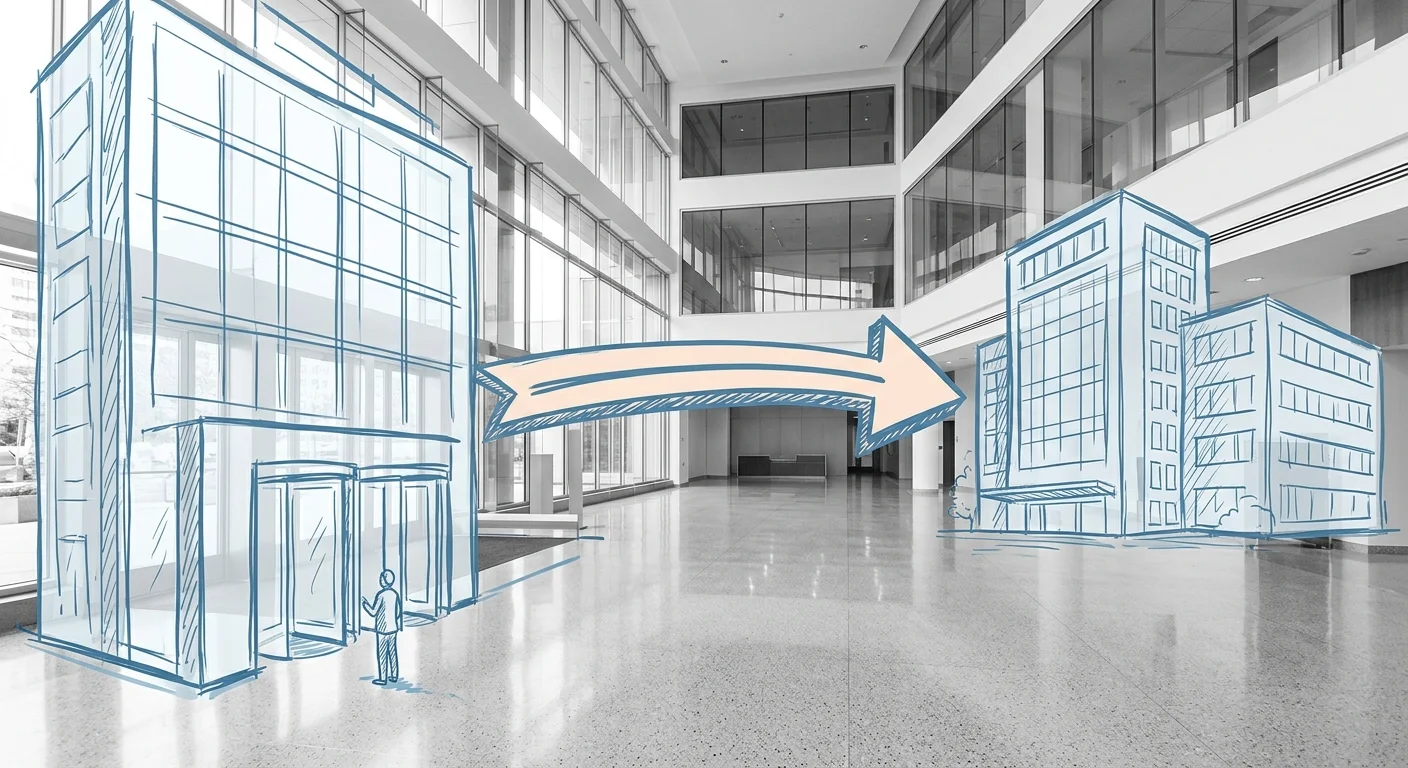
Touring without a formalized exclusive agreement doesn't leave you neutral. It hands the legal advantage to the other side before you've asked a single question about rent.
Here's the mechanism. Under California Civil Code Section 2079.13, the listing broker on a property is legally prohibited from acting as your exclusive representative in that same transaction — unless both parties sign written consent to dual agency. Without your own agreement formalized before the first tour, the only licensed professional in the room has a legal duty that runs to the landlord's income. Not yours.
The California DRE's published disclosure requirements confirm that mandatory disclosure rules apply to every licensed commercial broker in the state. But read what that disclosure actually says. It tells you who the broker works for. It doesn't provide a broker who works for you. That gap is structural — and it opens the moment you walk through a building door without exclusive representation in place.
Why Most Brokers Won't Tell You About the Dual Agency Trap
Most listing brokers won't explain what dual agency costs your negotiating position. That's not deception. It's math — they're legally required to protect the landlord's interests, not yours.
California Civil Code Section 2079.13 requires written consent from both tenant and landlord before dual agency can proceed. What it doesn't require: that the listing broker volunteer, unprompted, exactly what you give up by consenting. A tenant's financial interests and a landlord's financial interests are structurally opposed. Fiduciary duties of loyalty and full disclosure can't run in both directions from a single broker at the same time. The law acknowledges that conflict. It just doesn't fix it for you.
So the listing broker isn't the villain. They're doing exactly what their listing agreement and the law require: protecting the landlord's position. The problem is that a tenant who hasn't formalized exclusive representation before touring has no equivalent protection on their side. How that unprotected gap plays out on tenant improvement allowances and rent concessions is rarely part of the tour conversation. And by the time it becomes one, the structural damage is already done.
The California Department of Real Estate has statutory authority to suspend or revoke a broker's license for failing to disclose dual agency before a transaction. That enforcement mechanism exists to protect the public. But it only triggers after the violation. It doesn't rebuild the negotiating position you lost by touring unrepresented. Enforcement is correction. An exclusive agreement signed before the first tour is prevention — and prevention is the only version that actually helps you.
How Unrepresented Tenants Get Captured Before Negotiations Begin
Capture happens quietly. You schedule a tour through the listing broker, ask a few questions, walk out. You think you're still a free agent. You're not.
That first tour without a formalized exclusive agreement is when the negotiation's structure gets set. The listing broker now knows your timeline, your space requirements, and how interested you appeared. That information belongs to the landlord's team — because the listing broker's legal obligations run there under California Civil Code Section 2079.13. You walked away with nothing that creates leverage. You confirmed your interest and got no structural protection in return.
Without formalized representation, you're being shown a space. That's all. Formalizing exclusive tenant representation vs. dual agency before the first tour changes that entirely — from a tenant being walked through a building, to a tenant whose advocate is already working the competing options that create real negotiating pressure. The door isn't what matters. The structure behind it is.
| Scenario | Tenant Status | Broker's Legal Obligation | Negotiating Risk to Tenant |
|---|---|---|---|
| Tenant tours with no broker agreement in place | Unrepresented — no fiduciary advocate assigned | Listing broker's obligation runs exclusively to the landlord's income | Tenant's timeline, budget, and interest level become information the landlord's team holds — with no equivalent intelligence on the tenant's side |
| Tenant tours after consenting to dual agency | Nominally represented — but broker serves two opposing parties | Split between landlord and tenant; full loyalty to neither | Broker cannot advocate aggressively for lower rent, higher tenant improvement allowances, or free rent periods without undermining their obligation to the landlord |
| Tenant tours with a formalized exclusive representation agreement signed before the first visit | Fully represented — broker's legal duty runs solely to the tenant | Exclusive obligation to the tenant's financial outcomes, by contract and by statute | Tenant enters every tour with a broker already working competing options — the structural foundation for real negotiating pressure |
| Tenant tours multiple properties through multiple listing brokers with no exclusive agreement | Unrepresented across all buildings — each listing broker serves a different landlord | Each broker's obligation runs to the landlord of the property they represent, not to the tenant moving between buildings | No single advocate is synthesizing competing options into leverage; the tenant is comparison shopping without anyone turning those comparisons into negotiating power |
The Step-by-Step Process for Formalizing Exclusive Representation Before Your First Tour

Now comes the part that actually changes the outcome. Three steps. All of them happen before you set foot in a building. None of them are optional.
Skip one and you don't have partial protection. You have none.
Confirm Your Broker Represents Tenants Only
The first question isn't about available space. It's about whose side of the table the broker is on.
A broker who represents both tenants and landlords — depending on the deal — can't give either party undivided loyalty. That's not a personality flaw. That's how fiduciary duty works. Loyalty, full disclosure, and absolute alignment with one principal's financial interests can't run in two directions at the same time. One of those directions will always come second.
So ask it directly: does this broker take listings? Do they represent landlords? If the answer is yes to either, the incentive structure is already split — no matter how the broker frames the relationship. A dedicated tenant representative works for occupiers only. That's the only starting point where the structure is clean. Tenant representation in Los Angeles begins with that commitment — before a single property comes up.
Review and Execute the Written Agreement Before Any Property Contact
The written agreement isn't paperwork that follows the relationship. It's what creates the relationship.
Under California Civil Code Section 2079.16, brokers must provide a written agency disclosure form before a lease contract is entered. That form tells you which fiduciary duties exist and who holds them. But it's a notification. The exclusive representation agreement is what actually assigns the protection. It establishes your broker's duties before any property contact, defines the geographic scope and property types covered, and closes off the conflicts that surface when one broker tries to serve two principals with opposing financial interests.
And timing is the thing most tenants get wrong. An agreement signed after you've already toured through a listing broker — after that broker has logged your deadline and your level of interest — doesn't undo what already happened. The California DRE's mandatory disclosure framework applies to every licensed commercial broker in the state. It doesn't retroactively reassign whose interests were being served during that first walkthrough. Execute the agreement before any property contact. That's the only sequence that keeps your leverage intact from the start.
Understand What the Agreement Covers — and What It Doesn't
Here's what surprises most tenants: the agreement protects you from obligations, not just conflicts.
- Geographic scope — which markets and submarkets your broker is authorized to work on your behalf
- Property types covered — office, retail, industrial, or a defined combination
- Term length — how long the exclusive relationship runs before either party can reassess
- What counts as a protected transaction — so no toured property falls outside the agreement's coverage
- Your obligations — and the limits on them, including what you are not required to do or pay out of pocket
But the agreement doesn't lock you into one building, one submarket, or one outcome. It does the opposite. It gives your broker the structural foundation to run a real comparison across competing options — the kind of comparison that creates actual negotiating pressure. Without it, there's nothing to compare. With it, the landlord across the table knows you have somewhere else to go.
| Step | Action Required | Why It Matters Before Touring | California Statutory Basis |
|---|---|---|---|
| Step 1 | Confirm the broker represents tenants exclusively — no landlord-side listings, no dual agency in any transaction | A broker who takes listings has a built-in conflict before the first conversation. Undivided loyalty cannot flow in two directions. The structural alignment must be clean from the outset — before any property contact occurs. | California Civil Code Section 2079.16 requires written disclosure of fiduciary duties and to whom they are owed before a lease contract is entered |
| Step 2 | Execute a written Exclusive Tenant Representation Agreement defining geographic scope, property types, duration, and termination rights | The written agreement is what creates the legal relationship — not the conversation that precedes it. Without it, the broker's duties are undefined and the tenant's leverage is unprotected, even if both parties intend to work together. | California Civil Code Section 2079.16 mandates documentation of the specific fiduciary duties owed prior to any lease transaction; California DRE disclosure guidelines apply to all licensed commercial brokers statewide |
| Step 3 | Confirm the agreement is executed before scheduling or attending any property tour | A tour taken before the agreement is signed is a tour taken unrepresented. Information shared during that tour — timeline, requirements, level of interest — flows to the landlord's team. The agreement must precede any property contact to lock in leverage from the start. | California Business and Professions Code Section 10176 establishes DRE enforcement authority for agency violations; retroactive realignment of fiduciary duty after a tour has occurred is not available under California law |
| Step 4 | Verify the agreement explicitly assigns fiduciary duties of loyalty, full disclosure, and undivided care to the tenant alone | A signed agreement that still permits the broker to represent landlords in other transactions, or that fails to define exclusive loyalty to the tenant, does not close the structural gap. The language of the agreement determines the scope of the protection. | Cornell Law School's Legal Information Institute defines fiduciary duty as requiring undivided loyalty and absolute disclosure to the principal client — obligations that must be assigned in writing to be enforceable |
Who This Process Is — and Isn't — Designed For

The tenants who walk into this process don't all look alike. Some are relocating under a hard deadline. Others are expanding into a second submarket for the first time. A few are staring at a renewal quote that may or may not reflect what the market is actually doing — they don't know, because they have nothing to compare it against.
This process works for all of them. But what it delivers depends entirely on whether they're willing to let the comparison run.
The process has one hard requirement: the tenant has to be willing to tour competing options and let the comparison do its work. That comparison is what builds real pressure against a landlord who has negotiated hundreds of leases and reads an uncommitted tenant the moment they walk in.
Close fast, pick the first building, skip the friction — and the structural protection has nothing to work with. You cannot spend negotiating power you have not built.
The line runs on behavior, not deal size.
The Tenants Who Benefit Most from Formalizing Early
The tenants who gain the most from formalizing early are the ones facing a real decision — multiple submarkets in play, live options on the table, and a landlord on the other side who already knows how to read an unrepresented shopper.
For those tenants, the fiduciary divide between a dedicated tenant advocate and a listing broker is not an abstraction. Under California Civil Code Section 2079.13, the listing broker's legal obligation runs to the landlord's income. Whether your rent number moves — and by how much — depends on whether someone in the room is legally bound to argue for yours.
Decision-makers negotiating leases in the 2,000 SF to 100,000+ SF range — across office, medical office, retail, or industrial — are the clearest fit. So are tenants within twelve months of a renewal who haven't confirmed whether their current terms reflect live submarket rates. Both situations share the same problem: a number on paper with nothing to compare it against.
Owner-users evaluating a purchase to occupy belong here too. The same structural protection applies. Anyone who hasn't yet read how the fiduciary divide separating exclusive tenant advocacy from listing-side brokerage works in practice should do that before entering a transaction on either side of a lease or a purchase. Under California Civil Code Section 2079.13, the listing broker's legal obligation runs to the landlord — not to you. That doesn't change because the transaction feels collaborative.
What these tenants share is a willingness to run the comparison. Live competing options in the same submarket, this quarter. Not last year's data. Not what a colleague paid two zip codes over.
That comparison is what turns a signed agreement into real pressure. The agreement opens the door. The comparison is what you bring through it.
When This Approach Isn't the Right Fit
But this process isn't for everyone. Saying so plainly is more useful than softening it.
A tenant who wants to run through the listing broker — believing that skipping a separate advocate saves money — won't find what they're looking for here. The California DRE requires disclosure from every licensed commercial broker in the state. But disclosure tells you whose side the broker is on. It doesn't put a broker on yours.
The conflict documented under California Civil Code Section 2079.13 doesn't disappear because a tenant decides to work around it. It goes unaddressed — until the lease terms arrive and there's nothing left to negotiate.
And a tenant who wants the fastest possible close — no touring, no comparison, no alternatives on the table — is equally outside the fit. Negotiating power means having somewhere else to go. Without that, the agreement is a document with nothing behind it.
This process is built for tenants who want their legal protection in place before the first building is toured and their negotiating position structured before the first number is named. Skip the structure, and the number you end up with will be the landlord's number.
| Tenant Profile | Deal Size | Timeline | Exclusive Representation Recommended |
|---|---|---|---|
| Tenant relocating or expanding into Southern California | 2,000 SF to 100,000+ SF across office, medical office, retail, or industrial | Actively evaluating submarkets now or within the next twelve months | Yes — exclusive representation locks in fiduciary alignment before any property contact occurs |
| Tenant within twelve months of lease renewal | Any size — renewal terms apply regardless of square footage | Renewal window open; landlord has not yet issued a formal renewal proposal | Yes — live submarket comparison is required to verify whether the landlord's opening number reflects current market conditions |
| Owner-user evaluating a purchase to occupy | Purchase transactions where the buyer intends to occupy the property | Early evaluation stage, before engaging a listing-side broker | Yes — the same fiduciary divide between exclusive advocacy and listing-side brokerage applies to purchase transactions as to leases |
| Tenant planning to transact through the listing broker | Any size | Seeking the fastest possible path to closing without touring alternatives | No — disclosure of the conflict does not resolve it; the structural misalignment between the broker's obligation to the landlord and the tenant's interests remains in place regardless of deal timeline |
| Tenant committed to a single building with no interest in comparing alternatives | Any size | Decision already narrowed before a formal search process begins | No — exclusive representation requires a comparison process to function; without competing options on the table, the fiduciary alignment has nothing to act on |
| Landlord seeking representation for their building or investor acquiring property for income | Any size | Any stage | No — exclusive tenant and owner-user representation is structurally limited to occupiers; landlord-side and investment-side transactions are outside scope entirely |
Frequently Asked Questions
Good. Ask them. The answers below are the ones that change what a tenant does next.
None of these are neutral questions. The structure either protects you or it doesn't.
Why must I sign an Exclusive Tenant Representation Agreement before touring commercial properties in Los Angeles?
Because the listing broker's legal obligation to the landlord is already active the moment you walk through the door.
You don't get to retroactively assign fiduciary protection. Without a formalized exclusive representation agreement in place before you tour, you are an unrepresented shopper in a room with a broker whose duties run in the opposite direction. Under California Civil Code Section 2079.13, that broker cannot act as your exclusive representative — and without your own agreement, no one in the building is legally obligated to protect your position.
Execution after the first tour doesn't undo what happened during it. The broker already knows your timeline and your interest level. That information belongs to the landlord's side. The agreement closes that window. But only if it's signed before the first door opens.
Can I tour properties in Orange County with multiple tenant representation brokers at the same time?
No. Multiple brokers doesn't mean more competition. It means no one is fighting hard for you.
A broker who knows you're also working with two others has no structural reason to push hard on your rent number or your tenant improvement dollars. Fiduciary advocacy requires exclusivity. Split the engagement and you split the obligation — which means nobody is fully on your side.
And if one of those brokers holds a listing on a property they show you in Orange County, the conflict that California Civil Code Section 2079.13 requires to be disclosed and consented to doesn't disappear because the arrangement was informal. The conflict is structural. Informality doesn't neutralize it.
How does California Civil Code Section 2079.13 protect my lease negotiations?
California Civil Code Section 2079.13 establishes that a listing broker cannot legally act as your exclusive representative in the same transaction. The fiduciary duties pull in opposite directions — and the law is explicit that they cannot occupy the same broker at the same time.
If a broker wants to represent both the landlord and the tenant, that dual agency must be disclosed in writing and consented to by both parties. What the statute protects is clarity of obligation. A tenant who formalizes exclusive representation before touring has a legal basis for demanding that their broker's duties run entirely to them.
But the statute cannot retroactively create that protection. Tour first, formalize later — and the exposure that occurred during that unprotected tour stands. The law doesn't undo it. It just names what should have been in place before it happened.
Does signing an exclusive tenant rep agreement obligate me to pay the broker out of pocket?
It doesn't cost you anything out of pocket. The commission is already built into the landlord's numbers before you walked in the door. Bring a dedicated tenant rep or don't — that money is already spoken for. Without one, it stays on the landlord's side of the table.
What the agreement does define is the relationship. Your broker works exclusively for you. The search scope and timeline are clear. The duties of loyalty, care, and full disclosure run in your direction.
The financial obligation is on their end. Not yours.
What happens if a broker tries to represent both me and the landlord on the same property?
Under California law, a broker attempting to represent both the tenant and the landlord on the same property must disclose that dual agency and obtain written consent from both parties before proceeding. Without that disclosure, they are in violation of California Civil Code Section 2079.13.
And under Business and Professions Code Section 10176, the California Department of Real Estate has the authority to suspend or revoke a broker's license for failing to make that disclosure before the transaction. That enforcement mechanism exists. But it triggers after a violation — it doesn't restore the negotiating position you lost while the conflict was unaddressed.
Enforcement is correction. An exclusive representation agreement, signed before any property contact, is prevention. It makes the conflict impossible to ignore — and puts a clearly aligned advocate in your corner before the listing broker ever gets to measure how serious you are.
The Agreement Is the Leverage
The agreement isn't paperwork that follows a decision. It is the decision.
Before a single building gets toured. Before a listing broker logs your timeline and reads how serious — or how pressed — you actually are. Before a landlord calculates whether you have anywhere else to go. The formalized exclusive representation agreement closes the door on every conflict that quietly erodes your position. It gives you something no goodwill or persistence can manufacture after the fact: a broker whose legal obligations run entirely to your side of the table.
Walk into a Southern California commercial property without that agreement and you walk into a negotiation already behind. The listing broker knows it. The landlord's team knows it. You're the only one in the room who doesn't have a legal advocate assigned to your outcome.
Peninsula Commercial Real Estate Group exists for tenants who want the structure right before the search begins — who understand that comparing live, competing options in the same submarket is what turns a signed agreement from a document into a working instrument.
So if a lease decision is coming — a renewal, a relocation, an expansion into a second submarket — the sequence matters more than the speed.
Formalize the representation first. Establish whose legal obligation runs to your financial outcomes before anyone tours a building on your behalf. That's the only sequence that locks the protection in from the start — not from the moment you find the right space, but from the moment the process begins.
Right now, somewhere in Los Angeles or Orange County, a tenant is walking into a building whose listing broker's legal obligation runs to the landlord's income. The door is open. Your leverage isn't.
That comparison — what this market will actually give you, right now — is the conversation worth having before you tour a single space. Corina Irvin at Peninsula Commercial Real Estate Group handles every engagement personally. Bring your situation, and you'll get a straight read on whether the structure fits and where your negotiating position actually stands.