
Is Buying Commercial Real Estate Better Than Leasing for Southern California Businesses in 2026?
For most established Southern California businesses in 2026, buying commercial real estate outperforms leasing on a long-term financial basis. The advantage is structural, not circumstantial.
Every lease payment transfers capital out of the business permanently. It satisfies an obligation, clears the period, and leaves nothing on the business's balance sheet. An owner-user purchase redirects a portion of that same capital into equity — ownership of the physical asset the business already requires to operate.
For businesses with stable space requirements, ownership offers three financial advantages leasing cannot replicate. Each mortgage payment builds equity rather than transferring wealth to a landlord. Nonresidential commercial property is depreciated over a 39-year straight-line recovery period under federal tax law — a non-cash deduction that reduces taxable income annually without additional cash outlay. And ownership establishes a fixed cost baseline, removing exposure to rent escalations at renewal — a recurring risk in Southern California submarkets where market-rate rent adjustments are common.
Leasing carries its own financial logic. Ordinary and necessary commercial rent payments are generally fully deductible in the year they are paid, which preserves capital flexibility and keeps the balance sheet free of real estate debt. Businesses with high growth rates, uncertain space needs, or capital better allocated to core operations often find leasing the more defensible financial choice.
The financing structure for owner-user purchases is more accessible than most businesses expect. SBA 504 loans require a minimum of 51% owner-occupancy for existing buildings and can support up to 90% loan-to-value structures, substantially reducing the upfront equity required to close.
The right answer depends on business stability, predictability of space requirements, and whether equity accumulated in real property justifies redirecting capital from operations. The default assumption — that leasing is the lower-risk choice — warrants analysis before it is accepted.
Last Updated: August 24, 2026
- • What 'Owner-User' Actually Means — and Why It's a Different Decision
- • The Tax and Equity Math of Owning vs. Leasing
- • How SBA 504 Financing Makes the Purchase Accessible
- • When Leasing Still Makes More Sense
-
• Frequently Asked Questions
- • Is buying a commercial property in Southern California better than leasing in 2026?
- • What are the tax advantages of owner-user commercial real estate purchases under current IRS rules?
- • How does an SBA 504 loan help Southern California businesses buy office or industrial space?
- • Why do most national brokerage firms push Southern California tenants toward leasing over buying?
- • What is the minimum owner-occupancy requirement for an owner-user commercial property purchase?
- • Can a business deduct rent payments the same way it deducts depreciation on owned property?
- • The Bottom Line on Buying vs. Leasing in Southern California
What 'Owner-User' Actually Means — and Why It's a Different Decision

An owner-user purchase is simple: the business buys the building it operates from. Not as an investor. Not as a landlord. As the occupant — who decided that owning makes more sense than paying rent indefinitely.
Most Southern California business owners have never been offered this path. Not because it doesn't work for them — because the default conversation starts with leasing and ends there.
The owner-user model gets tagged as a specialty transaction for large companies or sophisticated investors. That framing is exactly backwards.
Here's the real difference: who captures the equity. Under a lease, every payment covers occupancy — and then it's gone. The wealth transfers to whoever holds the deed. Under an owner-user structure, that same capital starts building an asset the business controls.
The rent check stops being a one-way valve. How SBA 504 financing structures work for owner-users makes clear why this path is accessible to far more businesses than most brokers will ever tell you.
The Listing Broker Problem Nobody Talks About
When a business looks at a building for sale, there's a listing broker on the other side of that transaction. Their legal obligation runs to the seller — not to you. That's not a personality question. It's a structural one. California real estate brokers are required by law to disclose their agency relationship and act in the interest of the party they represent. The seller's broker represents the seller.
Most business buyers don't know this going in. They meet a knowledgeable broker at the property, get their questions answered, and assume the relationship is neutral.
It isn't. The broker who introduces the property, explains the terms, and walks you through the deal has a fiduciary obligation running in one direction — and it isn't toward you.
That's what independent owner-user representation is for. A buyer's broker owes the duty to the buyer: pulling comparable properties, modeling the purchase economics against the business's actual capital costs, and negotiating without a competing obligation to the other side.
Walk into that purchase without your own representation, and the only professional in the room who knows the market is working for the seller.
Who This Purchase Path Is Not For
But this isn't the right move for every business. If the operation is growing fast and you can't project your space needs two to three years out, locking capital into a fixed asset introduces real risk. A building that no longer fits the operation doesn't become neutral — it becomes a drag. Ownership is a commitment the balance sheet carries.
And if you're buying a building to lease it out to others, this conversation isn't for you. The owner-user model requires the purchasing business to occupy the property as its primary operating location. Passive acquisition — buying to collect rent from unrelated tenants — is a different transaction entirely. Different financing. Different tax treatment. Different representation needs. That's not what this is.
| Transaction Type | Who the Broker Represents | Whose Interests Are Protected | Typical Outcome for the Buyer |
|---|---|---|---|
| Owner-User Purchase | Buyer's broker represents the buyer exclusively | Buyer's capital, space economics, and long-term equity position | Buyer negotiates with full market context and a fiduciary in their corner |
| Direct Purchase from Listing (no buyer representation) | Listing broker represents the seller | Seller's price, terms, and disposition timeline | Buyer accepts terms without independent analysis or advocacy |
| Lease Through Listing Broker | Listing broker represents the landlord | Landlord's rental income and lease structure | Tenant signs terms that were never independently evaluated |
| Passive Investment Purchase | Listing broker represents the seller | Seller's exit economics | Buyer acquires an asset to lease to others — different financing, tax treatment, and representation needs apply |
The Tax and Equity Math of Owning vs. Leasing
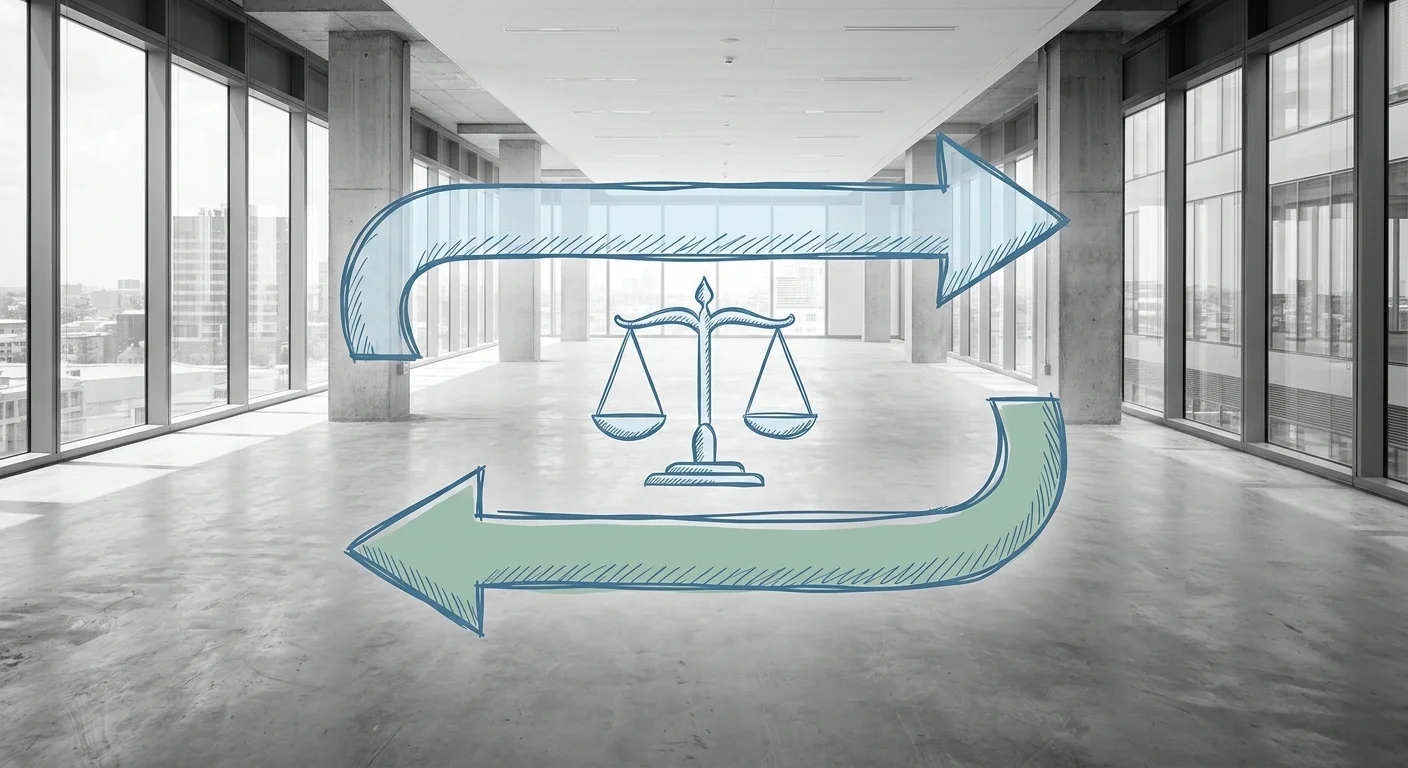
The financial argument for owning comes down to one question: where does the money go after it leaves the business?
A rent check covers occupancy. It satisfies the contract. And then it's gone — no asset, no equity, no return path.
An owner-user purchase changes that structure at the foundation. Each mortgage payment reduces principal. The business is acquiring an asset incrementally — month by month — instead of simply paying for the right to be there.
And here's what most Southern California businesses have never been asked: run the full-period comparison. Not just year one. Not just the down payment. The entire holding period. The default assumption is that leasing costs less. It doesn't. The evidence on why owner-occupied commercial real estate outperforms long-term leasing is consistent — and most businesses arrive at it late, if at all.
But equity isn't the only place the math diverges. Tax treatment operates differently depending on whether the business leases or owns — and the difference compounds over time.
Depreciation, Deductions, and What the IRS Actually Allows
On the leasing side, the picture is clean. IRS guidelines confirm that ordinary and necessary commercial rent payments are fully deductible in the year they are paid. The whole payment comes off taxable income now. No amortization. No recovery schedule. No complexity — and no asset at the end of it.
Ownership introduces a different deduction: depreciation. According to IRS depreciation rules, nonresidential real property is depreciated over a straight-line recovery period of 39 years.
That means the building's value comes off taxable income in equal annual installments across nearly four decades. The deduction is non-cash — the business doesn't write another check to claim it. It runs in the background, against operating income, whether the market moves or not. That's a structurally efficient offset most tenants never access.
Both deductions reduce taxable income. But depreciation does something rent cannot.
The rent deduction disappears the moment the lease ends. The depreciation schedule runs independent of occupancy costs — and the asset holds value long after the deduction clears.
The Equity Accumulation Owners Build That Tenants Never See
Equity accumulation is the return tenants never see.
Every month a business leases, the landlord's position in that building grows — financed, in part, by the rent checks the business is writing. The business gets occupancy. The landlord gets an appreciating asset. That split isn't neutral. It's a structural transfer, and it runs on autopilot for the full length of every lease.
The real question isn't whether owning feels better than leasing. It's whether the equity being built — through principal paydown, depreciation benefits, and potential appreciation — clears the hurdle rate the business applies to every other capital decision. If it does, ownership isn't a lifestyle preference. It's the more rational allocation.
Tenant representation that runs the full financial model — purchase against lease, holding period against rent escalations — is how that comparison gets made on real numbers instead of assumptions. Most businesses never see that model. They make the call without it.
| Financial Factor | Leasing (Tenant) | Owning (Owner-User) | Long-Term Impact |
|---|---|---|---|
| Monthly payment destination | Entire payment covers occupancy only — no asset created, no equity retained | Payment splits between principal reduction and interest — a portion builds ownership stake each month | Owner accumulates an appreciating asset; tenant accumulates nothing |
| Tax deduction mechanism | Rent payments are fully deductible in the year paid — simple, immediate, and gone | Building value is deducted through straight-line depreciation spread across a 39-year recovery period — a non-cash deduction tied to a real asset | Depreciation continues independent of market conditions; rent deduction ends the moment payments stop |
| Balance sheet effect | No asset recorded; lease liability appears on the balance sheet with no offsetting owned asset | Building appears as an asset; mortgage appears as a liability — net equity grows as principal is paid down | Owner builds net worth through occupancy; tenant's occupancy costs leave no balance sheet trace |
| Exposure to rent escalation | Fully exposed — market rate increases at renewal are absorbed by the tenant with no offset | Fixed-rate financing locks the debt service cost; the business is not subject to landlord-driven increases | Owner converts a variable cost into a predictable one; tenant's occupancy cost is permanently subject to market movement |
| Capital efficiency evaluation | Capital deployed into rent generates occupancy and no financial return | Capital deployed into a purchase must clear the business's own hurdle rate — if equity buildup and tax benefits exceed that threshold, ownership is the more rational allocation | Ownership converts a pure operating expense into a capital allocation decision with a measurable return |
| Exit or sale optionality | No exit value — tenant vacates, obligation ends, no asset to monetize | Owner can sell the building, lease it to a successor, or use it as collateral — the asset retains independent value | Ownership creates a second liquidity event; leasing creates none |
How SBA 504 Financing Makes the Purchase Accessible
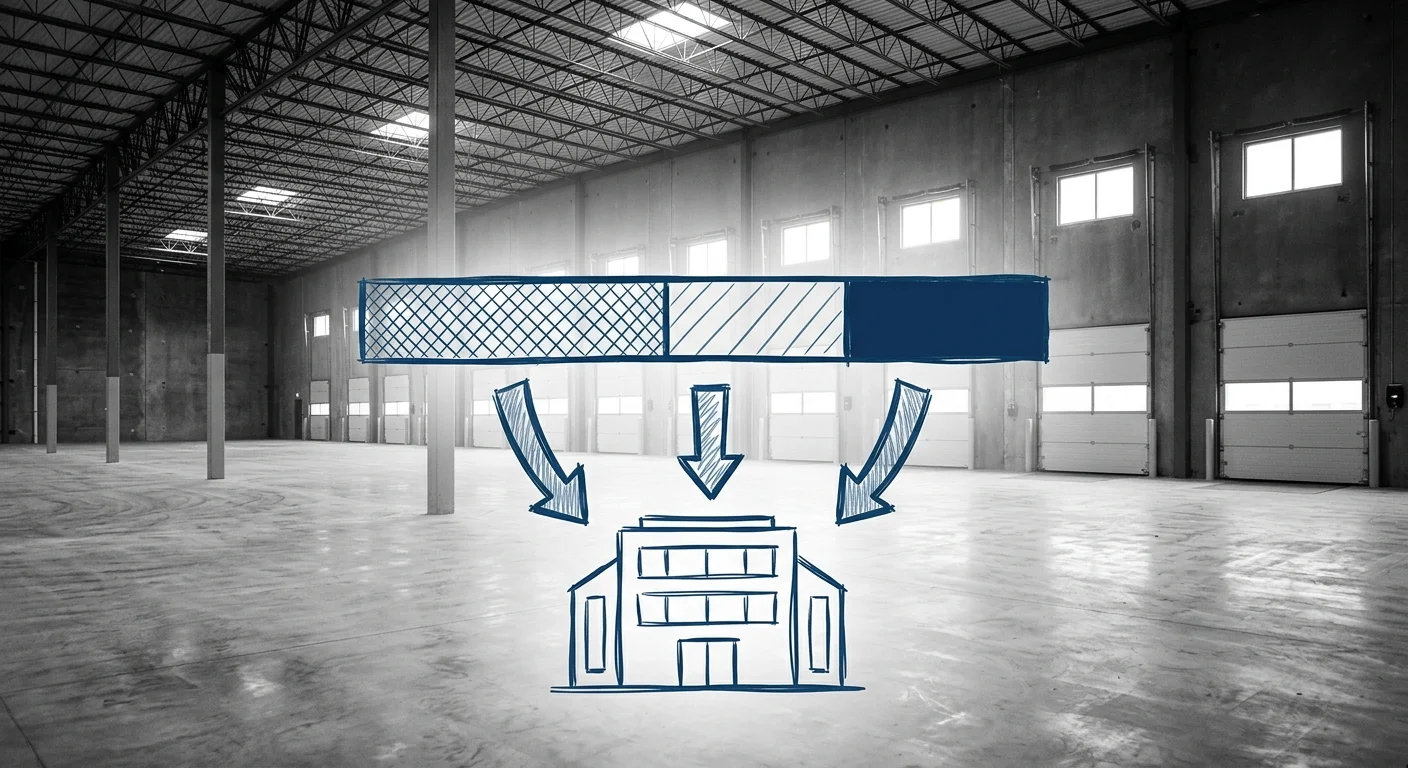
The down payment is usually the first objection. It's a fair one. But for most Southern California businesses, it's built on the wrong assumption about what buying actually costs. The SBA 504 loan program exists to lower that barrier — specifically for businesses buying the space they operate from.
Per SBA program guidelines, SBA 504 loans can support up to 90% loan-to-value financing. A qualified business can buy a commercial building with 10% down — not the 25% to 35% a conventional commercial lender requires. That gap isn't cosmetic. The capital that stays in the business instead of going into the down payment is working capital the business keeps and deploys.
For businesses watching rent escalations compress their renewal leverage, the 504 structure changes the question entirely. It's no longer whether the business has enough cash to buy. It becomes which use of that capital produces the better long-term return — a question most businesses have never been asked to answer seriously.
Occupancy Requirements and Eligibility Criteria
The 504 program has one hard occupancy rule: the purchasing business must occupy at least 51% of the building if the property already exists. That number is the line between an owner-user transaction and an investment acquisition. The program is built for one. It doesn't work for the other.
That 51% line matters beyond the loan paperwork. The California Department of Real Estate requires brokers to disclose their agency relationship and act in the interest of the party they represent. A business walking into a 504-financed purchase without independent representation is sitting across from a seller's broker who knows that building's economics cold — and whose legal obligation runs to the seller, not to you. That's not a neutral room.
Fall below 51% occupancy and the 504 program doesn't apply. This matters most when the business is eyeing a mixed-use or partially tenanted building. How much square footage the business actually needs isn't just an operations question. It's what determines whether this financing path is even on the table.
How the Down Payment Structure Actually Works
The 504 structure brings three parties to the table: a conventional lender covering roughly half the project cost, a Certified Development Company providing the SBA-backed portion, and the business contributing the remaining 10%. That low equity requirement is the program's entire point. It lets a business enter an owner-user purchase without stripping working capital from operations — which is the practical reason most businesses never seriously consider buying in the first place.
The rent analogy holds here. A business writing a monthly rent check sends capital in one direction with no return path. A business making a 504-structured mortgage payment splits that same flow — covering occupancy while also reducing principal on an asset it controls. The valve, for the first time, runs both ways.
| SBA 504 Criteria | Existing Buildings | New Construction | Notes for Southern California Buyers |
|---|---|---|---|
| Maximum Loan-to-Value | Up to 90% | Up to 90% | The 10% equity requirement is the 504's core advantage over conventional commercial financing |
| Minimum Down Payment | 10% of project cost | 10% of project cost | Capital that stays in the business rather than going to a conventional lender's equity requirement |
| Agency Disclosure Requirement | Required at transaction outset | Required at transaction outset | California brokers must disclose their agency relationship and the party they represent — independent representation corrects seller-side alignment |
When Leasing Still Makes More Sense
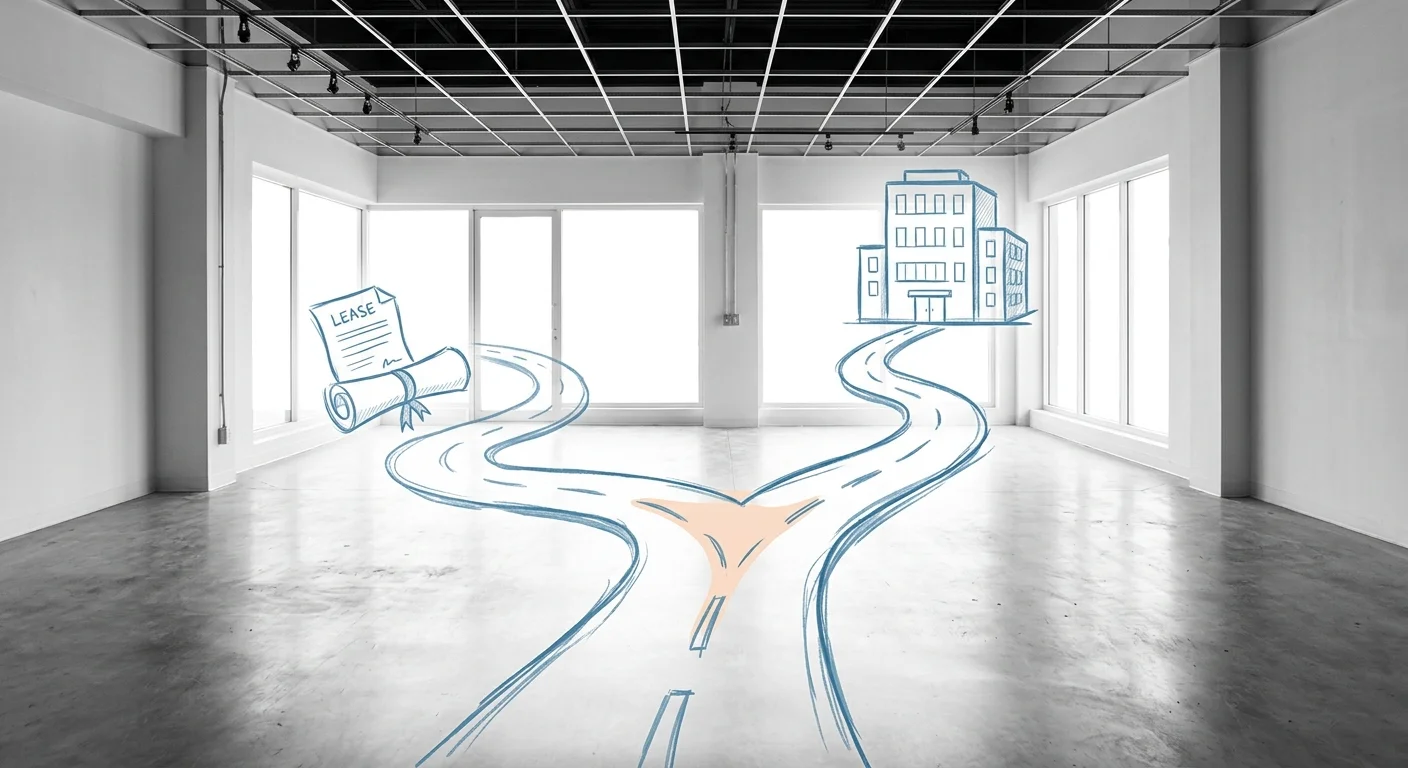
Buying is not always the right answer.
That is not a hedge. It is an operational fact, and any analysis that pretends otherwise is selling something.
Ownership makes sense when a business knows where it's going. When it can project its space requirements with reasonable confidence. When its balance sheet is stable enough to carry a long-term fixed asset without strain.
Strip away those conditions and leasing isn't a consolation prize. It's the structurally correct answer.
Two situations consistently point toward leasing. Not because leasing builds more value — it doesn't. But because ownership, in these cases, creates a constraint the business can't afford to carry.
Operational Flexibility vs. Long-Term Space Stability
Space planning has gotten harder since the pandemic, especially for Southern California businesses still figuring out what their footprint actually needs to look like. A company hiring aggressively, entering new markets, or restructuring its teams can't always commit to a fixed building for ten years without real risk that the space stops fitting the operation long before the loan does.
Buying locks the balance sheet into an answer the business hasn't finished forming yet. That's not a financing problem. That's a timing problem.
Operational agility and long-term space stability don't always point in the same direction. A business that needs to scale its square footage by fifty percent in three years isn't well served by an asset it controls but can't easily exit.
Modeling lease escalations versus fixed mortgage payments side by side shows that a fixed payment's predictability is a genuine advantage. But only when the business is confident it will occupy that space across the full holding period. Without that confidence, predictability becomes a trap.
Leasing preserves the ability to leave. A tenant whose operation outgrows a building can move. An owner has to sell, sublease, or carry a property that no longer fits the business.
For a company still in its growth phase — before footprint, team structure, and space needs have stabilized — that flexibility has real dollar value. The rent check is still a one-way valve. But a lighter balance sheet has its own strategic logic when the business's direction is still shifting.
Capital Allocation: When the Business Needs Its Cash Elsewhere
Here's the second situation: a business with stable space requirements where ownership still isn't the right place to put the money.
Every down payment has an opportunity cost. If that equity would generate a higher return deployed into core operations — hiring, equipment, inventory, product development — the math favors leasing, even accounting for the equity a purchase would build over time. Real estate ownership is not automatically the best use of available capital. It has to beat what the business would otherwise do with that money.
Leasing keeps working capital in the business. The IRS tax treatment supports this: ordinary and necessary commercial rent payments are fully deductible in the year they're paid. The business captures the cost reduction immediately instead of recovering it gradually through depreciation spread across decades.
For a business where capital velocity is a genuine competitive advantage, locking equity into real estate can cost more in opportunity than it returns. Corina Irvin runs this comparison as a standard step in any owner-user evaluation — because the right answer comes from the business's actual numbers, not a default preference for one structure over the other.
| Business Profile | Buy or Lease? | Primary Reason | Key Risk to Watch |
|---|---|---|---|
| Early-stage or high-growth company | Lease | Space requirements will likely change faster than a purchase horizon can accommodate | Outgrowing or underleveraging the building before the holding period ends |
| Business with unstable team structure or headcount | Lease | Operational agility requires exit optionality a fixed asset cannot provide | Carrying a property that no longer fits the operation |
| Capital-intensive business where velocity of working capital is a competitive advantage | Lease | Equity locked into real estate may underperform capital deployed into core operations | Opportunity cost if the business's internal return on capital exceeds real estate returns |
| Business entering a new geographic market or product line | Lease | Location requirements are not yet validated — committing to a fixed asset before the market is proven creates structural risk | Owning a building in a submarket the business later needs to exit |
| Established business with stable footprint and long operating history | Buy | Predictable space needs make a fixed asset and fixed payment structure advantageous over time | Underestimating capital requirements for maintenance, renovation, or future expansion |
| Owner-user candidate below the occupancy threshold for the target building | Lease or reassess acquisition target | A building the business cannot occupy at the required level does not qualify for owner-user financing structures | Pursuing a mixed-use asset that ties up capital without the financing advantages owner-user transactions provide |
Frequently Asked Questions
The structural case is made. But right before a business commits, the specific questions come up — financing, taxes, occupancy rules, and why every national firm seems to steer tenants away from buying.
Here's what actually governs each one.
Is buying a commercial property in Southern California better than leasing in 2026?
For an established business with stable space needs, buying is the stronger long-term position. A rent check moves capital in one direction with no return path. A mortgage payment covers the same occupancy need and reduces principal on an asset the business controls. That difference compounds across ten or fifteen years. Leasing cannot replicate it. Ownership builds something leasing never will — and the only businesses that miss that are the ones who never ran the comparison.
What are the tax advantages of owner-user commercial real estate purchases under current IRS rules?
Two mechanisms matter. First, the building is depreciable. The IRS recovers nonresidential real property over 39 years on a straight-line schedule — the business deducts a portion of the building's cost every year, reducing taxable income while the asset can still appreciate. Second, mortgage interest is generally deductible as a business expense. Rent payments are fully deductible in the year they are paid — clean and immediate. But that deduction disappears when the lease ends. Ownership trades some of that immediacy for a recovery schedule tied to an asset the business actually keeps.
How does an SBA 504 loan help Southern California businesses buy office or industrial space?
The SBA 504 program lets a qualifying business finance a commercial property with as little as 10% down. A conventional lender typically requires 25% to 35%. The 504 structure splits the financing three ways — a conventional lender covers roughly half the project cost, a Certified Development Company provides the SBA-backed portion, and the business contributes the remaining equity. In Southern California, where purchase prices are substantial, that lower equity requirement is often the line between ownership being viable and a business assuming it isn't.
Why do most national brokerage firms push Southern California tenants toward leasing over buying?
The incentive structure at large national firms rewards transaction volume. Leases generate recurring commissions — renewals, expansions, relocations — that a single purchase does not. There's also a representation conflict built into the process. California brokers are legally required to disclose their agency relationship and act in the interest of the party they represent. A business approaching an owner-user purchase through a listing broker is negotiating with someone whose legal obligation runs entirely to the seller. The push toward leasing is partly structural, partly financial. It is rarely disclosed in those terms.
What is the minimum owner-occupancy requirement for an owner-user commercial property purchase?
For an existing commercial building, the purchasing business must occupy at least 51% of the usable square footage to qualify for an SBA 504 loan. That threshold is the line between an owner-user transaction and an investment acquisition. A business looking at a partially tenanted property needs to confirm its own occupancy meets that floor before building the 504 structure into any purchase analysis. Fall below 51%, and the financing path changes entirely.
Can a business deduct rent payments the same way it deducts depreciation on owned property?
Not in the same way. Rent payments are generally fully deductible in the year they are paid — immediate, no complexity. Depreciation on owned property works differently. The deduction spreads over 39 years on a straight-line schedule. Gradual, not immediate. But ownership stacks mortgage interest deductibility on top of that, and eventually puts an asset on the balance sheet. Leasing captures the full deduction now. Ownership trades some of that immediacy for a longer recovery tied to equity the business actually keeps.
The Bottom Line on Buying vs. Leasing in Southern California
The rent check is a one-way valve.
Every payment covers occupancy, satisfies the contract, and disappears. Nothing returns. Nothing accumulates. The capital leaves the business and builds equity on someone else's balance sheet — not the business's own.
An owner-user purchase doesn't eliminate that flow. It redirects it. The mortgage payment covers the same occupancy need. But part of it reduces principal on an asset the business controls. For the first time, the valve runs both ways.
Buying is the stronger long-term position when the business knows its space requirements, can hold a fixed asset, and wants the mortgage payment doing double duty — covering occupancy and building equity at the same time. The SBA 504 program cuts the entry barrier lower than most businesses expect. A qualified buyer can enter a purchase at 10% down instead of the 25% to 35% a conventional lender demands.
Leasing wins when the business needs to stay mobile, or when its own cost of capital makes core operations a better use of available funds than a down payment.
But neither answer is universal. Both are knowable — if the comparison runs on real numbers, and if the person running it answers to the business and not to the building.
That last part is the whole problem.
A business negotiating an owner-user purchase without independent counsel is sitting across from a seller's broker whose legal obligation runs entirely to the other side of the table. Peninsula Commercial Real Estate Group builds the full financial model before a business commits — purchase against lease, holding period against rent escalations, 39-year depreciation schedule against immediate deductibility. Both paths, real numbers, no thumb on the scale.
The analysis is what changes the outcome. The representation is what makes the analysis honest. Every business that defaults to leasing because no one ran the numbers is still writing a check that moves in one direction only — and the only thing standing between that business and a better answer is who is in the room when the question gets asked.
That analysis only matters if someone runs it on your numbers. Not a market average. Not what a comparable deal looked like last quarter. Yours — your space requirement, your capital position, your submarket. Peninsula Commercial Real Estate Group does exactly that, with no financial stake in which answer comes out. The goal is the right call for your business, not the one that closes a transaction faster.