
Orange County Commercial Lease Escalations vs Fixed Mortgage Payments: What Business Occupiers Need to Know
Orange County commercial lease escalations and fixed mortgage payments can look nearly identical on a spreadsheet in Year 1. One number grows by design. The other stays fixed.
A standard commercial lease in Southern California frequently includes a CPI-indexed escalation clause. Rent rises annually in step with inflation across major urban areas. That escalation is written into the contract. It transfers purchasing power from your business to the landlord every single year, for the entire lease term, without exception.
A fixed-rate SBA 504 mortgage runs on opposite logic. The SBA 504 program provides 20-year or 25-year fixed interest rates on owner-occupied commercial properties, with down payments as low as 10%. The payment you make in Year 1 is the payment you make in Year 10. Nothing compounds against you.
Under a triple-net (NNN) lease, the gap widens further. Tenants absorb the operational risk of variable property tax and insurance escalations on top of base rent increases — costs that shift unpredictably and sit entirely outside the tenant's control.
Rent paid on a business lease is typically fully deductible as an operational expense under IRC Section 162. That deductibility is frequently cited as a reason to keep leasing. But the deduction disappears when the lease expires. Mortgage interest and depreciation on an owner-occupied property can provide comparable tax treatment — and in many cases more favorable treatment — plus equity building on the business's own balance sheet instead of the landlord's.
Buying commercial real estate becomes more advantageous than leasing when a business plans to occupy the space for more than seven years. In Orange County, where institutional landlords control renewal terms from a position of structural advantage, that threshold is not a future consideration for most established businesses. It is already behind them.
The comparison is not rent versus mortgage. It is a payment that grows by design versus a payment that stays fixed — and that difference, compounded over a decade, is not incidental. It is the whole argument.
Last Updated: August 24, 2026
- • How Orange County Commercial Lease Escalations Actually Work
- • The Fixed Mortgage Payment Advantage for Owner-Users
- • How the SBA 504 Loan Makes Owner-User Purchases Accessible
- • The Tax Dimension: Deductions on Both Sides of the Ledger
-
• Frequently Asked Questions
- • How do standard Orange County commercial lease escalations impact my long-term cash flow?
- • Why does a fixed mortgage payment provide better operational budget predictability than a commercial lease?
- • Can small businesses in Orange County use the SBA 504 loan program to buy their own commercial property?
- • What are the major tax advantages of transitioning from a commercial lease to an owner-user purchase?
- • How does a triple-net lease escalation clause expose tenants to compounding variable expenses?
- • The Lease Is Not Neutral Ground
How Orange County Commercial Lease Escalations Actually Work
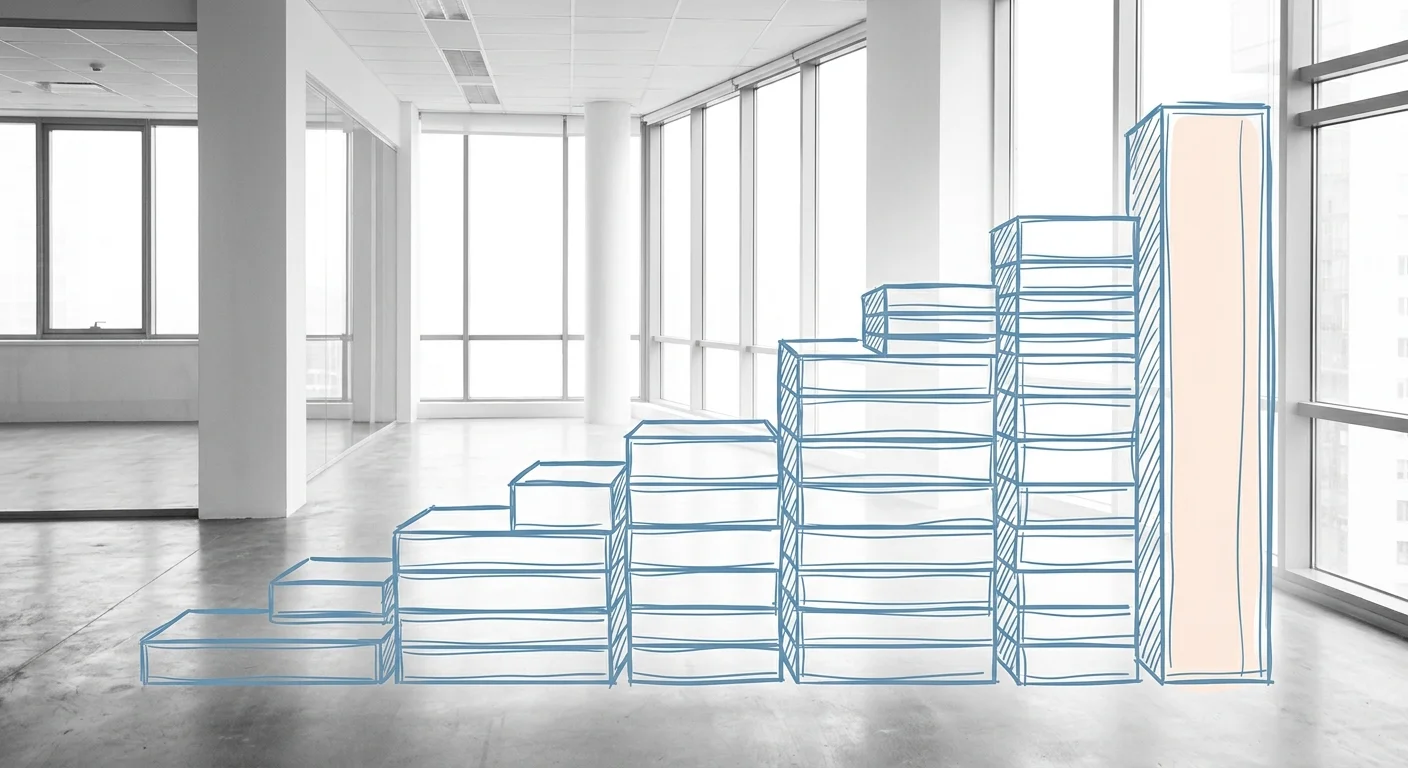
Most business owners sign the escalation clause without running the math past Year 1. That's not an accident. It's where the landlord's advantage lives.
Here's how it works. An escalation clause is a contractual mechanism that raises your base rent at set intervals — annually, in most Orange County leases. The most common benchmark is the Consumer Price Index, tracked by the Bureau of Labor Statistics across major urban areas. When the Consumer Price Index rises, your rent rises with it. No renegotiation. No notice. Just a larger number on next month's invoice.
That compounding isn't a side effect. It's the design. Each escalation cycle pulls more out of your operating budget than the last one did — because the base from which next year's percentage calculates has already been inflated by every prior cycle.
The Three Most Common Escalation Structures in Southern California
Not all escalation structures hit the same way. Orange County leases run on three main models, and each one carries a different level of exposure for the tenant.
- CPI-indexed escalation — rent increases are tied directly to the Consumer Price Index for urban consumers. When inflation runs high, your rent increase runs high with it. No cap exists unless you negotiate one explicitly, and most standard lease forms do not include one.
- Fixed-percentage escalation — a set annual increase written into the lease at execution. More predictable than CPI, but it still compounds against the tenant across a full term. Predictability is not the same as protection.
- Fair-market-value reset at renewal — the landlord reprices the space to current market conditions at the end of each term. The most aggressive structure. The one that gives tenants the least continuity and the most exposure.
Under a triple-net lease, the exposure stacks in a way the base-rent structure alone doesn't capture. Variable property tax and insurance cost escalations land on top of whatever base-rent adjustment is already in place. Anyone weighing buying versus leasing commercial real estate needs to model the combined number — because base rent plus NNN pass-throughs create a total occupancy cost that moves in only one direction.
Why Most Lease Escalation Clauses Are Worse Than They Appear
The Year 1 number isn't the problem. The Year 7 number is.
Consumer Price Index escalations compound against a growing base. The percentage rate on paper looks the same every year. The dollar amount it generates doesn't — because by Year 6, that percentage is applying to a base that's already absorbed five prior escalations. A tenant who signed a modest annual adjustment in Year 1 is writing a meaningfully larger check by Year 6 than that rate ever suggested they would.
NNN pass-throughs stack on top of that. When the landlord's property taxes reassess upward or their insurance costs shift, those increases land directly on the tenant's monthly statement. The tenant didn't cause them. The tenant can't control them. They move entirely with the landlord's expense environment. For a closer look at how this dynamic plays out at renewal time, see landlord leverage vs tenant equity.
That's the mechanism that splits the two. A lease payment and a fixed mortgage payment can look nearly identical in Year 1. The escalation clause — quietly, contractually, automatically — makes certain they never stay that way.
| Escalation Type | How It's Calculated | Who Bears the Risk | Typical Annual Increase | Common Property Types |
|---|---|---|---|---|
| CPI-Indexed Escalation | Base rent increases annually in step with the Consumer Price Index for urban consumers — no fixed ceiling unless explicitly negotiated | Tenant — rent moves with inflation, which the tenant cannot influence or predict | Varies with inflation; no contractual cap in most standard lease forms | Class A and B office, retail, industrial |
| Fixed-Percentage Escalation | A set annual percentage increase is written into the lease at execution and applies automatically each year regardless of market conditions | Shared — the increase is predictable but still compounds against the tenant across a full term | Stated as a fixed rate at lease execution; compounds against a growing base each cycle | Office, retail, mixed-use |
| Fair-Market-Value Reset | At the end of each lease term, the landlord reprices the space to current market conditions — prior rent history provides no protection | Tenant — entirely subject to landlord pricing power at renewal; no rent continuity from prior term | Unpredictable; determined by submarket conditions at the time of renewal | Class A office, premium retail, high-demand submarkets |
| NNN Pass-Through Escalations | Property taxes, insurance premiums, and common-area maintenance costs are passed directly to the tenant on top of base rent increases | Tenant — absorbs variable cost shifts set entirely by the landlord's expense environment, not the tenant's business performance | Variable and outside tenant control; driven by tax reassessments and insurance market conditions | Industrial, triple-net retail, freestanding commercial buildings |
| Fixed-Rate SBA 504 Mortgage (Owner-User) | Principal and interest payment is set at loan origination and remains unchanged for the full loan term | Owner-user — payment is fixed; no exposure to inflation indexing, landlord repricing, or pass-through cost shifts | Fixed at origination; does not compound against the occupant over time | Owner-occupied office, industrial, medical office, retail |
The Fixed Mortgage Payment Advantage for Owner-Users

An SBA 504 payment doesn't escalate. It doesn't index to CPI. It doesn't reset at renewal or pass through your landlord's rising insurance bill. The number you pay in Year 1 is the number you pay in Year 10.
That isn't just a preference. It's a planning asset. When you're managing multi-year hiring cycles, capital expenditure commitments, and debt service alongside occupancy costs, removing one compounding variable from the forecast matters. A CPI-indexed escalation clause can't do that. It wasn't designed to — it was designed to protect the landlord's income stream, not your budget.
The research on this is consistent: purchasing becomes the stronger financial structure when a business expects to occupy the space for more than seven years. In Orange County, where institutional landlords control renewal conversations and escalation clauses compound quietly across a full lease term, most established businesses have already cleared that threshold. Most of them just haven't done the math.
Budget Predictability Over a 10-Year Horizon
In Year 1, a lease payment and a mortgage payment can look nearly identical on paper. That's the trap. The escalation clause is what splits them — contractually, automatically, every year after.
With a fixed-rate SBA 504 structure, you can model occupancy costs across a decade with real precision. The principal and interest payment is locked. Property taxes and insurance still move — but you own those variables. You're not absorbing them as a pass-through from someone whose financial interest runs opposite to yours. That's a meaningful distinction. A cost you control is a problem you can plan around. A compounding NNN exposure that lands on your monthly statement with no corresponding equity return is just wealth leaving the building — and for a direct look at how tax benefits of owner-user commercial property ownership stack up, the numbers are more favorable than most tenants expect.
Past the seven-year mark, the fixed payment stays flat. The forgone lease escalation keeps growing. That gap is equity — and it's accumulating on your balance sheet, not your landlord's income statement.
Who This Model Is Not Built For
This isn't the right structure for every Orange County occupier. If your business is contracting, actively restructuring, or operating in a space so purpose-built it only works for your current use case — owner-user acquisition isn't your answer. The long-term stabilization argument only pays off for businesses with stable space requirements and the horizon to collect the benefit.
Ownership also means carrying responsibilities a triple-net lease hands to the landlord. Under a standard NNN structure, you absorb variable property tax and insurance escalations — but the landlord keeps the asset. An owner-user takes on those same cost variables and gets the equity position in return. That trade makes sense for a business with stable space needs and enough horizon to compound the benefit. It doesn't make sense for one that needs an exit option in three years.
If you're not planning to occupy the space for more than seven years, a carefully negotiated lease — with explicit escalation caps and real renewal terms — is the rational call. The fixed-mortgage argument is a long-horizon argument. It only works for occupiers who have the horizon to collect it.
| Year | Lease Payment Scenario (3% Annual Escalation) | Fixed Mortgage Payment | Cumulative Lease Premium Over Mortgage |
|---|---|---|---|
| Year 1 | Base rent — escalation clause not yet visible in dollar impact | Fixed principal and interest payment established at closing | Negligible — payments appear nearly identical on a spreadsheet |
| Year 3 | First compounding cycle complete — base has already escalated; each new increase calculates against a larger number | Same fixed payment as Year 1 — no adjustment, no index, no renegotiation | Gap begins to open as cumulative escalations pull the lease cost above the mortgage line |
| Year 5 | CPI-indexed or fixed-percentage escalations have compounded across multiple cycles; NNN pass-throughs add variable exposure on top of base rent | Payment unchanged — owner absorbs property tax and insurance variability directly, but carries an equity position in return | Lease premium is now structurally visible; the divergence that looked theoretical in Year 1 is showing up in monthly cash flow |
| Year 7 | Escalation clause has transferred compounding rent increases to the landlord's income statement across a full term; renewal repricing risk begins | Fixed payment remains flat — seven-year occupancy threshold where long-term cost stabilization historically begins to favor ownership | Cumulative premium represents capital that has permanently left the business without building any balance sheet position |
| Year 10 | Total occupancy cost is materially higher than Year 1 — by contractual design, not market surprise; renewal terms reset at landlord's discretion | Same fixed payment as Year 1 — the mortgage balance has declined while the business has built an equity position in the asset | The full spread between compounding lease escalations and a flat mortgage payment is now realized — one number funded the landlord's wealth, the other built the owner-user's |
How the SBA 504 Loan Makes Owner-User Purchases Accessible

But fixed rates only matter if the financing is actually within reach. For most Orange County businesses, the SBA 504 program is what puts it there.
Most business owners think commercial acquisition requires the kind of capital reserves only larger companies carry. That assumption is wrong. The SBA 504 program was built specifically to close that gap — long-term fixed interest rates, down payments as low as 10%, owner-occupied commercial properties.
That number changes the conversation. What looked like a prohibitive capital requirement becomes a manageable equity position. And from the day of closing, the building starts working for the business — not the landlord.
Down Payment, Loan Terms, and Qualification Basics
Here's how the structure actually works. Per SBA guidelines, the SBA 504 program pairs a conventional first mortgage from a private lender with an SBA-guaranteed debenture — the owner-user contributes as little as 10% as a down payment. That's what keeps the program within reach for operating businesses that can't idle significant capital while still running their core operations.
The terms run 20-year or 25-year at a fixed rate. That duration is the whole argument. A lease payment and a mortgage payment can look nearly identical in Year 1. But only one of those numbers is built to grow — and it isn't the mortgage.
Beyond the fixed-rate structure, owner-user status unlocks a separate category of financial advantages. The tax benefits of owner-user commercial property ownership don't appear anywhere on a lease renewal term sheet. But they compound over time in exactly the same way escalation clauses do — only in the owner's favor rather than the landlord's.
What Orange County Businesses Actually Qualify For
The SBA 504 program is designed for operating businesses. Not passive investors. Not developers. Not holding companies. Qualifying businesses must intend to occupy the property for their own operations — which is exactly what an owner-user purchase requires.
Past the occupancy requirement, eligibility is about operational stage — not raw balance sheet size. The SBA 504 program is built for companies that have outgrown the cost volatility of a lease but haven't yet stacked the reserves to fund a conventional acquisition outright. Businesses that are profitable enough to carry a mortgage, but still need the program's structure to get there.
Working with a broker who understands tenant representation in Orange County and owner-user acquisitions is what separates a business that finds the right property from one that also structures the right transaction around it. The SBA 504 program has specific use parameters. Go in without understanding them and the deal falls apart after you've already written the offer — not a position you want to negotiate from.
| Financing Component | SBA 504 Structure | Conventional Commercial Loan (Typical) | Key Difference for Owner-Users |
|---|---|---|---|
| Down Payment Requirement | As low as 10% of total project cost for owner-occupied commercial property | Typically 25% to 35% of total project cost required upfront | Owner-users retain significantly more working capital at acquisition — preserving cash for operations, tenant improvements, or equipment |
| Loan Structure | Split financing: conventional first mortgage plus SBA-guaranteed debenture covering the remaining balance | Single lender carries the full loan amount, with underwriting risk reflected in stricter terms and higher equity requirements | The SBA-guaranteed debenture reduces lender risk, which is what allows the lower equity contribution from the borrower |
| Interest Rate Terms | Long-term fixed rate locked at origination for the life of the SBA debenture — does not float or reset | Rate terms vary by lender and market conditions; adjustable-rate structures are common, particularly on shorter loan terms | A fixed rate on a long-term debenture is the mechanism that converts an occupancy cost from a variable into a predictable line item |
| Eligible Use | Specifically calibrated for owner-occupied commercial real estate and long-lived equipment — not general-purpose business financing | General commercial mortgage — may or may not require owner-occupancy; terms and covenants vary widely by lender | The program's owner-occupancy requirement aligns the loan's purpose directly with the financial logic of building balance sheet equity rather than funding landlord income |
| Qualification Basis | Underwriting is asset-backed and cash-flow-informed, based on business net worth and net income — not solely credit score | Qualification typically leans heavily on credit score, collateral quality, and personal guarantee strength | Businesses with strong operating fundamentals but modest credit profiles often find 504 underwriting more accessible than conventional commercial lending |
The Tax Dimension: Deductions on Both Sides of the Ledger
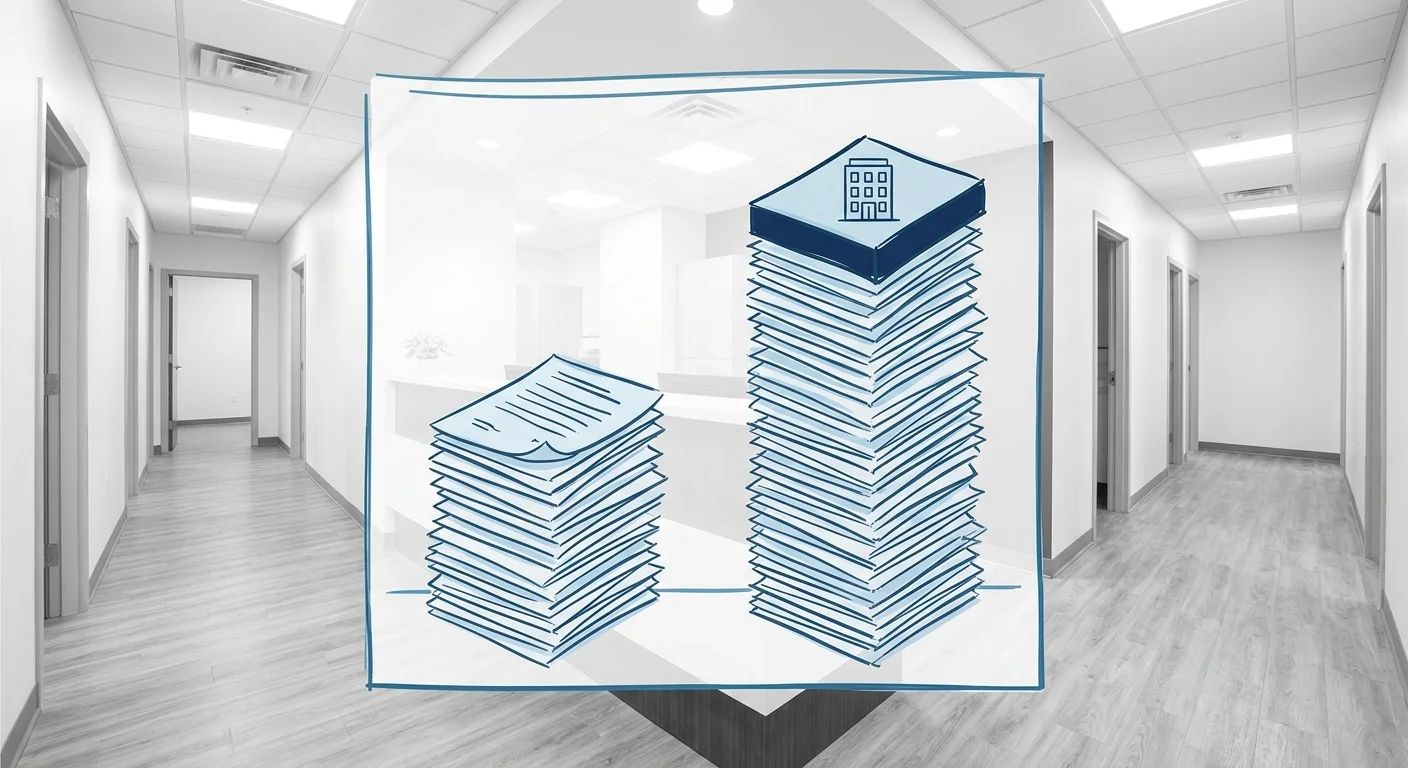
Both sides of this comparison come with real tax deductions. The lease isn't a tax disadvantage. Neither is ownership. But the deductions aren't equal — and that gap compounds in exactly the same way an escalation clause does.
Financing answers whether you can do this. Tax treatment answers the harder question: what does this decision actually cost once the IRS adjusts the ledger?
So look at them separately. What tenants can claim. What owner-users can claim. These aren't variations of the same thing.
What Tenants Can Deduct on a Commercial Lease
Rent on a commercial lease is deductible. Per IRS guidance, that deductibility flows from IRC Section 162, which treats lease payments as ordinary and necessary operational costs — not capital expenditures. Every dollar of rent reduces taxable income in the year it's paid. That's real. And it's immediate.
That deduction is also the ceiling. A tenant deducts the payment and gets nothing else. No equity. No depreciation. No appreciation. The rent clears a tax liability and lands directly on the landlord's income statement.
Businesses that understand this ceiling before the search begins make different decisions. Rent deductibility looks like a financial benefit in isolation. But advisors who understand owner-user transactions know what the deduction profile looks like on the ownership side — and once you put both on the same page, the picture changes entirely.
What Owner-Users Can Deduct That Tenants Cannot
Owner-user purchases come with depreciation. Commercial real estate is a depreciable asset, and that depreciation schedule creates a non-cash deduction — one that reduces taxable income without requiring additional cash outlay in the year it's claimed. A tenant has no equivalent. That deduction doesn't exist on the lease side of the ledger.
Beyond depreciation, qualifying businesses can claim Section 179 deductions for the immediate expensing of certain capital improvements. Instead of depreciating an improvement across its useful life, the business expenses a qualifying portion in the year it goes into service. A tenant putting money into space the landlord owns can't do that. When the lease ends, the improvement stays. The deduction doesn't come with you.
Mortgage interest on the SBA 504 loan is also deductible. So the fixed monthly payment partially offsets tax liability while simultaneously building equity. A lease payment gives you the IRC Section 162 deduction and nothing more. The mortgage payment gives you interest deductibility, depreciation, and the Section 179 capital improvement benefit — three separate deduction mechanisms where the lease provides one. That's the gap the tax benefits of owner-user commercial property ownership analysis puts in writing. It's also what the identical-looking spreadsheet in Year 1 never shows. One number grows by design. The other stays fixed — and so does the tax advantage that comes with it.
| Deduction Category | Available to Tenants | Available to Owner-Users | Notes |
|---|---|---|---|
| Ordinary lease/rent payment deduction | Yes — fully deductible as an ordinary and necessary business expense under IRC Section 162 | Not applicable — owner-users make mortgage payments, not lease payments | Tenant deduction is real but represents the ceiling; no equity or appreciation benefit accompanies it |
| Mortgage interest deduction | No — tenants have no mortgage on the occupied property | Yes — interest portion of the SBA 504 fixed-rate payment is deductible in the year paid | Deductibility partially offsets each monthly payment while equity simultaneously accumulates |
| Depreciation (non-cash deduction) | No — tenants cannot depreciate an asset they do not own | Yes — commercial real estate is a depreciable asset; depreciation reduces taxable income without additional cash outlay | Creates a deduction layer that has no tenant equivalent; the benefit compounds across the full ownership hold period |
| Section 179 capital improvement expensing | No — leasehold improvements made by a tenant are not eligible for Section 179 treatment on landlord-owned property | Yes — qualifying capital improvements can be immediately expensed in the year placed in service rather than depreciated over useful life | Accelerated expensing concentrates the tax benefit in earlier years rather than spreading it over the improvement's depreciation schedule |
| Equity accumulation (balance sheet impact) | None — every lease payment exits the business permanently | Indirect financial benefit — each fixed mortgage payment reduces outstanding principal and increases net asset value | Not a tax deduction per se, but the balance sheet outcome that makes the deduction profile above materially more valuable over time |
Frequently Asked Questions
So let's get to the questions that actually come up when business owners run these numbers on their own situation.
These aren't hypotheticals. The answers decide whether your occupancy cost is building your balance sheet — or someone else's.
How do standard Orange County commercial lease escalations impact my long-term cash flow?
The impact is compounding, and it runs in one direction only.
A CPI-indexed escalation clause means every annual increase calculates on top of the prior year's rent — not your original base rate. What reads like a manageable percentage in Year 1 is a materially larger dollar figure by Year 5 or Year 10. The base grows with every cycle. So does the amount leaving your operating budget.
None of that cash built equity. It funded the landlord's balance sheet. Yours received nothing in return.
Why does a fixed mortgage payment provide better operational budget predictability than a commercial lease?
A fixed-rate mortgage payment is the same number in month one as it is in month one hundred. A lease with a CPI-indexed escalation clause isn't — it resets annually against an index the tenant cannot control and cannot negotiate down.
A fixed SBA 504 payment on a 20-year or 25-year term lets you model occupancy costs years out without building in an inflation assumption. That's a real planning asset. It removes one of the most punishing variables from your forecast.
A lease forces you to model a range. And that range only goes up.
Can small businesses in Orange County use the SBA 504 loan program to buy their own commercial property?
Yes — and the SBA 504 program was specifically built for this transition.
It offers long-term fixed interest rates with down payments as low as 10% for owner-occupied commercial properties. A qualified business keeps a substantial portion of its capital at close rather than deploying it all upfront. The program is structured for operating businesses that intend to occupy the property — not passive investors, not developers.
If you currently lease space in Orange County and plan to stay in a building for the long term, the SBA 504 is the most common financing path for making that move. The idea that commercial acquisition is only within reach for larger companies is wrong. The program was designed to close exactly that gap.
What are the major tax advantages of transitioning from a commercial lease to an owner-user purchase?
The tax picture changes materially when you own rather than lease.
Rent paid on a commercial lease is fully deductible as an operational expense under IRC Section 162 — so tenants aren't missing a deduction by leasing. But that deductibility is the ceiling. Nothing else accrues. The payment reduces your tax liability and lands on the landlord's income statement.
Owner-users get a different category entirely. Depreciation creates a non-cash deduction that reduces taxable income without an additional cash outlay. Section 179 deductions let qualifying businesses immediately expense certain capital improvements rather than depreciating them over decades. Mortgage interest is deductible on top of both.
A lease gives you one deduction mechanism. Ownership gives you three. That gap compounds over time the same way a CPI-indexed escalation does — only it works in the owner's favor.
How does a triple-net lease escalation clause expose tenants to compounding variable expenses?
Under a triple-net lease, the tenant pays base rent plus a variable share of property taxes, insurance, and maintenance. Those three categories don't move in lockstep with any single index. They shift based on municipal reassessments, insurance market conditions, and deferred maintenance cycles — none of which the tenant controls, predicts, or negotiates.
Stack a CPI-indexed base rent escalation on top of that and you have multiple compounding cost lines moving at the same time. The landlord's fixed costs are covered. The tenant absorbs every variable.
That's not a side effect of the triple-net structure. It's the design. The lease delegates upside to the landlord and downside to the tenant — and the escalation clause guarantees the base from which every future increase calculates keeps growing.
The Lease Is Not Neutral Ground
In Year 1, the lease payment and the mortgage payment sit at almost the same number. That's by design. The divergence doesn't show up on a spreadsheet until Year 3, Year 5, Year 7 — when the CPI-indexed escalation clause has been quietly compounding and the fixed-rate SBA 504 payment hasn't moved a dollar.
That gap isn't market forces at work. It's the structural consequence of a decision the business owner made on signing day — whether they understood it at the time or not.
Staying in a lease by default is still a financial decision. It's a decision to keep sending compounding wealth to a passive institutional landlord while forgoing depreciation, fixed-rate predictability, and balance sheet equity that builds with every payment.
The lease is not neutral ground. It is a wealth-transfer mechanism running on a timer — and the timer runs whether the tenant has looked at it or not.
The businesses that end up ahead aren't the ones that negotiated hardest at renewal. They're the ones that ran the numbers before the landlord knew their clock was running out.
Peninsula Commercial Real Estate Group works owner-user purchase analysis alongside lease negotiation because the right answer isn't always the same. But you can't know which structure actually serves the business until both numbers are on the same table — the fixed SBA 504 payment beside the escalating lease, year by year.
One number grows by design. The other stays fixed. Which side of that comparison your business is currently on is not a question to save for renewal. It's a question to answer now.
The landlord isn't guessing about your cost trajectory. The escalation clause did the math before you signed. Request a lease analysis and find out exactly what your occupancy costs look like against a fixed SBA 504 payment — before your next renewal conversation happens without that comparison.