
Landlord Leverage vs Tenant Equity: The Real Cost of Southern California Commercial Leases
Southern California commercial leases are engineered to cost more every year. Annual escalations of 3% to 5%, compounded over a standard five-to-ten-year term, mean the rent on year five bears little resemblance to the number on page one. Nothing inside the lease reverses that direction.
Some escalation clauses lock in a fixed annual percentage. Others peg increases to the Consumer Price Index for the Los Angeles-Long Beach-Anaheim metro — meaning regional inflation drives rent upward automatically, every single year, without any action required from the landlord.
A tenant renewing without comparable live options has no structural basis to counter either clause. Harvard Business Review confirms that favorable lease outcomes require a credible Best Alternative to a Negotiated Agreement — a BATNA — meaning real space the tenant could actually occupy. A landlord facing no competition has no reason to move off opening terms.
Ownership is the other path. The SBA 504 loan program allows qualifying business owners to acquire commercial property with as little as 10% down, securing up to 90% long-term, fixed-rate financing. That converts a compounding monthly expense into a fixed obligation — and builds equity in the property instead of transferring it to a landlord.
Owner-users in 2026 also benefit from Section 179 and bonus depreciation rules that allow immediate deduction of substantial capital investments in qualifying commercial property, reducing the effective acquisition cost in the year the purchase occurs.
The decision between leasing and owning turns on business stage, capital availability, and space requirements. But it starts from an honest accounting of what the lease actually costs over time — not just the base rent on page one. Compounding escalations, CPI adjustments, and the absence of negotiating power add real cost that never appears on the first-year rent schedule.
Last Updated: August 24, 2026
- • How Southern California Lease Escalations Compound Over Time
- • The Isolation Trap: Why Renewing Without Alternatives Costs More Than the Rent
- • Owner-User Economics: When Buying the Building Stops the Escalation Permanently
- • Reading the Lease Before You Sign: Escalation Clauses to Identify and Challenge
-
• Frequently Asked Questions
- • Why do Southern California commercial leases favor landlords over tenants?
- • How do annual rent escalations compound the real cost of a commercial lease?
- • What are the primary tax benefits of owner-user commercial property ownership in 2026?
- • How does an SBA 504 loan make owner-user commercial purchases accessible in Southern California?
- • Why does negotiating a commercial lease renewal in isolation eliminate tenant leverage?
- • What is a CPI escalation clause and how does it affect my lease cost?
- • Stop Letting the Ratchet Run
How Southern California Lease Escalations Compound Over Time
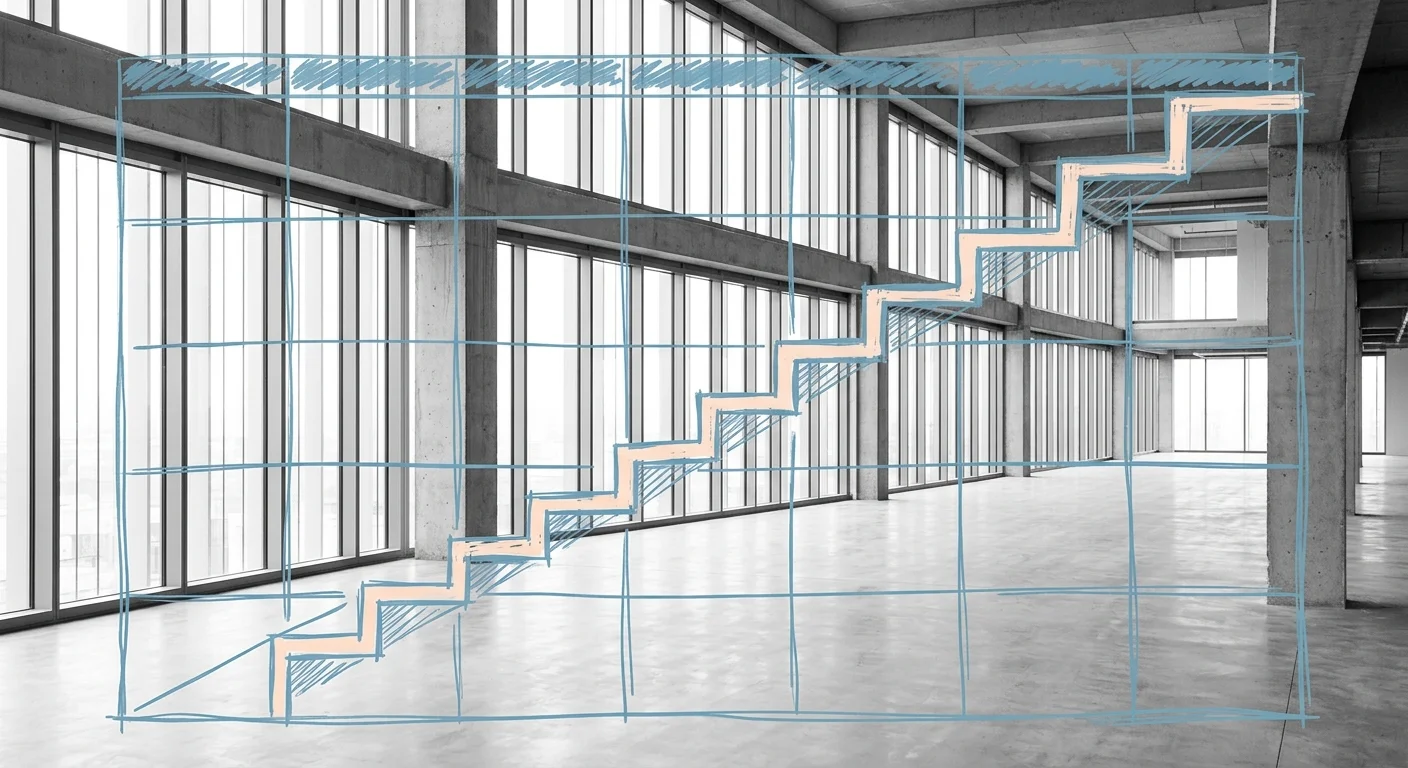
A Southern California commercial lease is a one-way ratchet. Annual escalations of 3% to 5%, compounded over a standard five-to-ten-year term, click the cost upward every single year. Nothing in the lease clicks it back.
That compounding isn't abstract. A tenant paying $20,000 per month at a 4% annual escalation is paying thousands more by year five than the number on signing day. The base rent on page one isn't the rent they'll actually pay.
So the first question isn't whether to negotiate. It's whether the full escalating cost — not just the base rent — has been honestly accounted for before signing anything. Most tenants never run that number. And for many, whether buying makes more financial sense than leasing deserves a serious look before the renewal conversation even starts.
Fixed vs. CPI Escalation Clauses: What the Lease Actually Says
Commercial leases run on two escalation structures, and neither one favors the tenant by default. Fixed-percentage clauses lock in a set annual increase — typically 3% to 5% — regardless of what inflation does. CPI clauses tie the annual increase to the Consumer Price Index, which means the market sets the rate automatically every year, and no one calls to warn you before it moves.
CPI clauses look appealing when inflation is low. They're considerably less appealing when regional inflation runs hot. The Bureau of Labor Statistics data for the Los Angeles-Long Beach-Anaheim metro tracks the Consumer Price Index landlords use to calculate those annual adjustments. Inflation does the landlord's negotiating for them — automatically, every year, without a single additional conversation.
Both structures share one underlying reality. The cost moves in one direction. The only variable is whether a fixed percentage or an inflation index sets the speed.
Why the Listing Broker Is Not Your Escalation Defense
The broker who showed you the space works for the landlord. That is not a personality statement — it is a legal one. Their fiduciary duty runs to the building owner. Not to you.
That misalignment matters most at renewal. When escalation clauses have been running for years and a tenant wants to push back on the new rate, the building's broker has no obligation to argue for a lower number. Their job is to deliver the best available terms for the landlord. Without competing options on the table, that's exactly what they'll do — and you won't hear a word of pushback on your behalf.
A tenant without alternatives has no pull. A lease without competing options only turns one direction. See Orange County Commercial Lease Escalations vs Fixed Mortgage Payments for what that cost gap looks like in real submarket terms.
| Lease Year | Annual Escalation Rate | Cumulative Rent Increase | Effective Monthly Premium Over Base |
|---|---|---|---|
| Year 1 | 3% – 5% | 3% – 5% above base | Negligible — the ratchet has just started |
| Year 3 | 3% – 5% | ~9% – 16% above base (compounded) | Noticeable gap between signed rate and current obligation |
| Year 5 | 3% – 5% | ~16% – 28% above base (compounded) | Material premium — well above what page-one rent suggested |
| Year 7 | 3% – 5% or CPI-indexed | ~23% – 41% above base (compounded) | CPI-linked clauses may accelerate this further in high-inflation periods |
| Year 10 | 3% – 5% or CPI-indexed | ~34% – 63% above base (compounded) | Tenant paying dramatically more than base rent — with no mechanism to reverse the increase |
The Isolation Trap: Why Renewing Without Alternatives Costs More Than the Rent

Renewing alone is how Southern California tenants pay more than they have to.
Without real alternatives — space you could actually occupy, in the same submarket, at a competitive rate — the landlord has no reason to move. Harvard Business Review is direct about why: favorable outcomes require a credible Best Alternative to a Negotiated Agreement. A BATNA. Competing options the other side believes you will actually use. Without one, you aren't negotiating. You're accepting whatever number the landlord opened with.
The landlord already knows this. The question is whether you do.
What a Landlord Knows When You Have Nowhere Else to Go
A landlord entering a renewal conversation knows exactly how much time you spent looking elsewhere. If the answer is none, they also know you have no credible reason to walk.
That gap isn't accidental. Long-term demand shifts have left real pockets of vacancy across Southern California's office market. Competing options exist — for the tenant willing to look. But a tenant who never looks hands that vacancy data, and every bit of leverage it represents, straight back to their landlord.
A landlord facing a tenant with live alternatives has to compete. A landlord facing a tenant with none does not. That asymmetry is the entire game — and it plays out the same way at every renewal, at every square footage, in every Southern California submarket.
Who Qualifies as the Wrong Tenant for This Article
This is not for tenants who want the fastest possible close with no interest in touring competing space. Leverage comes from comparison — specifically, from a landlord believing you have somewhere real to go. Skip the comparison and there is nothing to negotiate with. You are back to accepting.
And it is not for business owners looking for landlord-side brokerage, dual agency, or property management services. Peninsula Commercial Real Estate Group represents tenants and owner-users — one side of the table, every time. If you need the other side, this is not the right firm.
How a Comparative Submarket Search Creates Negotiating Leverage
A direct renewal negotiation gives you one option: accept or leave. A comparative submarket search gives you a credible BATNA — and the landlord knows it's credible because you can prove it.
Decentralized footprints, shifting headcount models, relocations away from traditional urban cores — all of it has generated real submarket vacancy across Southern California. That vacancy is negotiating power. But only for the tenant who finds it first. For independent tenant representation to convert vacancy into actual concessions, the comparison has to happen before the landlord knows your timeline.
Here's how it works. Multiple live options — space you could lease this quarter, in the same submarket, at a documented rate — force the existing landlord to compete or lose you. That competition is what moves rent numbers. It's what pulls tenant improvement dollars out of a landlord who had no intention of offering them. It's what buys free-rent periods that cut the effective cost of staying. None of it is available to the tenant who never looked anywhere else.
| Negotiation Scenario | Tenant Has Alternatives | Tenant Has No Alternatives | Likely Landlord Behavior |
|---|---|---|---|
| Renewal rate negotiation | Landlord must compete with documented alternatives or risk losing the tenant | Landlord opens at their preferred rate with no competitive pressure to move | Holds position or makes minimal concessions |
| Tenant improvement allowance | Competing buildings offering TI dollars create a benchmark the existing landlord must meet or exceed | No external benchmark exists — landlord sets the standard unilaterally | Offers limited or no TI contribution |
| Free-rent period | Tenant can cite competing offers that include free-rent as a condition of staying | Landlord has no incentive to offer abatement — tenant has nowhere else to go | Declines to offer free-rent or treats it as a significant concession |
| Escalation clause terms | Tenant can push for a fixed-percentage cap or negotiate a CPI ceiling based on comparable lease structures | Landlord proposes escalation structure that maximizes long-term rent growth | Escalation terms reflect landlord's preference, not market competition |
| Lease term length | Tenant can negotiate shorter initial term or flexible renewal options backed by credible exit alternatives | Landlord locks in longer term at current escalation structure with no concession on flexibility | Pushes for maximum term length to secure compounding rent increases |
| Overall negotiation dynamic | Landlord is responding — the tenant controls the conversation's direction | Tenant is accepting — the landlord controls every variable | Extracts maximum value from a tenant with no credible reason to walk |
Owner-User Economics: When Buying the Building Stops the Escalation Permanently

But some businesses don't need to win the negotiation. They need to exit it.
Ownership ends the ratchet. What was a compounding monthly expense becomes a fixed payment that builds equity instead of bleeding it out.
A lease escalates. A fixed-rate mortgage does not.
That one structural difference is what reverses the ratchet — not for one renewal cycle, but for the life of the loan.
Ownership is not the right answer for every business. Growth trajectory, available capital, and how much operational flexibility you need to preserve — those answers determine whether buying makes sense right now.
But if you plan to stay in the same Southern California market for five or more years, the economics deserve an honest look — before another renewal locks in five more years of escalations you never had to accept.
SBA 504 Financing: How Southern California Business Owners Buy With 10% Down
The first thing most business owners say is that they can't afford to buy. The SBA 504 loan program is designed specifically to make that objection obsolete.
Qualified owner-users can secure up to 90% long-term, fixed-rate financing. That caps the required down payment at 10%. Businesses that could never assemble a conventional down payment can get into a building on that structure alone.
The SBA's 504 program guidelines make the structure explicit: long-term, fixed-rate financing built for small business owners who want to own the building they operate from. The SBA 504 rate locks at closing. The payment doesn't move. And the landlord's position in your financial life disappears the moment the deed transfers.
A tenant on a ten-year lease signs a starting number. What that number becomes by year eight is anyone's guess.
An owner-user on a 25-year SBA 504 loan signs one number. That's the number. The ratchet has no mechanism to operate when there's no lease to escalate.
Section 179 and Accelerated Depreciation: The Tax Case for Ownership in 2026
There's a second financial outcome that ownership produces and leasing never will: a tax advantage that hits in the year you buy.
In 2026, owner-user buyers can apply Section 179 deductions and bonus depreciation schedules to qualifying capital investments — deducting substantial costs immediately rather than spreading them across decades. What that means for the effective cost of acquisition is spelled out in the analysis of ownership tax advantages for 2026.
A tenant writing off monthly rent payments gets nothing back. No equity. No depreciation benefit. The money leaves and it doesn't compound.
An owner-user who applies accelerated depreciation to qualifying property investments gets two things at once: a balance sheet asset and an immediate reduction in taxable income. That's a different financial position entirely.
Fixed financing. Equity accumulation. Accelerated tax deductions. Those three outcomes together make the owner-user path categorically different from the lease-renewal path.
Not for every business. But for the ones it fits, it's the only option that stops the escalation permanently — instead of managing it one renewal cycle at a time.
| Financial Metric | Long-Term Lease (10 Years) | Owner-User Purchase (SBA 504) | Difference |
|---|---|---|---|
| Down Payment Required | No purchase required — lease deposits only | 10% minimum for qualified owner-users | Owner-user entry point is a one-time capital event vs. ongoing lease exposure |
| Financing Structure | N/A — monthly rent obligation, no ownership | Up to 90% long-term, fixed-rate financing | Fixed-rate loan eliminates escalation exposure for the loan term |
| Monthly Cost Trajectory | Escalates annually per lease clause — cost unknown at year 10 | Fixed at closing — same obligation in year 1 as year 25 | Lease cost is unpredictable; mortgage cost is locked |
| Year-of-Purchase Tax Benefit | Rent deducted as an operating expense — no depreciation | Section 179 deductions and bonus depreciation schedules allow substantial costs to be deducted in the year they occur | Owner-user captures an immediate taxable income reduction leasing never produces |
Reading the Lease Before You Sign: Escalation Clauses to Identify and Challenge

That lease was drafted by the landlord's attorney. Reviewed by the landlord's broker. Then handed to you with a signature line at the bottom.
Before you countersign is the only moment you can stop the ratchet. Sign it, and the clauses run on their own — no further input required from anyone.
Two escalation structures dominate Southern California commercial leases. Fixed-step clauses lock in annual increases of 3% to 5% compounded annually — a set number, regardless of what the economy does. CPI clauses tie annual rent increases to the Consumer Price Index for the Los Angeles-Long Beach-Anaheim metro, which means the landlord's raise is calculated automatically by a government index.
No conversation required on their side. The index does the work.
Both structures read like boilerplate. Neither one is flagged as aggressive in the document.
That's the problem. A tenant who doesn't know what to look for signs a ten-year commitment without realizing the number on page one is not the number they'll pay in year seven.
Uncapped CPI Clauses: The Provision That Ties Your Rent to Inflation Without a Ceiling
A CPI escalation clause links your annual rent increase to regional inflation — specifically, to the index the Bureau of Labor Statistics publishes for the Los Angeles-Long Beach-Anaheim metro area. When inflation runs high, the clause runs with it.
The landlord does nothing. The index calculates. The rent goes up.
The word that changes everything is "uncapped."
A CPI clause with a cap — a fixed ceiling on how much the annual increase can reach regardless of where inflation lands — gives a tenant a known maximum. An uncapped CPI clause gives the landlord an open-ended escalation runway. The difference between those two provisions is not a minor negotiating point. It is the difference between a predictable cost structure and one that compounds with every inflation spike.
So run the comparison before you countersign — not after you've already exercised the renewal option.
What does a fixed monthly obligation under an SBA 504 loan actually look like against a compounding lease over ten years? That's the number that belongs in your analysis right now, while the terms are still movable. Once you sign, the only thing left to negotiate is the next cycle.
Rent Escalation Clause Checklist: What to Flag Before You Countersign
- Fixed step percentage — Confirm the annual increase rate. A 3% step compounds into a dramatically higher ending rent than it appears at signing. Push for a lower step or a hard ceiling.
- Uncapped CPI clause — Require a cap. An uncapped CPI clause converts inflation risk into a landlord benefit with no upside limit for the tenant. A cap at a fixed percentage above any given year's base is a standard negotiating position.
- Base year definition — The base year sets what index value the first escalation is measured from. A favorable base year reduces the first-year increase; an unfavorable one accelerates it.
- Compounding vs. simple escalation — Compounding applies each year's increase to the prior year's adjusted rent, not to the original base. Over a standard five-to-ten-year term, the difference is significant. Simple escalation on a fixed base is the more tenant-favorable structure.
- Audit rights — If the lease includes a CPI clause, confirm you have the right to audit the landlord's index calculation. Errors in index application are not uncommon and they always run in the landlord's favor.
None of those provisions are fixed. But none of them move on their own.
A landlord looking at a tenant who signs without questioning the escalation structure has no reason to offer a cap or a more favorable step. Why would they? The ratchet stays loaded because nobody challenged it.
Knowing which terms to flag is step one. Coming to the table with real alternatives — live options in the same submarket that make staying a deliberate choice instead of a default — is what actually changes them.
| Clause Type | How It Works | Tenant Risk Level | Key Question to Ask Before Signing |
|---|---|---|---|
| Fixed-Step Escalation | Annual rent increases by a set percentage each year, applied to the prior year's adjusted rent (compounding) or to the original base rent (simple) | Medium to High — depends on whether the step is compounded or simple, and whether a ceiling exists | Is this step applied to my original base rent or to the escalating balance — and is there a cap on the total increase over the lease term? |
| Uncapped CPI Escalation | Annual increases are calculated automatically using the published regional Consumer Price Index, with no maximum limit on how high the increase can reach in any given year | High — inflation spikes pass directly to the tenant with no negotiated ceiling and no landlord concession required | What is the cap on any single year's CPI-driven increase, and what happens in a year when the index moves significantly above historical norms? |
| Capped CPI Escalation | Annual increases still track the regional index, but the lease sets a maximum percentage the increase can reach regardless of where inflation lands | Low to Medium — the ceiling converts open-ended inflation exposure into a predictable worst-case cost | Is the cap applied per year or cumulatively over the term, and is the ceiling percentage written into the lease body or held in an exhibit that can be modified? |
| Base Year Definition | The index value or rent figure used as the starting point against which all future escalations are measured — the lower the base, the larger the calculated increases that follow | Medium — a landlord-favorable base year accelerates the first escalation and every one after it, even if the step percentage appears modest | Which specific year and which index period defines my base, and does the lease allow the landlord to restate the base if the measurement period changes? |
| Audit Rights Clause | A lease provision granting the tenant the right to verify that the landlord has applied the correct index value and escalation calculation in each lease year | Low risk when present, High risk when absent — errors in index application are not uncommon and the direction of error consistently favors the landlord | Does the lease explicitly grant me the right to audit the landlord's escalation calculation, and what is the notice window and cure period if a miscalculation is discovered? |
Frequently Asked Questions
These questions came up in real conversations. Business owners sitting across from a renewal deadline, or asking — maybe for the first time — whether buying actually makes more sense than staying.
Not hypotheticals. The questions that surface every time someone gets handed a renewal proposal and isn't sure whether the terms are fair — or whether anyone in the room is actually working for them.
Why do Southern California commercial leases favor landlords over tenants?
The lease was drafted by the landlord's attorney. Annual escalation clauses — fixed at 3% to 5% or tied to a CPI index — are already written in before you see the first page. The landlord's broker manages the building's income; their fiduciary duty runs to the ownership group, not to you.
A tenant who walks in without independent representation and without competing alternatives is the only party in the transaction without an advocate.
That imbalance doesn't require anyone to act in bad faith. It's structural. The document was designed this way before you were ever involved.
How do annual rent escalations compound the real cost of a commercial lease?
A 3% annual increase sounds manageable. It isn't — not once you apply it to a compounding structure over a standard five-to-ten-year term.
Each year's escalation applies to the prior year's adjusted rent, not to the original base. The gap between what you pay in year one and what you pay in year nine is significantly wider than the percentage suggests.
A CPI escalation clause adds a second variable. When regional inflation runs hot — as tracked by the Consumer Price Index for the Los Angeles-Long Beach-Anaheim metro — the landlord's annual raise runs with it, calculated automatically. No negotiation required on their side. The index does the work.
The compounding doesn't announce itself. It runs quietly, exactly as the lease was written to ensure it would.
What are the primary tax benefits of owner-user commercial property ownership in 2026?
Owner-user buyers in 2026 can apply Section 179 deductions and bonus depreciation schedules to qualifying capital investments — deducting substantial costs in the year they occur, not spread across decades.
A tenant writing off monthly rent gets no equity and no depreciation benefit. An owner-user gets both: a balance sheet asset and an immediate reduction in taxable income in the acquisition year.
The after-tax cost of purchasing is meaningfully lower than the sticker price suggests. That gap is what makes the ownership path worth running the numbers on honestly.
How does an SBA 504 loan make owner-user commercial purchases accessible in Southern California?
The SBA 504 program is the primary reason owner-user acquisition is realistic for businesses that can't assemble a conventional down payment. Qualified buyers can secure up to 90% long-term, fixed-rate financing. The required down payment is capped at 10%.
The rate locks at closing. The monthly obligation doesn't escalate.
For a business currently on a compounding lease, the SBA 504 loan replaces a ratchet that only moves upward with a fixed number that never moves at all. The program is built specifically for owner-users — businesses acquiring the property they intend to operate from. Not for investors. Not for passive buyers.
Why does negotiating a commercial lease renewal in isolation eliminate tenant leverage?
A landlord negotiating with a tenant who has nowhere else to go has zero competitive pressure. The existing relationship, the cost of moving, the approaching expiration date — all of it sits on the landlord's side when nothing is on the other side of the table.
Harvard Business Review puts it plainly: favorable outcomes require a credible Best Alternative to a Negotiated Agreement. Real competing spaces. Ones the tenant could actually lease this quarter, in the same submarket. Without that, asking for a concession is just asking — and the landlord has no reason to say yes.
So the renewal conversation stops being a negotiation. It becomes a formality dressed up as one. A lease without real alternatives only turns one direction.
What is a CPI escalation clause and how does it affect my lease cost?
A CPI escalation clause ties annual rent increases to the Consumer Price Index — specifically, for Southern California leases, to the index the Bureau of Labor Statistics publishes for the Los Angeles-Long Beach-Anaheim metro area. When that index rises, rent rises with it. Calculated automatically. No negotiation required.
The critical variable is whether the clause is capped. A capped CPI clause sets a maximum annual increase regardless of where inflation lands — the tenant knows the ceiling. An uncapped clause gives the landlord an open-ended escalation runway that accelerates with every inflation spike.
The difference between those two provisions isn't a minor drafting detail. It's the difference between a predictable cost structure and one that compounds whenever the regional economy does. And it's entirely negotiable — if you know to ask before you sign.
Stop Letting the Ratchet Run
Every Southern California commercial lease is built to cost more next year than it does today.
That's not a flaw in the document. It's the design. The escalation clause is already written in before you sit down to read it. Fixed-step or CPI-linked, capped or uncapped — once you sign, it runs. And a landlord sitting across from a tenant who shows up without alternatives has no reason to change a single word.
There are two ways out. Neither one is passive.
The first is the comparative process. Live competing spaces in the same submarket, current asking terms, landlords who actually want your tenancy — that's what turns a renewal from a formality into a real negotiation. Your landlord moves when staying means losing you to the building across the street. Not before.
The second is ownership. A fixed-rate mortgage doesn't escalate on your landlord's schedule. It builds equity instead of draining it. And for Southern California business owners with the right deal profile, the SBA 504 loan gets you into a building with 10% down.
Both routes start in the same place: deciding that the current terms aren't the only terms available, and starting the comparison before the landlord's renewal deadline makes that decision for you.
Inaction is a choice. It compounds every year, quietly, exactly as the lease was written to ensure it would.
Peninsula Commercial Real Estate Group runs this comparison for Southern California business owners — across competing spaces, against real ownership economics — before a renewal deadline collapses every option down to one. Not a junior broker running a search. Corina Irvin, working the deal directly, the same way she has done it for 15+ years at the institutional level.
Because a lease without leverage only turns one direction.
The comparison is the work. But it only moves the needle if you start it before the landlord knows your clock is running out.