
How SBA 51 Percent Owner-Occupancy Rules Work for Existing Commercial Buildings
The SBA 51 percent rule determines whether your business qualifies for SBA-guaranteed financing to purchase commercial real estate. For existing buildings, you must occupy at least 51% of the total rentable square footage. For new construction, that threshold rises to 60%, and occupancy must begin the moment the building is complete.
Two loan programs carry this rule. The SBA 504 program can finance up to 90% of an eligible acquisition, with the borrower contributing as little as 10% in equity. That 90% typically splits as 50% from a private bank, up to 40% from a Certified Development Company, and 10% from the borrower. The SBA 7(a) program sets a maximum loan amount of $5 million for real estate and business acquisitions.
The 51% threshold is not a ceiling. It is a floor. On an existing building, the remaining space — up to 49% of total rentable square footage — can be leased to third-party tenants. That rental income can offset debt service from day one.
Meeting the 51% minimum and structuring the remaining 49% to generate real offsetting income are two separate decisions. The first is a compliance requirement. The second is a financial tool.
Business owners who treat the 51 percent rule as a box to check typically leave significant value unrealized — both in how they finance the acquisition and in how they structure what remains of the building around their own operations.
Last Updated: August 24, 2026
- • What the 51 Percent Rule Actually Requires for Existing Buildings
- • How SBA Financing Is Structured for Owner-Occupied Commercial Buildings
- • The 49 Percent You Can Lease Out — and the Compliance Risks of Getting It Wrong
- • How to Navigate an SBA Owner-User Purchase Without Landing on the Wrong Side of the Transaction
-
• Frequently Asked Questions About SBA Owner-Occupancy Rules
- • How do you calculate the 51 percent occupancy threshold in a multi-tenant existing commercial building?
- • Can a business temporarily lease out more than 49 percent of an existing building acquired via an SBA loan?
- • What happens if my business operations shrink and we drop below the 51 percent owner-occupancy limit after purchase?
- • What are the hidden costs of managing the allowable 49 percent third-party leased space under SBA guidelines?
- • Why should I avoid using the seller's listing broker when buying a property under SBA financing rules?
- • Does the SBA 51 percent rule apply differently to mixed-use or multi-story commercial buildings?
- • What the 51 Percent Threshold Really Means for Your Business
What the 51 Percent Rule Actually Requires for Existing Buildings
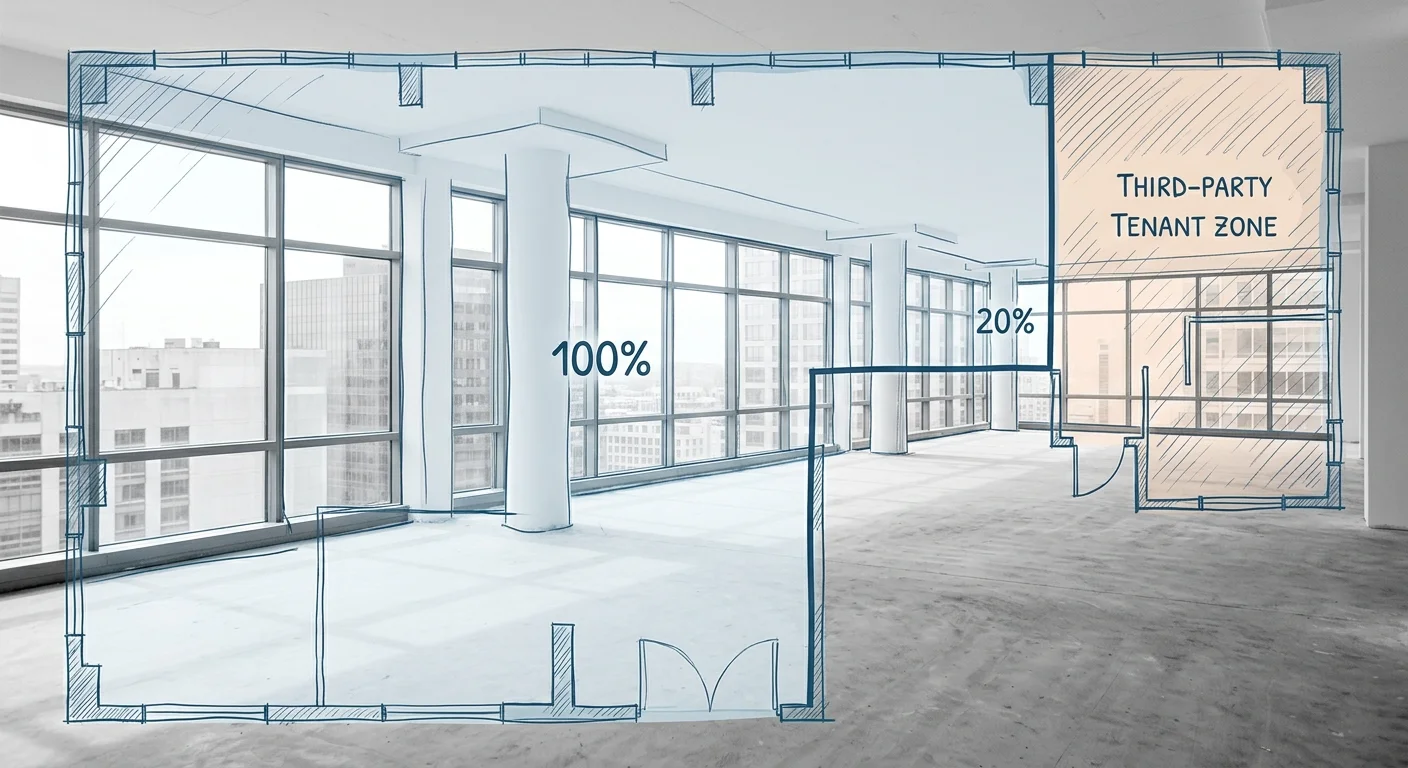
The 51 percent rule sounds simple. It isn't. To qualify for SBA-guaranteed financing on an existing commercial building, your business must occupy at least 51% of the property's total rentable square footage. Not gross square footage. Not lot coverage. Rentable space — the area tenants actually pay for.
SBA financing was built for owner-operated businesses. Not passive investors. That occupancy threshold is exactly what separates a qualifying owner-user from a landlord who keeps a desk in the building to claim the rate.
What makes this threshold worth understanding isn't the floor. It's what the floor implies on the other side. Federal SBA occupancy guidelines permit an owner-user to lease up to 49% of the building's total rentable space to third-party tenants. That remaining portion isn't dead square footage. Structured correctly, it's rental income that offsets your debt service — lowering the effective cost of ownership from the day you close.
How Rentable Square Footage Is Measured Against the Threshold
Rentable square footage is the operative number — not usable square footage. Usable square footage covers only the space a single tenant occupies exclusively. Rentable square footage adds a proportional share of common areas: lobbies, hallways, restrooms, mechanical rooms, stairwells. Everything that serves the building as a whole gets allocated back to each tenant.
That distinction matters more than most buyers expect. A building with 10,000 square feet of usable space will often carry 11,000 or 12,000 square feet of rentable square footage once common areas are allocated. Calculate your 51% threshold against the wrong number and you either believe you qualify when you don't — or you structure your third-party leases incorrectly and trigger a compliance problem after you've already closed.
This is also where buyers weighing whether buying or leasing makes more sense for their Southern California operation run into the real complexity. The math isn't rent versus mortgage. It's what space counts, how it's classified, and whether your intended footprint actually clears the federal occupancy threshold on the specific building you're targeting.
Why 'Existing Building' Changes the Occupancy Math
The "existing building" designation isn't bureaucratic language — it changes the occupancy math directly. For an existing commercial structure, your business must meet the 51% threshold, but not necessarily on day one. A business that expects to grow into additional space can qualify by demonstrating a reasonable plan to reach 51% occupancy within a defined period after acquisition. New construction cuts off that flexibility entirely: SBA construction standards require the borrower to occupy at least 60% of the rentable property immediately upon completion, with no ramp-up period.
That gap between 51% and 60% reflects a deliberate policy distinction. An existing building has documented occupancy history, a real tenant mix, and a market rent baseline a lender can actually evaluate. New construction carries more risk — so the SBA demands more commitment upfront. For buyers in Southern California's competitive office and industrial markets, an existing building with tenants already in place can make the 51% threshold easier to structure around — especially when that remaining 49% is already generating rent. But only if you go in knowing exactly what counts toward the number. Owner-user representation services exist to close that gap before you're under contract, not after.
| Building Type | Minimum Owner-Occupancy Required | Maximum Third-Party Tenant Space | Timing of Occupancy |
|---|---|---|---|
| Existing commercial building | 51% of rentable square footage | Up to 49% to third-party tenants | Must be met; growth plan to reach threshold may be acceptable within a defined period after acquisition |
| New construction | 60% of rentable square footage | Up to 40% to third-party tenants | Immediate upon completion — no ramp-up period permitted |
| Existing building — third-party lease cap | 51% minimum owner-occupancy retained | 49% maximum to third-party tenants | Ongoing requirement for the life of the SBA loan |
How SBA Financing Is Structured for Owner-Occupied Commercial Buildings

SBA financing for owner-occupied commercial real estate isn't one program. It's two. The 504 and the 7(a) operate differently — different structures, different ceilings, different mechanics at the closing table. Choosing between them isn't administrative. It's the decision that sets how much cash you bring and how much debt you carry into the building.
Both programs require the same 51 percent occupancy threshold. That part doesn't change. But the capital structure underneath that threshold is completely different — and most buyers don't figure that out until they're already calculating what to wire at closing.
Businesses seriously weighing the risks of tying up capital in commercial properties need to know which program minimizes that commitment. The 504 and the 7(a) don't produce the same answer on that question. Not even close.
The 504 Loan Stack: Bank, CDC, and Borrower Contributions
The 504 is built for larger acquisitions — and it's the one that moves the equity number most dramatically. Per SBA program guidelines, it can finance up to 90% of the eligible property cost. Your equity contribution drops to 10%. That's not a teaser rate or a best-case scenario. It's the program structure, designed specifically to lower the capital barrier for owner-operated businesses buying real property.
Here's how the 504 stack actually works. A private bank covers 50% of the total project cost. A Certified Development Company steps in for up to 40%. You bring the remaining 10%. But those aren't three buckets inside the same loan. The bank note and the CDC debenture are separate instruments — different terms, different underwriting timelines, different documentation requirements. What looks like a single transaction at signing is actually three parties moving on three different tracks.
Buyers who treat the 504 as a single low-down-payment loan are the ones who hit closing delays they didn't see coming. The bank and the CDC underwrite on different criteria. They want different paperwork. They move on different timelines. Three coordinated parts don't move as one — and nobody warns you about that unless you already know to ask.
How the 7(a) Program Compares for Real Estate Acquisitions
The 7(a) is structurally simpler. One lender. One loan. Per SBA lending rules, the maximum for real estate and business acquisitions is $5 million. That ceiling makes it the right fit for smaller transactions where the three-party coordination of a 504 stack isn't warranted.
The 7(a) doesn't give you the 504's 90% financing ceiling. Equity requirements vary by lender and deal profile — the program doesn't set a fixed number the way the 504 does. That flexibility sounds useful until you're trying to model a closing before you have a lender commitment. If you know the property, know your occupancy footprint, and want a capital structure you can plan around from day one, the 504 gives you a cleaner model. The 7(a) gives you more variables.
| Loan Program | Maximum Loan Amount | Borrower Down Payment | Bank Contribution | CDC / Guarantee Contribution | Best Fit For |
|---|---|---|---|---|---|
| SBA 504 | No program-set ceiling (project-based) | 10% | 50% of total project cost | Up to 40% via Certified Development Company | Larger acquisitions where low equity contribution and structured financing matter |
| SBA 504 | Up to 90% total financing of eligible property cost | 10% | 50% of total project cost | Up to 40% via Certified Development Company | Owner-users who want to minimize cash at closing on a qualifying commercial acquisition |
| SBA 7(a) | Up to $5 million | Varies by lender and deal profile | Single lender covers full loan amount | SBA guarantee (no CDC involved) | Smaller transactions where a single-lender structure and flexible terms are more practical |
The 49 Percent You Can Lease Out — and the Compliance Risks of Getting It Wrong
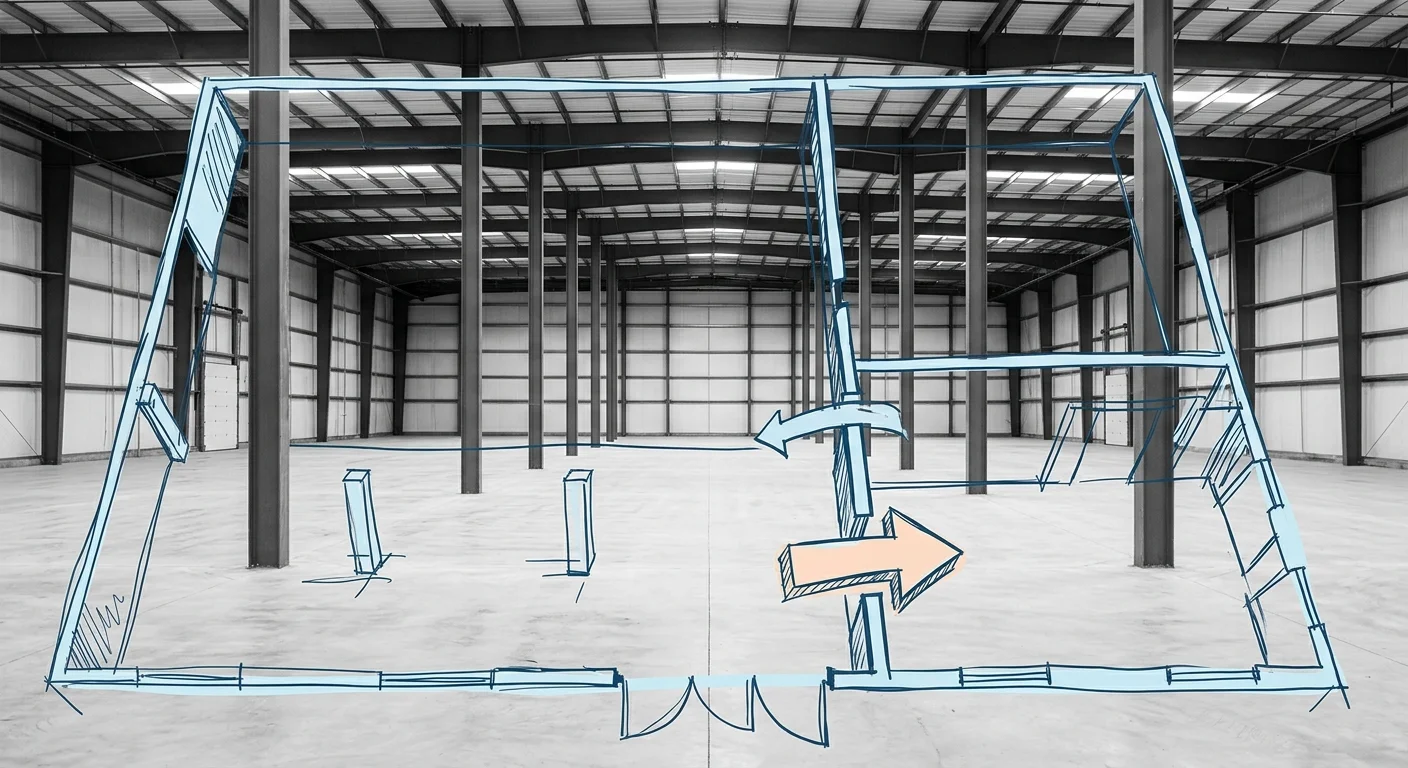
Everyone talks about the 51% minimum. Nobody talks about the 49% ceiling on third-party tenants — and that's where the real exposure is. Most buyers don't know those rules exist until they're already in violation.
Federal rules permit an owner-user to lease out up to 49% of the property's total rentable space to third-party tenants. That's not a loophole. It's a structural feature built into the program. Rental income from that portion can offset your debt service from day one — lowering the effective cost of ownership before you've made a single improvement to the space.
The compliance risk isn't in using that 49%. It's in mismanaging it. Buyers who sign the first tenant who shows up, at whatever rate seems close enough, are making a financial decision without a financial framework. The tax mechanics of that rental income — including how it interacts with commercial depreciation versus renting treatment — are part of the acquisition decision. Not a separate question to sort out later.
What Happens When Owner-Occupancy Drops Below the Threshold
Dropping below 51% occupancy after closing isn't a paperwork problem. It's a loan compliance problem. SBA-guaranteed financing is conditioned on the borrower meeting the owner-occupancy requirement. If your business shrinks or restructures in a way that pulls your footprint below that floor, the lender has grounds to call the loan.
The danger is sharpest for growth-stage businesses — companies where headcount and space needs shift fast. A business that occupies 55% of a building at closing and downsizes two years later may be holding a federally backed loan on a property it no longer qualifies to own. That's not a hypothetical. It's a documented failure mode that shows up when buyers don't model their occupancy trajectory against the 51% floor before they sign.
So don't avoid the program. Model it. Run the 51% floor against realistic projections for your space needs across the full loan term — not just what your headcount looks like at closing. A buyer who does that before selecting a property is in a completely different position than one who figures it out after the fact.
Why Most Buyers Underestimate the Complexity of Managing Tenant Space
Here's what most buyers don't think through: managing third-party tenant space is a landlord function. Collecting rent, enforcing lease terms, handling maintenance obligations, keeping the occupancy records that document your ongoing 51% compliance — those are continuing responsibilities. They don't go away once the loan closes. Most business owners buying under an SBA program are operators. Running a rental unit on the side of their business is not what they signed up for.
The buyers who get this wrong are usually the ones who treated the 49% as found money instead of a structured decision. They sign the first tenant who shows up, at whatever rate looks close enough, with no thought to how that income lines up against debt service. Below-market rents, short-term agreements that don't fit the loan timeline, tenants whose use conflicts with your own operations — any of these erodes the financial advantage the program was designed to give you. The 51% threshold is the floor. What you build above it decides whether this acquisition was a real wealth-building move or just a more expensive way to occupy space.
| Compliance Scenario | Owner-Occupancy Percentage | Third-Party Tenant Percentage | SBA Loan Status | Corrective Action Required |
|---|---|---|---|---|
| Fully compliant at closing and throughout loan term | Owner occupies majority of rentable space, well above the minimum threshold | Third-party tenants fill the remainder, actively managed under structured lease agreements | In good standing — no lender action | None — maintain occupancy records and tenant documentation on an ongoing basis |
| Marginal compliance — owner occupies just above the minimum | Owner footprint sits close to the minimum threshold with little room for operational change | Third-party tenants occupy the remaining space up to the permitted ceiling | Technically compliant but lender scrutiny increases if business operations shift | Model occupancy projections forward across the loan term; build a buffer into space planning before signing |
| Non-compliant after closing — business operations contract | Owner footprint falls below the minimum threshold due to downsizing, restructuring, or headcount reduction | Third-party tenant share now exceeds the permitted ceiling by default | Loan compliance breach — lender has grounds to call the loan or impose remediation conditions | Notify lender immediately; develop a documented remediation plan to restore qualifying occupancy or refinance out of the SBA program |
| Non-compliant from the start — misclassified space | Owner counts storage, common areas, or shared infrastructure as occupied square footage it does not actually control | Third-party tenant footprint is understated on paper but accurate on the ground | Loan application is based on inaccurate occupancy representation — creates legal exposure at closing and audit | Conduct a proper rentable square footage analysis with an independent broker before submission; never rely on seller representations alone |
| Strategic compliance — third-party lease space actively structured to support debt service | Owner occupies a comfortable share above the minimum, leaving room for modest operational fluctuation | Third-party tenants are under market-rate, term-aligned leases that generate income offsetting monthly debt obligations | Fully compliant — rental income reduces effective cost of ownership from day one | None for compliance — ongoing lease management and occupancy documentation required to sustain the position |
How to Navigate an SBA Owner-User Purchase Without Landing on the Wrong Side of the Transaction
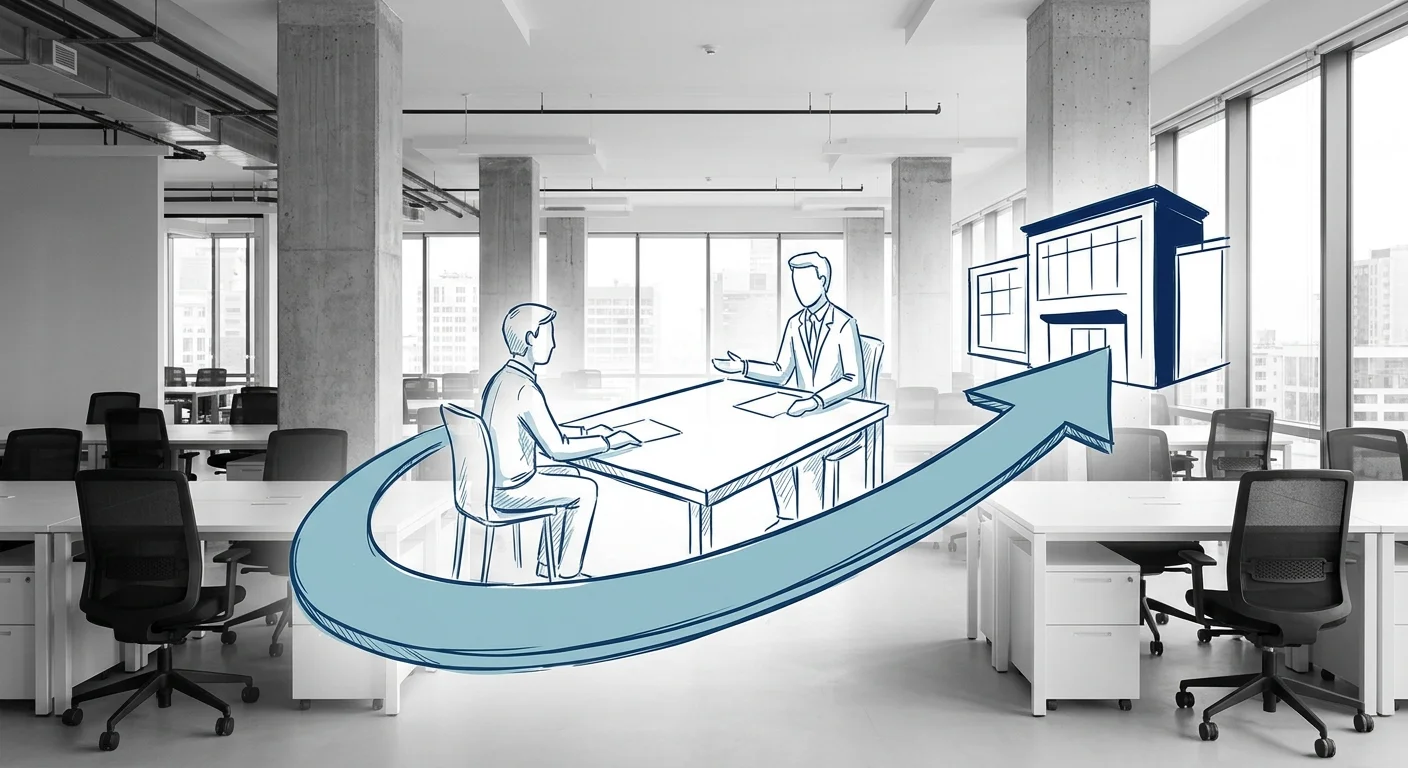
Knowing the rules is one thing. Knowing who's in the room — and whose side they're actually on — is what determines whether those rules work for you or against you.
The SBA occupancy framework gives a business owner real tools: a federally backed path to acquiring a building with as little as 10% down, the right to collect income on up to 49% of the rentable space, and a long-term asset instead of a landlord's rent roll. But that doesn't show up automatically. The purchase side of commercial real estate carries the same structural misalignment problem as the leasing side. Most buyers don't see it until the deal is already done.
Buying doesn't fix the information gap. It compounds it. You're not signing a five-year lease you can exit if the terms turn out to be wrong. You're carrying an SBA loan for the life of the asset. The gap between what a buyer pays and what a property is actually worth — what Southern California tenants discover when they finally look at landlord leverage versus tenant equity in commercial leases — doesn't disappear at the purchase table. Getting the structure wrong here isn't a recoverable mistake.
Why the Listing Broker Is Not Working for You
The seller's broker has one job: get the seller the best possible price and terms. That's not a character flaw. It's a fiduciary obligation. Buyers who walk into a commercial acquisition expecting the listing broker to explain occupancy thresholds, flag compliance risk, or model the 51% footprint against their actual business needs are asking the wrong person entirely.
A listing broker who walks you through SBA rules isn't doing you a favor. They're managing the transaction toward a close that benefits their client — the seller. The information may be accurate. The framing almost certainly isn't neutral. That's the gap where buyers end up in buildings that technically clear the 51% threshold but don't fit the way the business operates, grows, or plans to use the third-party tenant space. Technically compliant and strategically wrong are not the same thing.
That's what independent owner-user representation actually does. A boutique representation model where a principal handles the transaction personally — not a junior associate assigned after the pitch — means someone who understands both the SBA compliance framework and the Southern California commercial market is running comparisons across competing properties. Not just the one the listing broker is incentivized to close. That's what turns the 504 program's 90% financing ceiling from a number on a flyer into real negotiating power — the kind that comes from knowing what the building next door is trading for.
Who This Purchase Process Is Not Built For
This purchase process isn't built for passive institutional investors. It isn't built for buyers who want to acquire a property primarily as a rental income vehicle. And it isn't built for anyone whose business won't realistically occupy at least 51% of the rentable square footage. The SBA owner-occupancy mandate isn't a technicality to work around. It's the structural condition of the entire program. If the business doesn't need the space, this isn't the right instrument.
It's also not built for buyers who want to skip the comparison process and close on the first building that pencils out. The owners who use this program well are the ones who modeled multiple properties, stress-tested the occupancy projection, and went in knowing what third-party tenant income would actually cover. That work doesn't happen by accident. And it doesn't happen without dedicated representation in Los Angeles and across the Southern California markets that understands both the regulatory layer and the deal mechanics beneath it. The 51% threshold is only as useful as the person measuring it.
Frequently Asked Questions About SBA Owner-Occupancy Rules
The 51% threshold sounds simple until you're standing in front of a specific building. Then the questions get pointed. How exactly do you measure it? What happens if you grow out of the space — or shrink into less of it? What does the 49% on the other side actually cost you to manage?
These aren't academic questions. They're the ones that decide whether this acquisition actually works — or just technically closes.
How do you calculate the 51 percent occupancy threshold in a multi-tenant existing commercial building?
Start with total rentable square footage — every leasable square foot in the building, with common areas allocated proportionally across tenants. Your business must physically occupy at least 51% of that number.
Not storage. Not shared lobbies counted twice. Not space you plan to grow into eventually. The SBA measures current, documented occupancy at the time of loan qualification — not projected occupancy six months from now.
If the building already has tenants when you acquire it, your square footage still has to clear that 51% floor after accounting for every existing lease. The only way to know you're actually hitting the threshold — not just estimating it — is a professional occupancy analysis before you're under contract.
Can a business temporarily lease out more than 49 percent of an existing building acquired via an SBA loan?
No. The 51% owner-occupancy requirement isn't a closing-day snapshot. It's a continuing condition of the loan — meaning leasing more than 49% of rentable space to third-party tenants puts you out of compliance. There's no built-in grace period. No standard temporary exception.
If your business needs flexibility to lease out more space during a transition period, that conversation belongs with an SBA lender before you close. Not after. The deal structure may need to account for it — and lenders don't all interpret edge cases the same way.
Buyers who go in without that clarity are the ones who discover a compliance problem they didn't see coming. That's not a lender problem. That's a preparation problem.
What happens if my business operations shrink and we drop below the 51 percent owner-occupancy limit after purchase?
Dropping below 51% after closing isn't an operational inconvenience. It's a loan compliance event. SBA-backed financing is conditioned on the borrower continuing to meet the owner-occupancy requirement. A lender who discovers you no longer occupy the required share of rentable space has grounds to call the loan — the full outstanding balance could become due immediately.
The risk hits hardest for businesses where space needs shift: headcount reductions, operational consolidations, a move toward remote work. Any of these can pull occupancy below the threshold without the owner noticing until the lender does.
The answer isn't a legal workaround. It's modeling your occupancy trajectory honestly before you pick the property — so the 51% floor isn't a cliff you're walking toward two years after closing.
What are the hidden costs of managing the allowable 49 percent third-party leased space under SBA guidelines?
Managing third-party tenant space makes you a landlord. That function carries costs that don't appear in the pro forma: collecting rent, enforcing lease terms, handling maintenance obligations, and maintaining the occupancy documentation that proves your ongoing 51% compliance. These are ongoing responsibilities — not a one-time closing task.
The financial exposure is in structuring those leases poorly. Below-market rents that don't contribute to debt service. Short-term agreements that create vacancy at the wrong moment. Tenant uses that conflict with your own operations.
The 49% of rentable space you're permitted to lease out is an advantage — but only if the lease terms are built with intention. Buyers who treat it as passive income figure out quickly that it isn't.
Why should I avoid using the seller's listing broker when buying a property under SBA financing rules?
The seller's broker has a fiduciary obligation to the seller. That obligation shapes every piece of information they share, every way they frame the property's financials, and every explanation they offer about SBA compliance. The information may be technically accurate. The framing is almost never neutral.
A listing broker who walks you through the 51% occupancy calculation is doing it to close a transaction that benefits their client. They aren't modeling whether this building fits your space needs over the loan term. They aren't flagging occupancy trajectory risk. They aren't running comparisons across competing properties to build your negotiating position. That's not their job.
But it needs to be someone's job — on your side of the table. The listing broker can't fill both roles. And the buyers who assume otherwise are the ones who find out the hard way.
Does the SBA 51 percent rule apply differently to mixed-use or multi-story commercial buildings?
The 51% threshold applies to total rentable square footage regardless of how the building is configured. Mixed-use layouts and multi-story structures don't change the underlying requirement for existing commercial buildings. What changes is how you measure and document it.
In a building where some floors are zoned retail and others office, the rentable square footage of each use type still counts toward the combined total. Your business must occupy at least 51% of that combined figure. The complexity isn't the percentage — it's the measurement itself. Allocating common areas correctly. Separating owner-occupied from tenant-occupied space across different floors. Documenting the split in a form the lender actually accepts.
Most listing brokers won't walk you through the measurement methodology accurately. Not because they're dishonest — because it's not their problem to solve. It needs to be solved before you're under contract, not during underwriting when there's no time to fix it.
What the 51 Percent Threshold Really Means for Your Business
The 51 percent threshold isn't a compliance burden. It's a government-subsidized entry point to commercial asset ownership — federally backed financing, the right to offset debt service with third-party tenant income, and a long-term equity position that renting never builds.
But it only works that way if you go in treating it as a tool.
Buyers who treat the 51 percent rule as a minimum — a box to check at closing — end up in buildings that technically qualify but don't actually serve the business. Tenant income that doesn't cover the payment. An occupancy projection that was never modeled before the ink dried. A federally backed loan on a property that was never structured to deliver.
Buyers who treat it as a structuring tool are in a different position. They ran the occupancy projection against realistic growth scenarios before making an offer. They built out the 49 percent lease space with intention, not as an afterthought. They understood how the SBA compliance framework interacts with the specific asset they were acquiring. Those are the buyers who come out with something that builds wealth instead of just replacing rent.
Peninsula Commercial Real Estate Group works exclusively on the buyer's side of this transaction. Not the seller's. Not the listing broker's. Yours.
The SBA compliance framework doesn't optimize itself. The occupancy math doesn't model itself. And a federal mandate doesn't become negotiating power just because it's on paper — someone has to know how to use it.
A threshold is only as useful as the person measuring it.
The 51% threshold doesn't manage itself. Measuring it wrong, structuring the leased 49% without a plan, walking into underwriting without someone fully in your corner — that's how a wealth-building acquisition turns into a compliance exercise you barely passed. Request a Consultation to get a straight read on whether the property you're evaluating is built to deliver — or just technically compliant.