
How to Find SBA-Qualifying Commercial Properties in Southern California in 2026
Finding SBA-qualifying commercial property in Southern California is a compliance problem, not a listing search problem.
Most buyers discover that in the wrong order — after they are already under contract on a building that fails the occupancy test.
The SBA 504 loan program requires a small business owner-user to occupy at least 51% of an existing building's square footage. For new construction, that threshold rises to 60% immediate occupancy. Those two numbers are the first filter — before price, before location, before any conversation with a seller. A building that fails either threshold cannot be financed through the 504 program, regardless of how favorable everything else looks.
The SBA 7(a) program caps at $5 million for commercial real estate acquisitions. In Southern California's 2026 market, where industrial and office assets in Los Angeles County, Orange County, and the Inland Empire routinely trade above that ceiling, the loan structure question is not academic. It determines which properties are worth pursuing at all.
The correct search sequence runs compliance first, then submarket, then building — never the reverse. Buyers who find a property they want and then ask whether it qualifies hand the seller every dollar of negotiating power before talks begin. Buyers who run the occupancy and loan-structure filters first arrive with a comparative set of qualifying properties and a real ability to walk away from any one of them.
That difference decides whether a buyer pays what a seller asks or negotiates what the market will actually support. The occupancy rule that looks like a restriction is the mechanism that forces sellers to move — but only when the search process is built around it from the beginning.
Last Updated: August 24, 2026
- • What SBA Financing Actually Requires From the Property
- • The Two SBA Loan Structures and What Each Demands
- • How the Search Process Breaks Down Without SBA Alignment
-
• Building the Comparative Selection Framework
- • Filter 1 — SBA Occupancy Compliance: Screening Every Property Before the Tour
- • Filter 2 — Loan Structure Fit: Matching the Property to the Right SBA Program
- • Filter 3 — Submarket Comparables: Using Live Options to Compress the Asking Price
- • Filter 4 — Seller Leverage Analysis: Reading Who Has Somewhere Else to Go
- • The Long-Term Economics of Getting This Right
-
• Frequently Asked Questions
- • What are the exact occupancy requirements for an SBA-qualifying commercial property in Southern California?
- • Can I use an SBA 504 loan to purchase a multi-tenant office building in Los Angeles?
- • Why do residential real estate agents struggle to locate SBA-eligible commercial properties?
- • How does the comparative search process preserve leverage when buying an owner-user commercial building?
- • What are the upfront fee realities when utilizing an SBA 504 loan program in 2026?
- • The Right Process Produces the Right Property
What SBA Financing Actually Requires From the Property
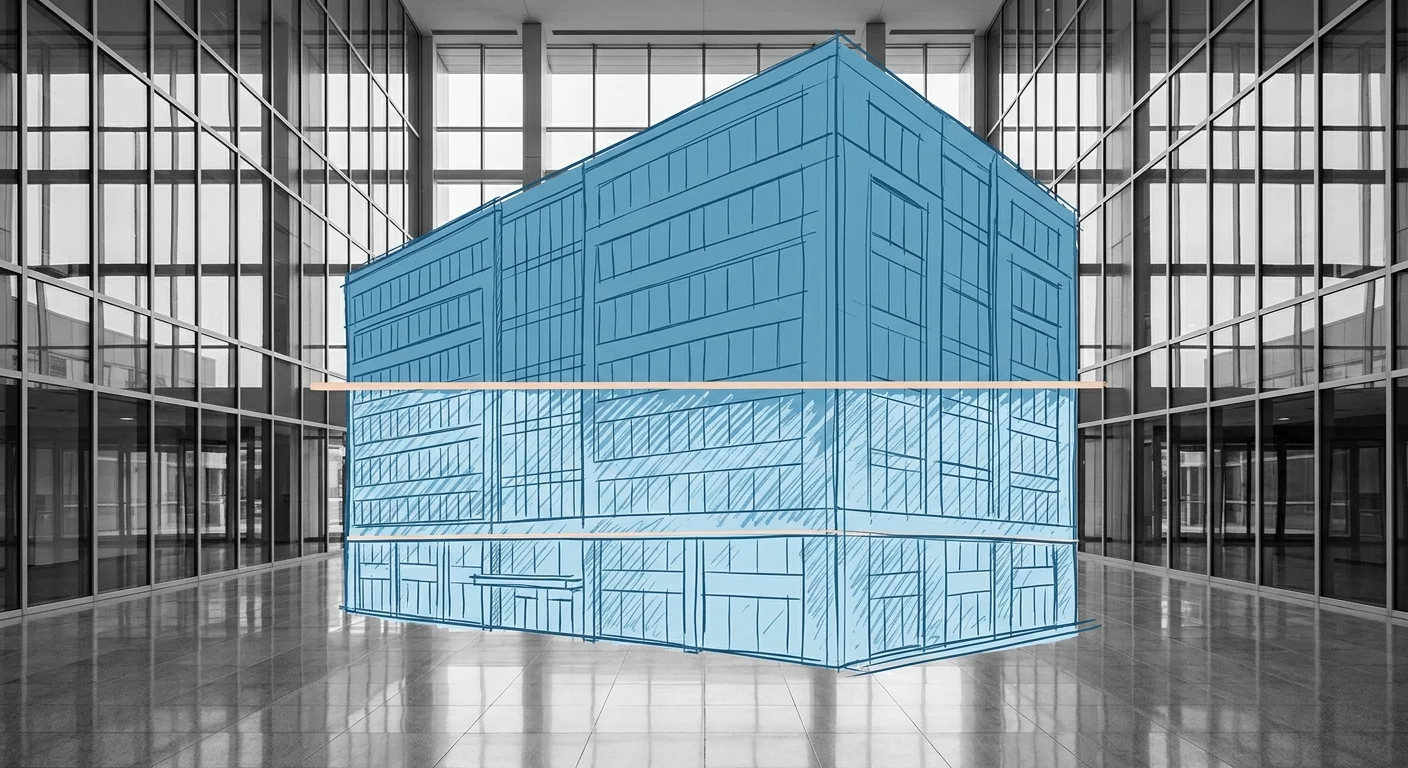
The SBA doesn't care what you want to buy. It cares what the building can support.
Occupancy is the gating requirement. Price, location, seller motivation — none of it matters if the building can't clear the threshold. An owner-user must occupy at least 51% of the total square footage to even get into SBA 504 financing. A property that fails that test is out before the first offer is written. Competitive terms on paper mean nothing at that point.
Most owner-users skip this step. They spend weeks touring buildings, warming up to a seller, getting attached to a floor plan — then find out in underwriting that the square footage split doesn't work. Run the occupancy math before the tour. That's not paperwork. That's how you keep your negotiating position intact.
The 51% and 60% Occupancy Rules — What They Mean in Practice
The rule doesn't flex. For an existing commercial building, SBA 504 program guidelines require the owner-user to occupy at least 51% of total square footage. For new construction, that floor jumps to 60% immediate occupancy — with the expectation that owner-use expands further over time. There's no variance process. No negotiating with the threshold.
That threshold isn't just a compliance number. It's an inventory filter. A buyer who needs 51% occupancy of an existing building can't purchase a multi-tenant complex where long-term leases already fill 70% of the space. Those buildings are off the table before anyone schedules a showing. The occupancy rule pre-screens the market for you — if you know to apply it first.
That pre-screening works in your favor — not against you. For a business weighing whether buying beats leasing in the current market, the occupancy rules shrink the qualifying universe. A smaller qualifying universe means the seller of an SBA-eligible building is competing for a specific, financing-ready buyer pool. Not the open market. That changes who has the pressure on them.
Why Most Listings Fail the Occupancy Test Before You Tour Them
Most commercial listings in Southern California don't qualify. The reason is almost always tenant mix. A building where long-term tenants already occupy the majority of leasable space fails the 51% threshold immediately. The buyer can't displace existing tenants to manufacture occupancy. And the seller often doesn't know that's the problem until financing collapses.
A standard listing search — pull everything available in a submarket, sort by price — produces a list that's mostly SBA-ineligible. The occupancy filter wipes out a significant share of what gets marketed as 'available for owner-users' before anyone has verified whether the building actually complies. Doing that filter last is exactly how buyers waste months and lose deals in underwriting.
Run occupancy compliance at the start of the search and the entire dynamic shifts. Every building that makes it onto the comparative set has already cleared the threshold that sinks most deals. That's a set of pre-qualified properties — and pre-qualified is exactly what forces sellers to compete rather than dictate. The exclusive commercial real estate services that matter here aren't about accessing listings. They're about structuring the search so the occupancy filter does its work before a single offer gets written.
| Property Scenario | Minimum Owner Occupancy Required | Maximum Leasable to Third Parties | SBA Program Applicability |
|---|---|---|---|
| Existing commercial building (owner-user purchase) | 51% minimum | Up to 49% of total square footage | SBA 504 eligible |
| New construction / newly constructed facility | 60% minimum (immediate) | Up to 20% can be leased out permanently | SBA 504 eligible |
| Multi-tenant building where existing leases exceed 49% of space | Cannot meet 51% threshold with tenants in place | Existing tenant occupancy disqualifies the building | SBA 504 ineligible — fails occupancy test |
The Two SBA Loan Structures and What Each Demands
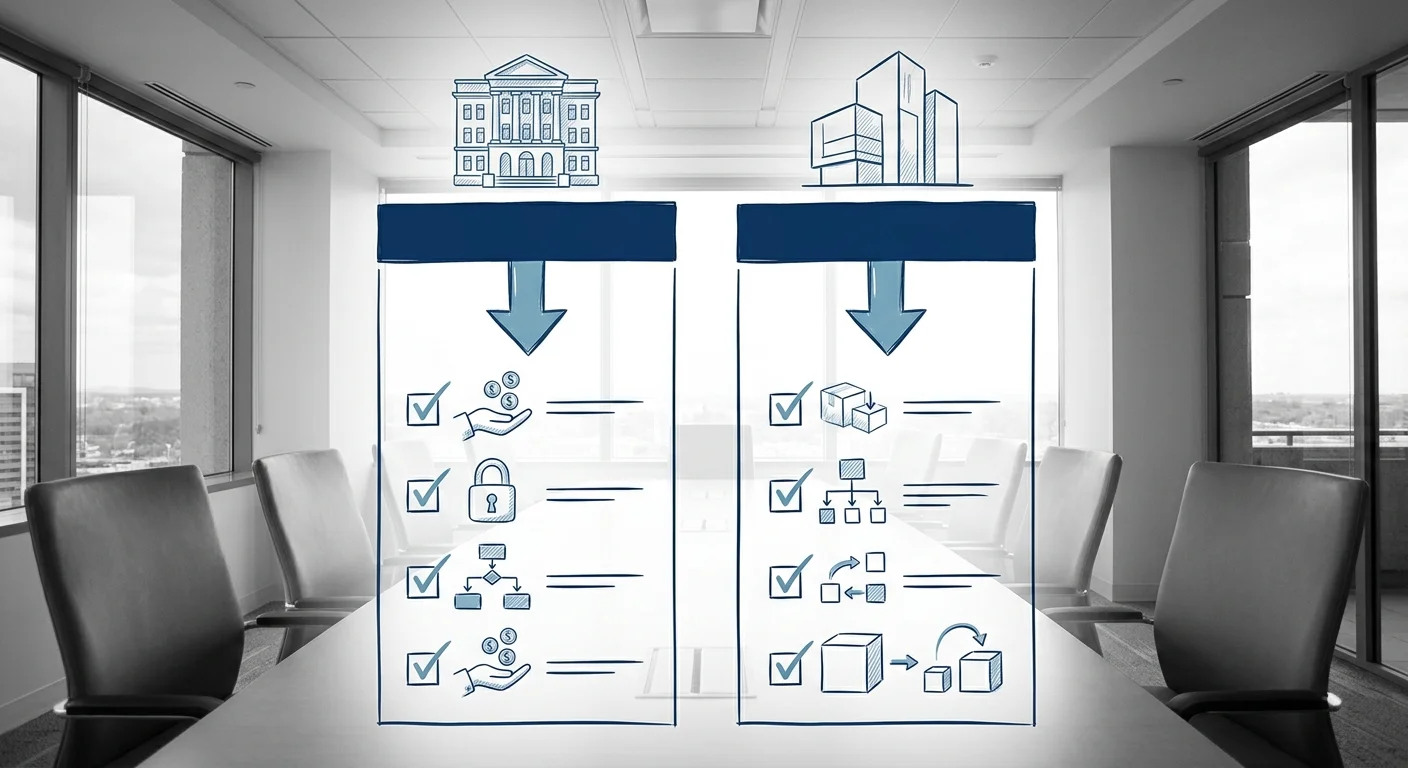
Occupancy is only the first filter. The next one is loan structure — and the 504 and the 7(a) are not interchangeable. Each one imposes different constraints on deal size, lender involvement, and which buildings are even worth putting on a list.
The property has to match the program. Not the other way around.
Most owner-users find out about the mismatch after weeks of work. They've toured a building, gotten attached, and then discovered the financing doesn't fit the program. By that point, the seller knows they're committed — and that's when the price stops being negotiable. That sequencing error is exactly where brokers who lack commercial transaction depth cost their clients the most. A broker who handles owner-user purchases only occasionally doesn't carry the pattern recognition to catch that problem before it becomes expensive.
SBA 504: The Long-Term Fixed-Rate Structure for Building Ownership
The SBA 504 is the dominant structure for owner-users buying commercial real estate they intend to hold. It's built for fixed-asset acquisition — land, buildings, major equipment — and it runs through three parties: a private lender, a Certified Development Company (CDC), and the borrower. That three-party structure isn't a formality. It shapes every part of the timeline.
CDCs are non-profits certified and regulated by the SBA to package, process, close, and service 504 loans. Their involvement isn't optional — it's baked into the program. But buyers who don't know that going in tend to misread the timeline and underestimate the documentation load. Both of those are driven by the CDC, not the private lender. Expecting one process and getting another is how deals slip.
The 504's gating requirement is occupancy: at least 51% of an existing building's square footage must be owner-occupied. That single threshold determines eligibility. Not the interest rate. Not the down payment. The threshold. Maturity terms run 10, 20, or 25 years — which makes this the right structure when the buyer intends to own the asset through a real operational cycle, not exit it in three years and move on.
SBA 7(a): Flexibility With a Hard Ceiling
The SBA 7(a) offers more flexibility in how the money gets used. But it comes with a hard ceiling: $5 million, maximum, for commercial real estate acquisitions. That number does more work than most buyers realize.
In Southern California's 2026 market, that ceiling hits earlier than most buyers expect. Office and industrial assets in Los Angeles County and Orange County regularly trade above $5 million. So the 7(a) doesn't just filter by occupancy — it filters by price. A buyer planning to use the 7(a) needs to know that number before building any comparative list. Otherwise they're spending time on buildings their financing can't touch.
The 7(a) guarantee structure also differs from the 504. Lenders receive a guarantee of up to 85% for loans under $150,000 and 75% for larger loans. That affects how aggressively an approved lender will engage — and it means the buyer's financial profile, not just the property's numbers, is part of what gets priced. Knowing which program applies before the search narrows isn't paperwork preparation. It's how you avoid spending weeks in a submarket your financing can't close.
Choosing the Wrong Structure Reshapes the Entire Search
Choosing the wrong loan structure doesn't delay a deal. It invalidates the property list you built around it.
A buyer who qualifies for the 504 and builds around that program's requirements is searching in the right range. A buyer who assumes 7(a) flexibility and shops assets above the $5 million cap will burn weeks in a submarket their financing can't close. But here's the inversion most buyers miss: the SBA's structural constraints — the 51% occupancy floor, the loan ceilings — aren't obstacles. They're the filters that define which buildings give the buyer a real position of strength. A property that clears those thresholds and fits the right program is the only property worth approaching with confidence. The rule that looks like a restriction is what forces sellers to compete. But only for the buyer who built the search around it before anyone else did.
| Feature | SBA 504 Loan | SBA 7(a) Loan |
|---|---|---|
| Occupancy Requirement (Existing Building) | Owner-user must occupy at least 51% of total square footage | No fixed occupancy minimum — use determined by lender underwriting |
| Loan Maturity Terms | 10-year, 20-year, or 25-year terms available | Varies by lender; no fixed long-term maturity structure |
| Maximum Loan Amount | No hard cap tied to program ceiling; deal size driven by project cost structure | Capped at $5 million for commercial real estate acquisitions |
| Lender Guarantee Structure | Three-party structure: private lender, CDC, and borrower — CDC role is mandatory | Lender guarantee of up to 85% for loans under $150,000 and 75% for larger loans |
| Third-Party Administrator | Certified Development Company (CDC) — non-profit, certified and regulated by the SBA — packages, processes, closes, and services the loan | No CDC involvement; administered directly between borrower and SBA-approved lender |
| Best Fit For | Owner-users acquiring fixed assets — land or buildings — for long-term occupancy in Southern California | Owner-users with smaller acquisition targets that fall within the $5 million ceiling |
How the Search Process Breaks Down Without SBA Alignment
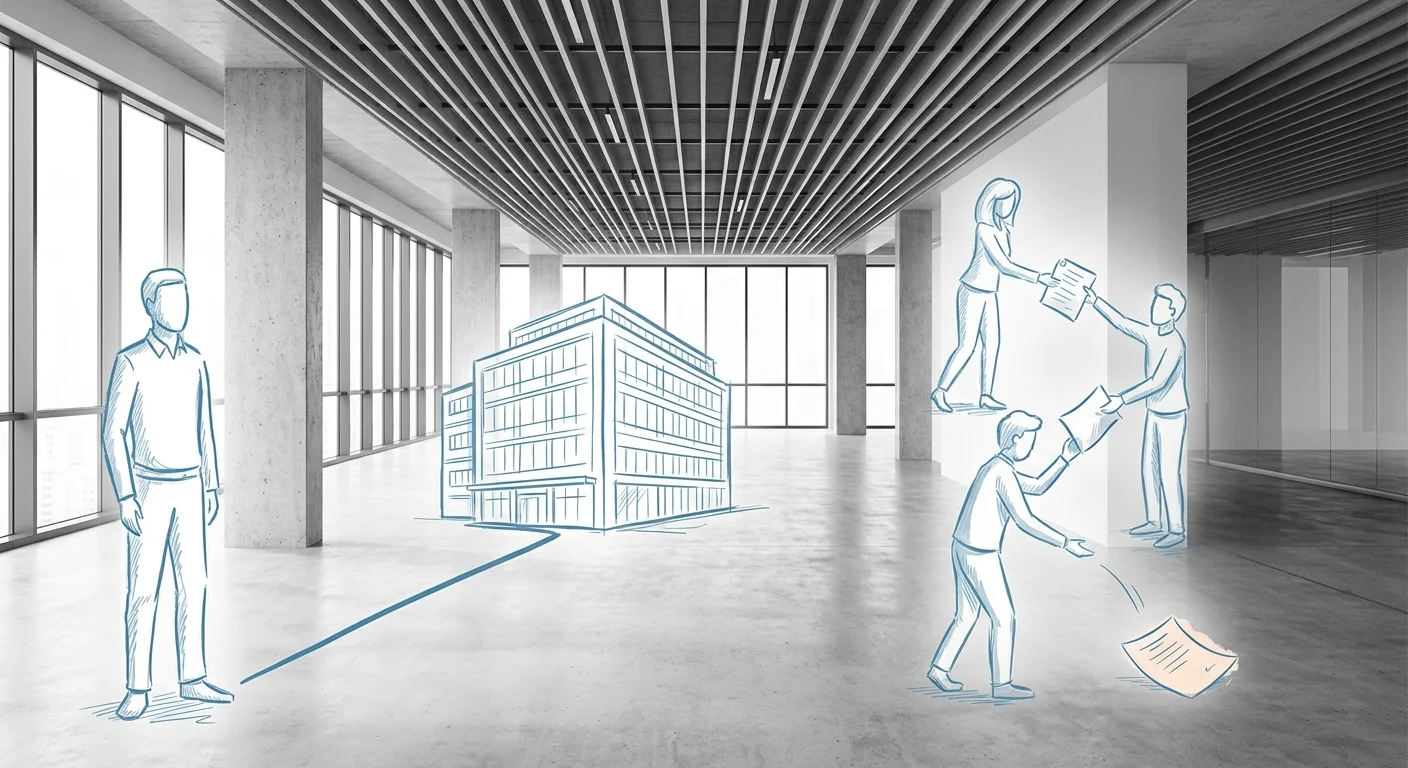
Knowing the rules doesn't protect you. Building a search that enforces them from the first property toured does. Most owner-user searches never make that distinction — and that's where the deal starts breaking down.
The failure doesn't happen at the offer stage. It happens earlier — at the search design stage. When the broker running the search treats SBA occupancy compliance and loan structure fit as due diligence items rather than the first two filters, the buyer is already losing ground before a single tour is scheduled.
By the time the occupancy math surfaces, the buyer has spent weeks on a building that never cleared the 51% threshold. The seller knows it. The lender knows it. And the buyer is negotiating from the worst position possible — no alternatives, no comparative set, a financing structure coming apart in real time.
Why Residential Brokers Struggle With Owner-User Commercial Deals
The most common source of that sequencing error is the broker. Residential agents who occasionally step into commercial transactions — or commercial generalists who handle owner-user purchases on the side — rarely build a search around SBA eligibility from the start.
But it's not incompetence. It's a structural expertise gap. Residential brokerage runs on completely different transaction architecture — different financing programs, different occupancy logic, different due diligence sequences. A residential broker who hasn't closed SBA-financed commercial deals doesn't know that the 51% occupancy floor is the gating requirement. They treat it as a financing detail to confirm later. It isn't. It's the first filter. Everything else is downstream of it.
That gap has real consequences. A broker running a residential-style search pulls everything in a submarket that matches the buyer's square footage and price range — and hands over a list where most properties fail the occupancy threshold before a single offer is written. The buyer tours them anyway. The buyer gets attached. Then the financing falls apart, and the seller walks away knowing exactly what happened.
California requires all real estate licensees conducting commercial transactions to hold an active, verifiable license through the California Department of Real Estate. Checking that license before you engage a broker is a baseline step — but it tells you nothing about whether that broker has ever closed an SBA-structured owner-user deal. License status and transaction competency are two different things. Only one shows up in a DRE license lookup.
The Passive Listing Search Problem
The passive listing search is the industry default. It starts with a database pull — LoopNet, CoStar, internal MLS feeds — filtered by submarket, square footage, and price. SBA occupancy compliance isn't a filter. It's an afterthought, if it comes up at all.
What comes back looks thorough. Buildings where long-term tenants already occupy the majority of leasable space are on it. Mixed-use assets with residential components are on it. Multi-tenant office complexes where no realistic configuration clears the 51% threshold are on it. None of them qualify for SBA 504 financing. The list is a time sink dressed up as research.
The passive search doesn't just waste time. It hands the seller of every eligible building a free week of no competition. Run the 51% occupancy floor and loan structure fit at the front of the search, and every property in the comparative set is one a financing-ready buyer can actually close on. That's what forces sellers to compete — not charm, not persistence. The comparison itself is what you're negotiating with.
Who This Search Process Is Not Built For
This process isn't built for buyers who want to move fast without comparing options. Running multiple SBA-eligible candidates simultaneously — with occupancy compliance and loan structure confirmed on each — takes longer than calling the first listing that looks right and writing an offer. That's the point. Speed without comparison isn't efficiency. It's just a weaker negotiating position with a shorter runway.
It's also not built for buyers whose primary goal is rental income. The SBA's programs exist for businesses that occupy the space they're buying. A buyer who wants tenants paying their mortgage isn't an owner-user — and the occupancy minimums exist specifically to enforce that line. No search structure works around them.
And it's not built for buyers who want the cheapest, fastest close with no interest in what the comparative set reveals about seller motivation and submarket pricing. The tenant representation in Los Angeles framework that Peninsula CRE Group applies to lease negotiations — forcing competing options to the table before any single landlord can dictate terms — runs the same logic on the owner-user side. Skip the comparison and there's nothing to negotiate with. That's true whether you're signing a lease or buying the building.
| Search Approach | SBA Compliance Screening | Occupancy Math Applied | Comparative Leverage Built | Likely Outcome for Buyer |
|---|---|---|---|---|
| Passive listing search (residential-style) | None — SBA eligibility treated as a due diligence item after property selection | Not applied at search design stage; surfaces as a problem after buyer attachment | None — no competing eligible properties on the table | Buyer discovers disqualification mid-process; financing collapses; seller retains all leverage |
| Database pull filtered by size and price only | Partial — price range may accidentally exclude some ineligible assets, but occupancy mix is not screened | Applied inconsistently; tenant configuration reviewed only when lender flags it | Minimal — property list includes disqualified buildings that dilute focus and waste negotiating time | Compressed timeline, no alternative candidates ready, buyer negotiates from a single-option position |
| Commercial search without SBA specialist experience | Inconsistent — broker understands commercial transactions generally but has not structured searches around SBA occupancy thresholds | Applied late — occupancy math confirmed after offers are drafted, not before properties are toured | Weak — comparative set assembled by geography and price, not by financing eligibility | Offer submitted on a property that cannot close under the intended loan structure; re-starts search from zero |
| Principal-led comparative search with Filter 1 and Filter 2 applied at intake | Complete — SBA Occupancy Compliance screened before any property enters the candidate set | Applied at the front of the search; only buildings clearing the occupancy threshold advance | Strong — every property in the comparative set is one a financing-ready buyer can close on, forcing sellers to compete | Buyer enters negotiation with multiple eligible options confirmed; seller faces real competitive pressure |
| Single-property pursuit without comparative framework | Not applicable — buyer targets one building and works toward making it qualify | Not applied systematically; occupancy math shaped around the desired property rather than used as a filter | None — seller knows the buyer has no alternative; asking price and terms are non-negotiable | Buyer overpays, accepts unfavorable terms, or loses the property when occupancy math fails at underwriting |
Building the Comparative Selection Framework

The fix isn't a better database pull. It's a different architecture entirely — one that runs the SBA occupancy mandate as the first filter, not the last confirmation.
Four filters run in sequence. Each one cuts properties that cannot close — before any offer is written, before any seller knows the buyer exists. What survives is a comparative set where the financing is confirmed, the occupancy math clears, submarket pricing is understood, and seller motivation is already mapped. That's the set where the buyer holds the stronger position.
A 51% occupancy floor reads like a compliance hurdle. Run it first and it becomes a screening tool — separating buildings the buyer can actually close on from buildings that will eat weeks of goodwill before the financing collapses.
Filter 1 — SBA Occupancy Compliance: Screening Every Property Before the Tour
Filter 1 runs before any property gets a tour. Not after the buyer has walked the space and started mentally arranging furniture.
For an existing building, the threshold is 51% owner-occupancy of total leasable square footage. For new construction, that rises to 60% immediate occupancy, with a permanent ceiling of 20% that can be leased to outside tenants. Both numbers are fixed by program rules. A seller cannot negotiate them away. A lender cannot waive them. They are the gate — and no amount of enthusiasm for the property changes what's on the other side of it.
Running this filter first means pulling the current tenant roll on every candidate property before scheduling anything. A building with a single long-term anchor tenant sitting at 60% of the space fails immediately — regardless of price, location, or condition. Cutting it at that stage costs nothing. Cutting it after three weeks of tours and seller conversations costs leverage, time, and usually the transaction itself.
Filter 2 — Loan Structure Fit: Matching the Property to the Right SBA Program
Filter 2 matches the property to the right SBA program before the search narrows. The two primary programs carry different ceilings and different structural requirements. A property that works cleanly under one may be completely out of reach under the other. Finding that mismatch after weeks of pursuit is one of the most expensive sequencing errors in owner-user transactions — and it happens constantly when the financing conversation gets deferred.
The SBA 7(a) program caps commercial real estate acquisitions at $5 million. In Los Angeles County and Orange County, that ceiling is a live constraint. Assets in competitive submarkets regularly trade above it. A buyer working within the 7(a) needs to know that number before building the comparative set — not after identifying a property and opening the financing conversation.
The 504 program carries no equivalent dollar ceiling — but the occupancy floor is harder, and the three-party structure involving a Certified Development Company adds timeline and documentation load that has to be planned around from day one. Permanent tenant exposure is also capped at 20% of leasable space, which eliminates a wide range of mixed-use candidates buyers often assume will qualify. Knowing which program applies shapes which properties are worth pursuing at all. Run Filter 2 at the start and the comparative set is built around assets the financing can actually reach. Skip it and the lender's structure collapses at the last moment — with a seller who already knows the buyer has nowhere else to go.
Filter 3 — Submarket Comparables: Using Live Options to Compress the Asking Price
Filter 3 is where the process stops screening and starts building something the buyer didn't have before: pricing power.
One SBA-eligible property with no alternatives is just an asking price to accept or walk away from. Three SBA-eligible properties in the same submarket — all cleared through Filters 1 and 2 — give the buyer a pricing reference they control. When one seller knows the buyer has two other qualified options on the table, the conversation about price and terms changes. Not because the buyer pushed harder. Because the seller's grip on the outcome was structurally reduced. The same logic that drives landlord pricing power in Southern California commercial leases runs identically on the purchase side: pricing power is a function of alternatives, not persistence.
Submarket comparables also expose what sellers believe their buildings are worth — and why. An owner convinced their asset commands a premium because nothing comparable has sold recently will hold that position until a buyer puts active alternatives in front of them. Live options do that work. Historical sales data doesn't. Assessed values don't. The asking price compresses when the seller can see, in real time, that the buyer has somewhere else to go.
Filter 4 — Seller Leverage Analysis: Reading Who Has Somewhere Else to Go
Filter 4 reads the seller's actual position before any offer is written. Days on market, existing financing obligations, vacancy exposure, lease expiration timelines — all of it maps how much pressure the seller is carrying. A seller whose asset has sat for months, with carrying costs accumulating and no competing offers visible, is negotiating from a fundamentally different place than one who listed three weeks ago with multiple inquiries pending. That difference is worth more at the offer stage than any amount of goodwill built up over tours.
Running this analysis across every property in the comparative set — not just the preferred one — tells the buyer which seller is most motivated and which asset is therefore most negotiable. The goal isn't to find the best building and then negotiate. The goal is to find the building where the seller's pressure and the buyer's SBA-compliant financing create conditions the market would never hand an unprepared buyer. The occupancy rule that reads like a restriction is the thing that forces sellers to move — but only for the buyer who built the search around it from the start.
| Framework Filter | What It Screens | Why It Matters Before the Offer | What Skipping It Costs the Buyer |
|---|---|---|---|
| Filter 1 — SBA Occupancy Compliance | Whether the existing tenant roll allows the owner-user to meet the minimum occupancy threshold required by the SBA program | Occupancy math is fixed by program rules — no seller negotiation, no lender waiver. A property that fails this filter cannot be financed under SBA terms, regardless of price or condition. | Weeks spent pursuing a disqualified property while an eligible seller faces no competition. Every tour of a non-qualifying building is leverage transferred to the seller of the building that actually qualifies. |
| Filter 2 — Loan Structure Fit | Whether the property's acquisition cost and financing structure align with the correct SBA program's mechanics and ceiling | The two primary SBA programs have different funding caps and different structural requirements. A property accessible under one program may be entirely out of reach under the other. Knowing which applies before building the comparative set prevents the search from producing options the buyer's financing cannot reach. | A financing structure that collapses at the close — after the buyer has invested time, due diligence costs, and negotiating capital into a property that was never realistically fundable under the program they are using. |
| Filter 3 — Submarket Comparables | Whether the qualified properties in the comparative set represent enough live alternatives to establish a pricing reference the buyer controls | A single qualifying property is an asking price. Multiple qualifying properties in the same submarket create competitive pressure the seller cannot ignore. Seller pricing assumptions hold until the buyer presents active alternatives — not historical sales data, not assessed values. | An asking price accepted on faith rather than tested against the market. Without live comparables, the buyer has no structural mechanism to compress the seller's opening position — and no evidence to demonstrate that the seller's pricing assumptions are wrong. |
| Filter 4 — Seller Leverage Analysis | The seller's actual negotiating position — days on market, carrying cost exposure, vacancy timelines, and competing offer activity — across every property in the comparative set | Seller motivation is not uniform across a comparative set. Reading which seller is under the most pressure before writing an offer directs the buyer's negotiating energy toward the asset where the conditions for favorable terms already exist. | An offer written against a seller's stated position rather than their actual one. A seller with no time pressure and no competing offers has no structural reason to move off their opening ask — and a buyer who hasn't mapped that position in advance has no leverage to create one. |
The Long-Term Economics of Getting This Right

A correctly structured search doesn't just produce an SBA-eligible property. It produces one purchased at terms an unprepared buyer never gets. That financial difference compounds across a 20-to-25-year loan life — and most owner-users don't run that math until well after close.
Most owner-users watch the purchase price. The buyers who come out ahead watch total cost of ownership across the full hold period. Those two numbers tell completely different stories when the acquisition structure is right from the start.
Getting the occupancy filter, the loan structure, the submarket comparables, and the seller leverage analysis right at the front of the search does more than close the deal. It sets the economics of that building for the next two decades. Front-end work is the only point where that's still possible.
How Depreciation Changes the Real Cost of Ownership
Depreciation is one of the biggest financial advantages commercial ownership offers. Most owner-users underestimate it before they buy. And almost none of them recover it once they've closed on the wrong structure at the wrong price.
Under IRS depreciation rules, nonresidential real property depreciates over a 39-year recovery period on the straight-line method. Every year of ownership, a portion of the building's cost basis offsets taxable income. That offset reduces the real cost of holding the asset. It's also a deduction a tenant writing rent checks every month never sees.
The depreciation clock starts at close. A buyer who overpaid because the search produced no real alternatives doesn't just absorb the cost upfront — they carry a higher cost basis through all 39 years of that schedule. The search structure determines the purchase price. The purchase price determines the basis. The basis determines what the tax math produces every single year until the building sells.
What the First Offer Reveals About the Seller's Position
The first offer tells a seller exactly how much homework the buyer did. An offer at asking price, with no financing structure and no reference to competing properties, says the buyer ran no comparative process. Sellers read that in about thirty seconds.
A buyer who ran all four filters across a genuine comparative set arrives at the offer stage with a different posture entirely. The offer reflects what the submarket will bear, what the seller's carrying costs say about their motivation, and what the SBA loan ceiling of $5 million means for the viable price range. That specificity isn't aggressive. It's informed. And sellers respond to it differently than they respond to someone who just wants the building.
Interest is common. A financing-ready buyer with verified occupancy compliance and live alternatives on the table is not. That combination — the thing the four-filter process produces — is what converts a seller's opening position into negotiable terms. The rule that looks like a restriction is the thing that forces sellers to move.
| Economic Factor | Owner-User With SBA Financing | Tenant Paying Market Rent |
|---|---|---|
| Monthly occupancy cost | Fixed debt service on a depreciating asset — principal payments build equity with every payment | Rent payment leaves the business entirely — no equity, no asset, no residual value |
| Depreciation benefit | A portion of the building's cost basis offsets taxable income every year across the full recovery period | No depreciation available — rent is a straight operating expense with no corresponding ownership deduction |
| Exposure to rent escalation | Debt service is fixed at close — landlord rent increases are structurally irrelevant for the space the buyer occupies | Subject to lease renewal terms, landlord pricing power, and submarket rent escalation at every renewal cycle |
| Long-term cost certainty | Purchase price and financing structure lock the primary occupancy cost — predictable across the full loan term | Occupancy cost is renegotiated at each lease expiration, with the landlord holding the leverage each time |
| Asset value at end of hold period | Owner retains a commercial asset that can be sold, refinanced, or leased — the building itself is a business outcome | Tenant retains nothing at lease end — all payments made produce no transferable asset value |
| Impact of acquisition structure | A disciplined comparative search that drives down purchase price reduces cost basis, improving both debt service and long-term tax math | No purchase structure to optimize — cost is whatever the landlord will accept and the market will bear |
Frequently Asked Questions
SBA financing for owner-user commercial property isn't complicated. But it's specific. And the specifics are the part most buyers get wrong — usually after they've already fallen in love with a building.
Below: the five questions that trip buyers up most. Occupancy thresholds. Multi-tenant eligibility. Why your broker's specialty matters more than you think. How comparative leverage actually gets built. And what the fee structure looks like at the front end of an SBA 504 deal.
What are the exact occupancy requirements for an SBA-qualifying commercial property in Southern California?
It depends on the building. For an existing commercial property, the owner-user must occupy at least 51% of total square footage to qualify for SBA 504 financing. For new construction, that threshold rises to 60% — and the occupancy must be immediate, not phased in over time.
Both numbers apply to the building as a whole. Not just the suite the buyer intends to use.
A buyer planning to lease out more than 49% of an existing building — or more than 40% of a new one — is outside the program's eligibility rules before the loan application is written. The occupancy math is the first question. Everything else is downstream of it.
Can I use an SBA 504 loan to purchase a multi-tenant office building in Los Angeles?
Not if the existing tenants occupy more than 49% of the building. The SBA 504 program requires 51% owner-occupancy of total leasable square footage — and that calculation covers the entire building, not just the buyer's intended suite.
A multi-tenant office complex where the buyer takes one floor and leases the rest almost always fails that test. The tenant mix is the problem, not the price or the location.
Running the occupancy math before pursuing any multi-tenant asset is what prevents a deal from collapsing at the lender stage — after weeks of tours, seller conversations, and due diligence on a building that was never eligible.
Why do residential real estate agents struggle to locate SBA-eligible commercial properties?
They search the wrong inventory with the wrong filters. SBA-eligible commercial properties don't show up in residential MLS databases. And the occupancy thresholds — 51% for existing buildings, 60% for new construction — aren't criteria residential agents are trained to apply before the first tour.
So the list looks complete. It isn't. Buildings that fail the occupancy test before anyone sets foot inside them appear anyway. The buyer walks the space. Gets attached. Then the financing falls apart in underwriting — weeks later, after tours, seller conversations, and due diligence on a building that was never going to close.
A commercial broker who actually works owner-user transactions runs the occupancy filter first. Before tours. Before offers. Before any time is spent on a property that can't qualify.
How does the comparative search process preserve leverage when buying an owner-user commercial building?
One SBA-eligible property gives the seller complete pricing control. Accept the ask or walk. That's the whole negotiation.
Three SBA-eligible properties in the same submarket — all cleared through occupancy compliance and loan structure fit — change that math entirely. When a seller knows the buyer has qualified alternatives on the table, the motivation to move on price shifts. Not because the buyer pushed harder. Because the seller's pricing control was structurally reduced.
And it goes further than that. The comparative process identifies which seller is most motivated — and structures the offer around that seller's actual carrying cost pressure. That's manufactured pressure. It doesn't exist without the comparison.
What are the upfront fee realities when utilizing an SBA 504 loan program in 2026?
Model the fees before the search begins, not after the lender conversation starts. SBA 504 loans are administered through Certified Development Companies — non-profit corporations certified and regulated by the SBA — and the fee structure reflects that layered process.
Fees typically include a CDC processing fee, an SBA guarantee fee, and third-party closing costs. The exact amounts vary by lender, loan size, and CDC. That variability is why Loan Structure Fit runs at the start of the search, not the end.
The ceiling matters too. The SBA 7(a) program caps commercial real estate acquisitions at $5 million. In Southern California's 2026 market, assets in competitive submarkets regularly trade above that number. A buyer who hasn't confirmed their target acquisition price fits within that ceiling before building a comparative set will spend weeks in a submarket their financing can't reach.
The Right Process Produces the Right Property
The search process determines the purchase outcome. Not the market cycle. Not the interest rate. Not how hard the buyer pushes at the table.
The comparative set — built around SBA Occupancy Compliance, Loan Structure Fit, Submarket Comparables, and Seller Leverage Analysis — decides what terms are possible before the first offer is written.
Everything else is downstream of that.
That's what the SBA's occupancy rules actually make possible when they're treated as the first filter instead of a closing-table compliance check.
The constraint becomes the mechanism. A buyer who clears the occupancy math, confirms the financing structure, builds a genuine comparative set, and reads the seller's carrying cost pressure arrives at the negotiation with power the market didn't hand them — power the process manufactured.
That inversion doesn't happen by accident. It happens because someone built the search around the rule instead of discovering it at the closing table.
Peninsula Commercial Real Estate Group runs this process because the alternative is a straight handoff of advantage. Tour properties without financing clarity, without occupancy verification, without live alternatives on the table — and the seller controls every term from the first conversation.
Owner-users in Southern California's 2026 market don't lose to better-capitalized buyers. They lose to buyers who did the comparative work first.
The rule that looks like a restriction is the thing that forces sellers to move. Build the search around it before you tour a single property — or spend the next 20 years paying for the one you bought without it.
Most owner-users tour three buildings before they know what they can actually afford. By then, the negotiating position is gone. The search that produces real terms — rent, concessions, seller movement — has to be built around SBA eligibility from day one, not retrofitted after the lender conversation.
Corina Irvin works every owner-user search personally. Not a junior associate. Not a team. Request a Consultation and get a straight answer on whether the buildings you're considering actually qualify — and whether what's on the table reflects what this market will actually bear.