
Commercial Depreciation vs Rent Write-Offs: A Financial Comparison for Business Owners
Buying beats renting on taxes. That's the assumption. It's wrong — or at least, it's incomplete in a way that costs business owners real money.
Commercial depreciation and rent write-offs are both legitimate tax strategies. They aren't interchangeable. And choosing between them isn't primarily a tax question. It's a capital question.
When a business buys commercial property, the IRS requires nonresidential real property to be depreciated over a 39-year recovery period using the straight-line method under MACRS. The building's cost spreads across nearly four decades of deductions. A cost segregation study can accelerate certain components to shorter recovery periods of 5, 7, or 15 years — but the structural shell still depreciates on the long timeline.
When a business leases, rent paid is fully deductible as an ordinary and necessary business expense under IRC Section 162. Every dollar paid in a given tax year is a dollar deducted that same year. No 39-year spread. No capital tied up in an illiquid asset.
This isn't a contest over which write-off is larger. Buying requires significant upfront capital — and that capital stays locked into real property for as long as the business holds the asset. Leasing preserves that capital for hiring, operations, equipment, or growth. The depreciation deduction is real. So is the cost of earning it.
There are also hard eligibility constraints. SBA financing for owner-user purchases requires the occupying business to use at least 51% of the building's square footage. Businesses that can't meet that threshold don't qualify for the financing structures that make ownership accessible at all.
Neither path is automatically superior. The right answer lives on a ledger — with both columns filled in honestly before the decision is made.
Last Updated: August 24, 2026
- • The Two Write-Off Mechanisms: How Each One Actually Works
- • The 39-Year Reality: What Depreciation Actually Costs You
- • Cost Segregation and Leasehold Improvements: The Exceptions That Prove the Rule
- • When Buying Makes Financial Sense — and When It Doesn't
-
• Frequently Asked Questions
- • Is rent fully tax-deductible for commercial spaces?
- • How long is the depreciation period for a commercial building?
- • Can I use cost segregation to accelerate commercial property depreciation?
- • Do I lose out on write-offs if I rent instead of buy?
- • How do SBA 51 percent owner-occupancy rules affect my financing options when buying?
- • The Ledger Always Balances
The Two Write-Off Mechanisms: How Each One Actually Works

The tax code doesn't treat owners and tenants as two versions of the same thing. They're different entities with different relationships to real property. That difference drives every number in this comparison — and glossing over it is where most business owners go wrong.
An owner acquires a depreciable asset. A tenant acquires a deductible expense. Those aren't the same thing — and the balance sheet consequences of each path are very different.
Which path fits your business depends on which write-off structure fits your capital position. That answer starts with what each mechanism actually delivers — and what it costs to access it.
What Rent Deductions Actually Cover Under IRC Section 162
Rent deductions are straightforward. Every dollar your business pays for commercial space is fully deductible as an ordinary and necessary business expense under IRC Section 162. You don't have to own anything to claim it.
Every dollar of rent paid this year is deducted this year. No amortization schedule. No minimum holding period. The deduction matches the calendar — and that timing is something depreciation can't replicate.
The deduction also moves with the lease. Rent increases at renewal? The deduction increases with it. The business relocates? The prior space's deductions don't drag behind you on a multi-decade schedule. They end. That kind of clean exit doesn't exist in the ownership column.
How Commercial Depreciation Works Under MACRS
Depreciation runs on a different clock entirely. When a business buys nonresidential real property, the IRS requires that building's cost to be recovered over a 39-year period using the straight-line method under MACRS. The same fraction of the purchase price is deducted every year — spread across nearly four decades, whether the business still needs the space or not.
That 39-year timeline is the number most business owners underestimate. A building purchased today still carries depreciation in year thirty-nine — long after the company may have outgrown the space, moved to a different market, or sold the asset. The write-off doesn't accelerate because the business moved on.
Any financial & lease analysis worth doing has to fill in both columns honestly. The write-off in one. The capital cost, the illiquidity, and the multi-decade timeline commitment in the other. The deduction is real. So is everything you give up to earn it.
| Feature | Rent Deduction (Tenant) | Depreciation (Owner) |
|---|---|---|
| Tax code classification | Ordinary and necessary business expense | Depreciable capital asset |
| Deduction timing | Full deduction in the same tax year rent is paid | Cost spread across a multi-decade recovery period using the straight-line method |
| Capital requirement to access the write-off | None beyond the rent payment itself | Significant upfront purchase capital locked into an illiquid asset |
| Flexibility if the business changes | Deductions end cleanly when the lease ends or the business relocates | Depreciation schedule continues running on the asset regardless of occupancy changes |
| Deduction scales with business needs | Yes — rent increases at renewal increase the deduction proportionally | No — the deduction is fixed at the original purchase cost basis |
| Balance sheet impact | Reduces taxable income without adding a long-term liability | Adds real property as an asset alongside the financing obligation used to acquire it |
| Eligibility constraints | None beyond executing a valid commercial lease | Ownership financing (e.g., SBA) requires meeting minimum owner-occupancy thresholds |
| Risk if the business exits early | No write-off consequence — operational deductions already taken stand | Depreciation recapture tax may apply on sale; remaining basis does not accelerate |
The 39-Year Reality: What Depreciation Actually Costs You
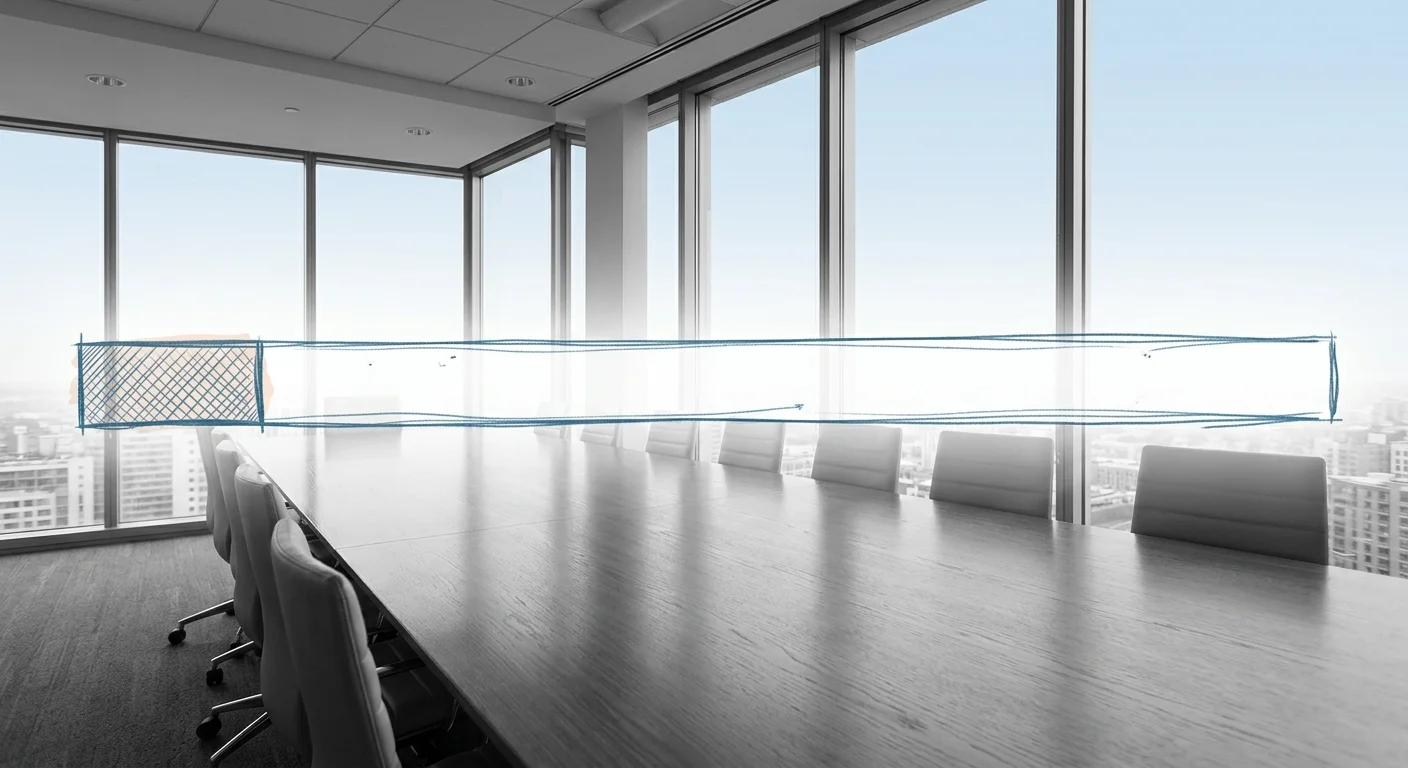
A 39-year recovery period looks fine on a tax return. It looks different when you realize it outlasts most lease terms, most business plans, and quite possibly your interest in owning that particular building.
The depreciation clock starts the moment the building is placed in service. It doesn't stop because you've outgrown the space. It doesn't reset when ownership changes hands. Under the straight-line method of MACRS, it runs for 39 years — regardless of what's happening to the business inside the building.
And that's the column most buyers don't fill in. The write-off is real. So is the multi-decade capital commitment — and everything that capital can't do while it's sitting in a depreciating asset.
Why a 39-Year Depreciation Schedule Is Not a Quick Win
A 39-year depreciation schedule is not an accelerated write-off. It's one of the longest recovery periods in the federal tax code for any asset class. Each year, you deduct the same small fraction of the building's cost. You put up significant capital to earn that fraction. The IRS spreads the reward across four decades.
The straight-line method doesn't front-load anything. The deduction is identical in year one and year thirty-nine. That means the years when capital is tightest — early growth, new hires, equipment gaps — are also the years when the depreciation benefit does the least relative work. You don't get more when you need it most. You get the same thin slice, every year, for nearly four decades.
Tenants run into a version of this too. Capital improvements to a leased space aren't immediately deductible — they have to be depreciated over the applicable recovery period, not expensed in the year the work gets done. So if you're a tenant planning a serious build-out in a space you don't control long-term, that cost doesn't come off the books the year you write the check. The IRS spreads it out, same as it does for owners.
The Capital Opportunity Cost Most Buyers Ignore
The capital required to buy commercial real estate doesn't disappear at closing. It stays tied to the asset — illiquid, inaccessible, and unavailable for anything else the business needs. Whether tying up capital in real property constrains business growth depends entirely on what that capital would otherwise be doing. Most buyers haven't run that comparison honestly before signing.
The opportunity cost doesn't pause because the business is doing well. Every dollar locked into building equity is a dollar not available for hiring, equipment, or the next expansion decision. The depreciation deduction doesn't compensate for that. It's a tax benefit — not a return of capital.
The 39-year recovery period makes this opportunity cost structural, not temporary. A business that leases keeps its capital working inside the business. A business that buys accepts a multi-decade illiquidity position in exchange for a write-off that arrives in small annual installments. Neither path is automatically wrong. But one of them gets made with both columns filled in. The other one usually doesn't.
| Year | Cumulative Depreciation Claimed | Capital Still Locked in Building | Equivalent Annual Rent Deduction (Illustrative) |
|---|---|---|---|
| Year 1 | A small fraction of the purchase price — uniform, predictable, and fixed by the straight-line method | Nearly the full purchase price remains tied to the asset | Full annual rent paid — entirely deducted in the same tax year |
| Year 5 | A modest cumulative slice of the building's cost recovered so far | Overwhelming majority of the original capital remains locked and illiquid | Five years of rent deductions taken — each one matched to the year it was paid |
| Year 10 | Roughly one quarter of the recovery period elapsed — deductions remain thin relative to capital deployed | Most of the purchase capital is still inaccessible for business operations or growth | Ten full years of deductions claimed — no holding period, no illiquidity requirement |
| Year 20 | Approximately halfway through the recovery schedule — annual deduction unchanged since day one | Substantial equity may have built, but capital remains locked unless the asset is sold | Twenty years of rent deductions taken, with no long-term asset commitment required to earn them |
| Year 39 | Full cost of the building recovered — depreciation schedule ends | Asset is fully depreciated; any remaining equity requires a sale event to access | No multi-decade obligation — tenant capital has remained available to the business throughout |
Cost Segregation and Leasehold Improvements: The Exceptions That Prove the Rule
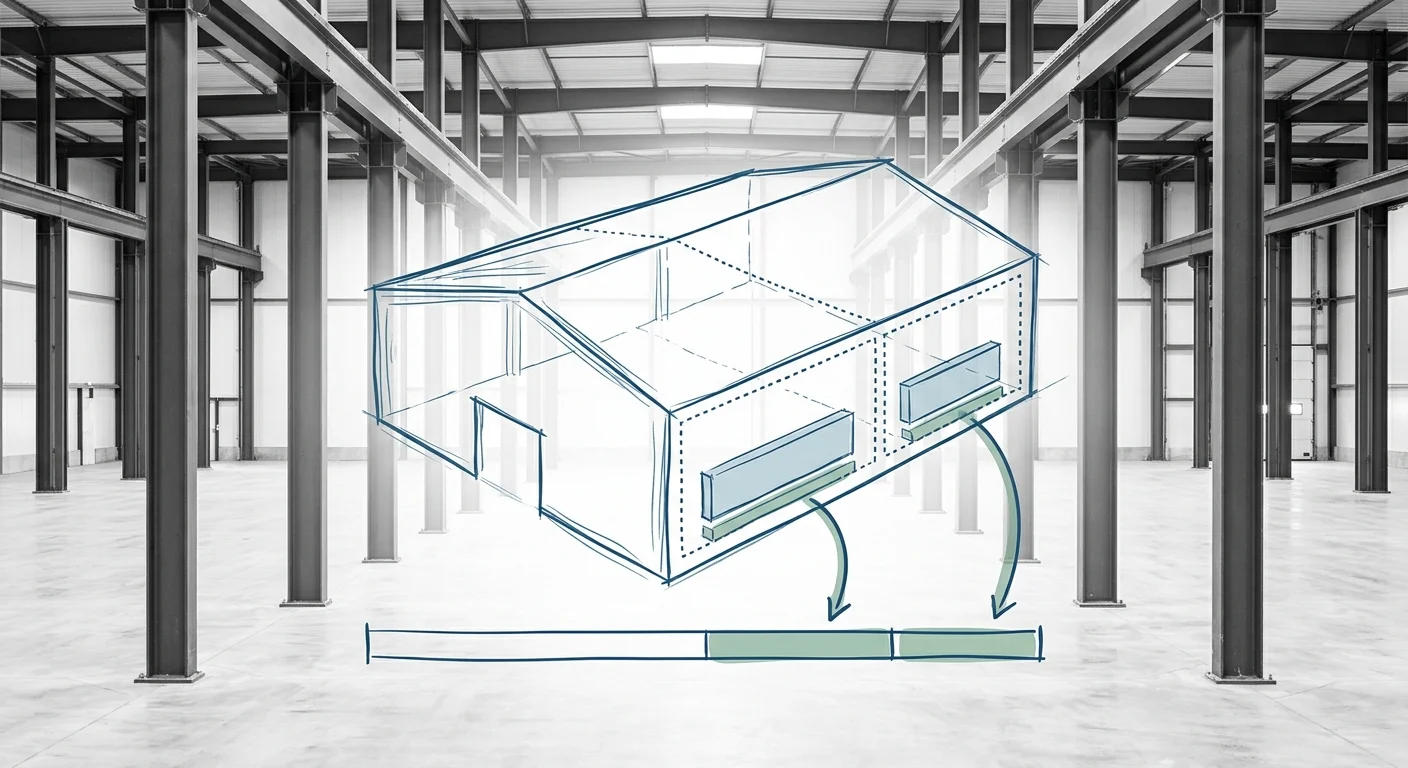
Two tools can shift the timeline. Neither erases the underlying commitment.
One applies to owners. One applies to tenants. Both are worth understanding before any conclusion about which path wins is treated as final.
Cost segregation is an ownership tool. Leasehold improvement depreciation is a tenant tool.
They run under different rules and produce different outcomes. And most analyses bury both in the footnotes — which is exactly where a bad decision gets made.
Neither exception rewrites the ledger. The two columns stay the same — what you write off, and what you give up to earn it.
But both exceptions can change specific numbers inside those columns. That's enough to matter. It's not enough to settle the comparison on its own.
How Cost Segregation Can Shorten the Depreciation Timeline
Here's how it works. Instead of depreciating an entire building on the standard long timeline, a cost segregation study lets you break the building into components — electrical systems, specialty flooring, land improvements — and move those components to shorter recovery periods of 5, 7, or 15 years. The IRS cost segregation guidelines define which components qualify and how the reallocation is performed.
It's a real benefit. And it's only available if you own the building.
Components shifted to 5- or 7-year recovery periods generate larger deductions in the early years. That's the whole point — you're pulling forward tax benefit that straight-line depreciation would otherwise drip out across decades.
For businesses carrying significant near-term tax liability, that acceleration is worth real money. It doesn't release the capital you put into the building. But it does improve the timing of one column on the ledger.
But cost segregation reshapes the timing. It doesn't release the capital.
The building's structural shell still depreciates on the long standard timeline. The money is still inside the asset. So if you're still deciding whether ownership makes sense at all, cost segregation is an answer to a question you haven't gotten to yet — it belongs after the capital commitment question is settled, not before.
And the SBA owner-occupancy thresholds that govern purchase financing can determine whether the financing structure that makes cost segregation accessible is even available to you. That's another variable that belongs in the analysis before you call the comparison done.
Leasehold Improvement Depreciation for Tenants
Tenants run into their own version of the same problem. Put money into a leased space — new flooring, a full buildout, HVAC upgrades — and you can't expense it in year one. Those improvements get depreciated over the applicable recovery period, same as a building owner's capital investment.
The cash goes out immediately. The write-off arrives in pieces. That gap matters when you're planning a significant buildout and expecting the tax benefit to offset the near-term cost.
There's a second risk. The depreciation schedule for leasehold improvements can run longer than the lease term itself, depending on the improvement type and the rules in effect when the work was done.
A tenant who puts real money into a space and then leaves before the schedule completes walks away from unrealized write-offs. That's not a reason to skip the buildout. But it is a planning cost — and it belongs on the ledger before the first contractor shows up.
Both exceptions tell the same story.
The tax code doesn't hand out clean, immediate write-offs for capital committed to commercial real estate — whether you own or lease. Cost segregation and leasehold improvement depreciation can change the timing. Neither one changes what you gave up to get the deduction.
| Asset Category | Standard Recovery Period | Cost Segregation Recovery Period | Applies To |
|---|---|---|---|
| Commercial Building (Structural Shell) | 39 years | 39 years (not eligible for reclassification) | Owners |
| Specialty Flooring / Finish Work | 39 years | 5 or 7 years | Owners |
| Electrical & Mechanical Systems (Qualifying) | 39 years | 5, 7, or 15 years | Owners |
| Land Improvements | 39 years | 15 years | Owners |
| Leasehold Improvements (Tenant Buildout) | Applicable recovery period | Not available — cost segregation applies to owned property only | Tenants |
When Buying Makes Financial Sense — and When It Doesn't

So now the comparison is actually possible. Both sides of the ledger are visible. Let's use them.
Buying isn't the wrong answer. It's the wrong answer without the ledger. The mistake isn't the purchase — it's committing capital before both columns are filled in honestly.
Three questions decide which path wins — and all three need honest answers before the comparison closes. How stable are the business's space needs over the next decade or two? How much capital can the business lock into a non-liquid asset without constraining operations? And does the ownership structure actually qualify for the financing terms that make the numbers work? Skip one and the comparison is still unfinished.
The Business Profiles That Benefit From Ownership
Ownership creates the most financial value for businesses with long, predictable space needs. A company that's held the same footprint for a decade and expects to stay another two has a completely different capital equation than one navigating growth spurts, contraction, or market uncertainty. The 39-year recovery period stops looking like a burden when the business genuinely plans to be in that building for most of it.
Businesses pursuing owner-user financing also need to clear a specific threshold before the purchase structure works at all. SBA guidelines require owner-occupants to occupy at least 51% of an existing commercial building's square footage to qualify for that financing. That threshold shapes which buildings are eligible and which purchase structures are available. Understanding how SBA 51 percent owner-occupancy rules work before selecting a target property avoids a financing mismatch that can derail an otherwise sound acquisition.
Ownership also rewards businesses with strong, consistent cash flow and minimal near-term capital demands elsewhere. If the business doesn't need that capital working in operations — for hiring, equipment, or expansion into a new market — locking it into real property is a lower-stakes tradeoff. The depreciation benefit becomes a genuine annual return on a stable long-term asset. That's not a consolation prize. That's the math working as intended.
The Business Profiles Where Renting Preserves More Value
Renting preserves more value for businesses that are growing, contracting, or simply uncertain about their space needs over the next several years. Flexibility isn't a soft benefit — it's a financial one. A lease that can be renegotiated, downsized, or exited preserves optionality that ownership closes off permanently. And optionality has real dollar value, especially in markets where conditions shift faster than a 39-year depreciation schedule was ever designed to accommodate.
For businesses where capital is the engine of growth, the rent write-off is the cleaner choice. Rent is fully deductible as an ordinary and necessary business expense under IRC Section 162 — 100% of the payment, in the year it's made, with no 39-year recovery schedule attached. No capital locked in a depreciating asset. No financing threshold to clear. Businesses that have studied lease escalations against fixed mortgage costs often find that the predictability of ownership carries its own risks — and that the depreciation benefit doesn't offset them.
The rent deduction isn't a lesser write-off. It's a different kind. The leasing ledger is shorter, cleaner, and keeps capital working in the business instead of locked in a building. For businesses where growth depends on deploying capital actively, that column consistently outweighs whatever the depreciation column on the ownership side offers in its place. Fill in both columns honestly — that's the only way the answer becomes visible.
| Business Characteristic | Points Toward Ownership | Points Toward Leasing |
|---|---|---|
| Space horizon | Long, stable occupancy needs with minimal likelihood of expansion, contraction, or relocation over the next decade or more | Growth-stage, contracting, or uncertain footprint — space needs are likely to shift before a long depreciation schedule pays off |
| Capital position | Strong, consistent cash flow with limited near-term demand for capital in operations — locking equity into property is a lower-stakes tradeoff | Capital is the engine of growth — every dollar tied to a building is a dollar not available for hiring, equipment, inventory, or expansion |
| SBA occupancy eligibility | Business can satisfy the owner-occupancy threshold — occupying at least 51% of an existing building's square footage — which unlocks favorable financing structures | Business cannot meet occupancy requirements, or the target property's configuration makes the threshold difficult to satisfy |
| Write-off priority | Depreciation benefits are valuable as a long-term, annual offset against income — even spread across a multi-decade recovery schedule | Immediate, full deductibility of rent in the year it's paid matters more than a write-off that arrives in small annual installments over decades |
| Flexibility premium | Business model is stable — lease renegotiation, downsizing, or early exit is not a foreseeable need and optionality has low strategic value | Flexibility is a financial asset — the ability to renegotiate, right-size, or exit a lease is worth more than the equity position ownership would create |
| Improvement investment | Significant capital improvements are planned and the business intends to occupy long enough to realize the full depreciation benefit of those improvements | Planned buildout is substantial relative to the lease term — the recovery period for improvements may outlast the tenancy, leaving write-offs unrealized |
Frequently Asked Questions
Now the questions. The ones that come up every time — most of them built on assumptions the numbers have already corrected.
These aren't edge cases. They're the questions that change what the ledger says — once they get straight answers.
Is rent fully tax-deductible for commercial spaces?
Yes — all of it, in the year it's paid. Commercial rent qualifies as an ordinary and necessary business expense under IRC Section 162. There's no recovery schedule. No asset to track on a balance sheet. No capital committed in exchange for the deduction. The entire payment is deductible in the period it's made — clean, immediate, and complete.
How long is the depreciation period for a commercial building?
A commercial building depreciates over a 39-year recovery period, straight-line, under MACRS. The same small fraction, every year, for nearly four decades — regardless of what's happening inside the business. That's a real deduction. It's also a slow one. And it only works as long as the capital stays locked in that asset for the full ride.
Can I use cost segregation to accelerate commercial property depreciation?
Yes, under specific conditions. A cost segregation study lets taxpayers reallocate certain building components — electrical systems, specialty flooring, land improvements — to shorter recovery periods of 5, 7, or 15 years. That front-loads some of the depreciation benefit. But it doesn't release the capital. The building's structural shell still runs on the standard long timeline. The asset stays illiquid. Cost segregation reshapes one column on the ledger. It doesn't rewrite the other.
Do I lose out on write-offs if I rent instead of buy?
No. Rent is fully deductible as an ordinary and necessary business expense under IRC Section 162 — 100% of the payment, every year, with no depreciation schedule attached. The write-off isn't smaller than depreciation. It's structured differently. Ownership spreads a large deduction over 39 years. Leasing's deduction is immediate and complete. Which one is worth more depends entirely on how the business deploys capital — not on which number looks bigger on paper.
How do SBA 51 percent owner-occupancy rules affect my financing options when buying?
SBA financing requires the owner-occupant to use at least 51% of an existing building's square footage. That threshold isn't flexible — it decides which buildings qualify and which financing structures are on the table. A business that can't meet it won't get the loan terms that make owner-user acquisition work. Most buyers find this out after they've picked a property. Find it out before, and the analysis stays grounded in a deal that can actually close.
The Ledger Always Balances
The ledger always balances — but not in the way most business owners expect. Every dollar the depreciation column saves you costs something in the column next to it: capital locked into a 39-year asset, liquidity you can't redeploy, options you've permanently closed. Ownership isn't a tax strategy. It's a capital allocation decision that happens to carry tax consequences.
So the right answer isn't the one with the bigger write-off. It's the one that matches how this specific business actually deploys capital. A company that grows by keeping cash active in operations reads that ledger one way. A company with stable space needs, predictable cash flow, and no better use for locked-in equity reads it another. Neither reading is wrong. But only one of them fits your business right now — and you can't find it without running both columns filled in honestly before committing to either path.
The tax benefit is always visible. What you give up to earn it is what most business owners don't see until the capital is already gone. Run the comparison before the lease is signed or the purchase agreement lands. Not after.
The write-off is visible on day one. What it costs you — in locked capital, in 39 years of carrying a depreciating asset, in lost flexibility — doesn't show up until later. Most business owners see that second column only after the deal is done. Peninsula CRE Group runs both columns before you commit. Request a Consultation.