
Does Tying Up Capital in Commercial Real Estate Hurt Business Growth?
Tying up capital in commercial real estate hurts business growth only when the purchase is structured wrong. The financing vehicle determines the outcome — not the decision to buy.
Most business owners picture a property purchase as a single lump sum that drains the reserves they need to hire, expand, and respond to market shifts. That picture is accurate for an all-cash purchase. It is not accurate for a structured owner-user acquisition using SBA 504 financing.
SBA 504 loans require as little as a 10% down payment. A business owner can acquire a commercial building while keeping up to 90% of that capital available for operations. The property secures long-term occupancy and builds equity. The business retains the liquidity it needs to grow.
The tax side adds a second financial layer. Commercial buildings qualify for depreciation under IRS rules — specifically, a 39-year straight-line recovery period for nonresidential real property. That annual deduction offsets taxable income in a way a rent payment does not.
The liquidity concern is real and deserves a direct answer. Long-term illiquid assets do reduce financial maneuverability. Commercial real estate cannot be converted to cash quickly. The SBA 504 structure addresses that risk by limiting the equity commitment at closing — it does not eliminate the illiquidity of the asset, but it limits how much operating capital gets tied up inside it.
For businesses that will occupy at least 51% of the property, the owner-user purchase path is a capital allocation decision, not a capital sacrifice. The financing structure is what determines whether buying helps or hurts.
Last Updated: August 24, 2026
- • The Real Question Isn't Whether to Buy — It's How
- • Why the Full-Cash Purchase Fear Is Legitimate (and Mostly Avoidable)
- • How SBA 504 Financing Changes the Capital Equation
- • What Ownership Builds That a Lease Never Can
- • Who This Structure Works For — and Who It Doesn't
-
• Frequently Asked Questions
- • Does buying commercial property tie up too much capital for a growing business?
- • How do SBA 504 loans minimize upfront capital requirements for owner-users?
- • Are tax write-offs for commercial property depreciation better than rent deductions?
- • How does the SBA 51 percent owner-occupancy rule affect day-to-day business operations?
- • What are the real liquidity risks of owning commercial real estate versus leasing it?
- • Can a business use an SBA 504 loan to buy an existing building, not just new construction?
- • The Structure Decides Everything
The Real Question Isn't Whether to Buy — It's How
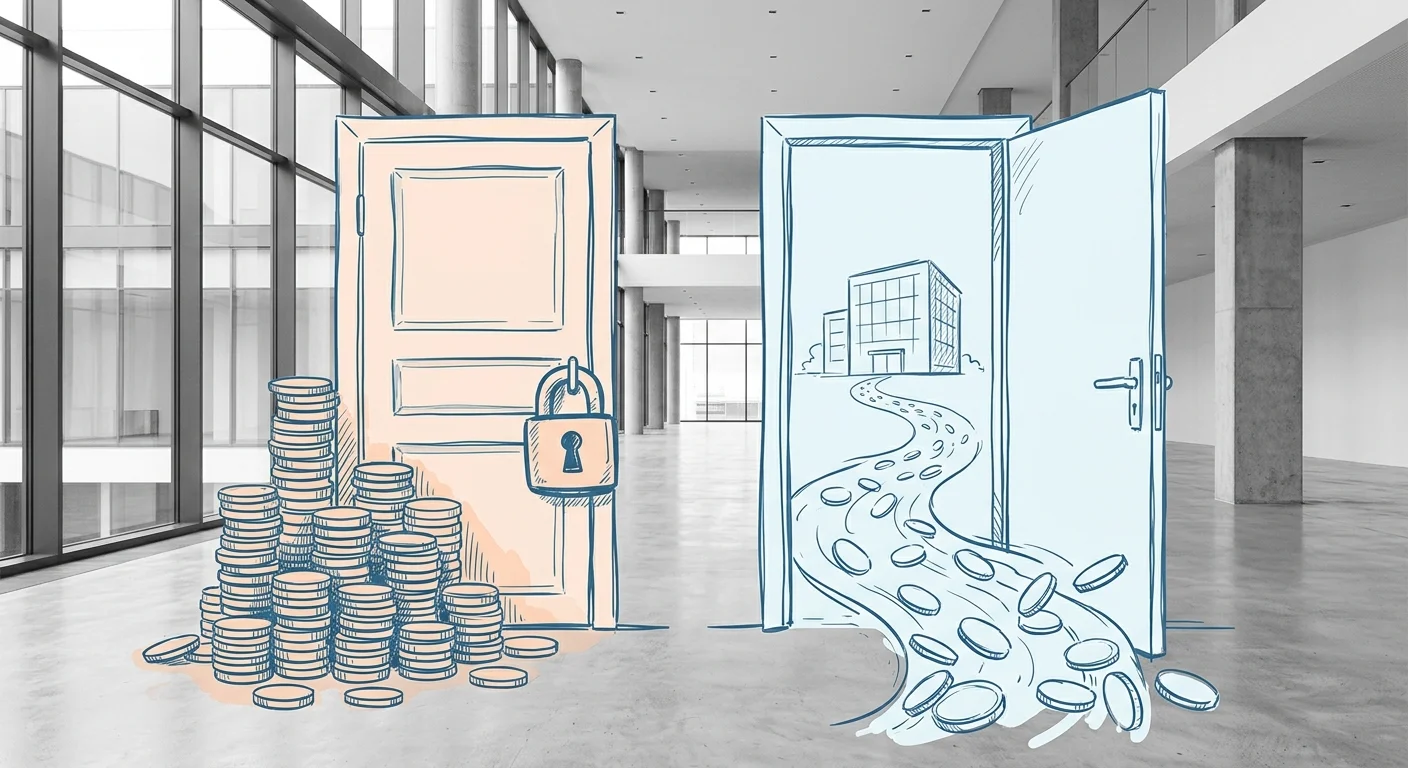
The fear is legitimate. The diagnosis is wrong.
Business owners aren't afraid of owning real estate. They're afraid of running out of cash. Those are two different problems, and only one of them is caused by the purchase itself.
Most people picture the purchase like walking into a room and locking the door behind them. That image is accurate for exactly one scenario — an all-cash deal that converts liquid reserves into fixed, illiquid equity.
It doesn't describe a structured owner-user acquisition using SBA 504 financing. That structure requires as little as a 10% down payment and preserves up to 90% of operating capital.
The door stays open. The question is always whether you lock it on the way in.
The buy-versus-lease question every Southern California business owner eventually faces comes down to one variable: how the acquisition is structured.
Get the structure right and you aren't choosing between owning and growing. You're doing both.
Why the Capital-Lock Fear Gets the Causality Backwards
The conversation almost always starts from the wrong place.
Business owners hear "buying ties up capital" and decide ownership is the problem. Ownership isn't the problem. Undercapitalized ownership is. Those aren't the same diagnosis.
Yes — companies in volatile markets need liquid buffers. Locking reserves into fixed, long-term assets creates real exposure when cash demands are unpredictable. That part is true.
But the conclusion most people land on — don't buy — skips the step that actually matters. The SBA 504 structure exists to separate ownership from capital lockup. A 10% down payment isn't a capital sacrifice. It's a financing mechanism engineered to keep those two things apart.
Full-cash purchases create the scenario everyone fears. SBA 504 acquisitions are built to prevent it.
Conflating the two is where the bad conclusion happens. And where businesses that could own keep renting — for another decade — because the analysis started from the wrong place.
The Variable That Actually Determines Liquidity Impact
So what actually determines whether a purchase helps or hurts liquidity?
One number: how much equity you put in at closing.
Put 100% down and the building absorbs your operating reserves entirely. The cash is in the walls.
Put 10% down through an SBA 504 loan and the building secures long-term occupancy and equity growth while 90% of that capital stays in the business — available for hiring, equipment, market shifts, and every other demand that requires cash to move fast.
The financing structure is the lever. Everything else follows from it.
| Purchase Method | Upfront Capital Required | Capital Retained for Operations | Liquidity Impact |
|---|---|---|---|
| Full-cash purchase | Entire acquisition amount paid at closing | Minimal — most liquid reserves convert to fixed equity | High negative impact — operating reserves absorbed into illiquid asset |
| SBA 504 owner-user acquisition | Small down payment at closing | Substantial — majority of capital remains in the business | Low negative impact — financing structure separates ownership from capital lockup |
| Conventional commercial loan (high down payment) | Large down payment required at closing | Reduced — significant portion of reserves committed upfront | Moderate negative impact — less severe than all-cash but more constraining than SBA 504 |
| Leasing (no purchase) | None at closing — security deposit and initial costs only | High — no equity commitment | Neutral short-term, but no equity builds and rent obligations continue indefinitely |
Why the Full-Cash Purchase Fear Is Legitimate (and Mostly Avoidable)

The fear is legitimate. A full-cash purchase converts liquid reserves into a fixed, illiquid asset. That cash doesn't disappear — it just becomes a building, and buildings don't pay payroll.
But the risk isn't ownership. It's the equity-at-closing figure. Get that number wrong and ownership becomes a constraint. Get it right and it becomes an asset — in every sense.
Run the comparison between depreciation and rent write-offs and ownership wins on paper for most businesses that qualify. But that analysis is only useful if the capital structure works first. Solve the liquidity question, and the tax argument becomes one more reason to buy. Don't solve it, and you're debating write-offs while the operating account runs dry.
When Buying Commercial Property Actually Does Drain Operating Capital
A full-cash purchase is where the horror stories come from. You hand over the reserves. The building holds them. The equity is real — but it's completely illiquid. You can't redeploy it to hire, expand, or absorb a market disruption without selling the property or refinancing first. Both of those take time. Neither of them is fast.
That's the version of commercial ownership that actually conflicts with growth. Not ownership as a concept. This specific structure — where operating capital and real estate equity collapse into the same pool of money.
The businesses that get hurt went in without separating their operating reserves from their acquisition capital. Once those two pools merge into a building, pulling them apart means selling the property or refinancing. And both of those take time you probably don't have when you actually need the cash — which is the exact moment a market disruption, a hiring push, or an equipment failure arrives.
The Liquidity Risk the SEC and Harvard Business Review Both Name
The SEC's guidance on liquidity risk makes the concern explicit: long-term illiquid assets reduce a company's financial maneuverability. Commercial real estate qualifies. If you need the capital back, the timeline is measured in months or years. Not days. Not weeks. The asset is real — it just can't move when you need it to.
Both sources are right about the risk. But read them carefully and what they're actually describing is undercapitalized ownership — not ownership itself. A business that goes in with 10% down and 90% of its capital still intact is not the same business as one that emptied its accounts to close. Same building. Completely different financial position. The financing decision is what separates them.
| Scenario | Capital Deployed | Remaining Operating Reserves | Growth Risk Level | Key Constraint |
|---|---|---|---|---|
| Full-cash purchase | Entire acquisition cost paid from operating reserves | Severely reduced — reserves convert directly into illiquid equity | High — business cannot redeploy capital quickly if conditions change | Operating reserves and real estate equity occupy the same pool |
| SBA 504 owner-user acquisition | Minimum down payment; lender and SBA fund the remainder | Largely intact — the majority of operating capital stays in the business | Low to moderate — liquidity is preserved at closing by design | Must occupy at least 51% of the property to qualify |
| Over-leveraged purchase (conventional financing, high LTV) | Moderate down payment but aggressive debt service obligations | Reduced by recurring cash outflows required to service the debt load | Moderate to high — debt payments compress operating margins over time | Monthly debt service competes directly with hiring, equipment, and growth capital |
| Leasing with no ownership path | No acquisition capital deployed | Fully intact — no equity commitment of any kind | Low in the short term, high over the long term | No equity accumulation; rent payments do not build a recoverable asset |
How SBA 504 Financing Changes the Capital Equation
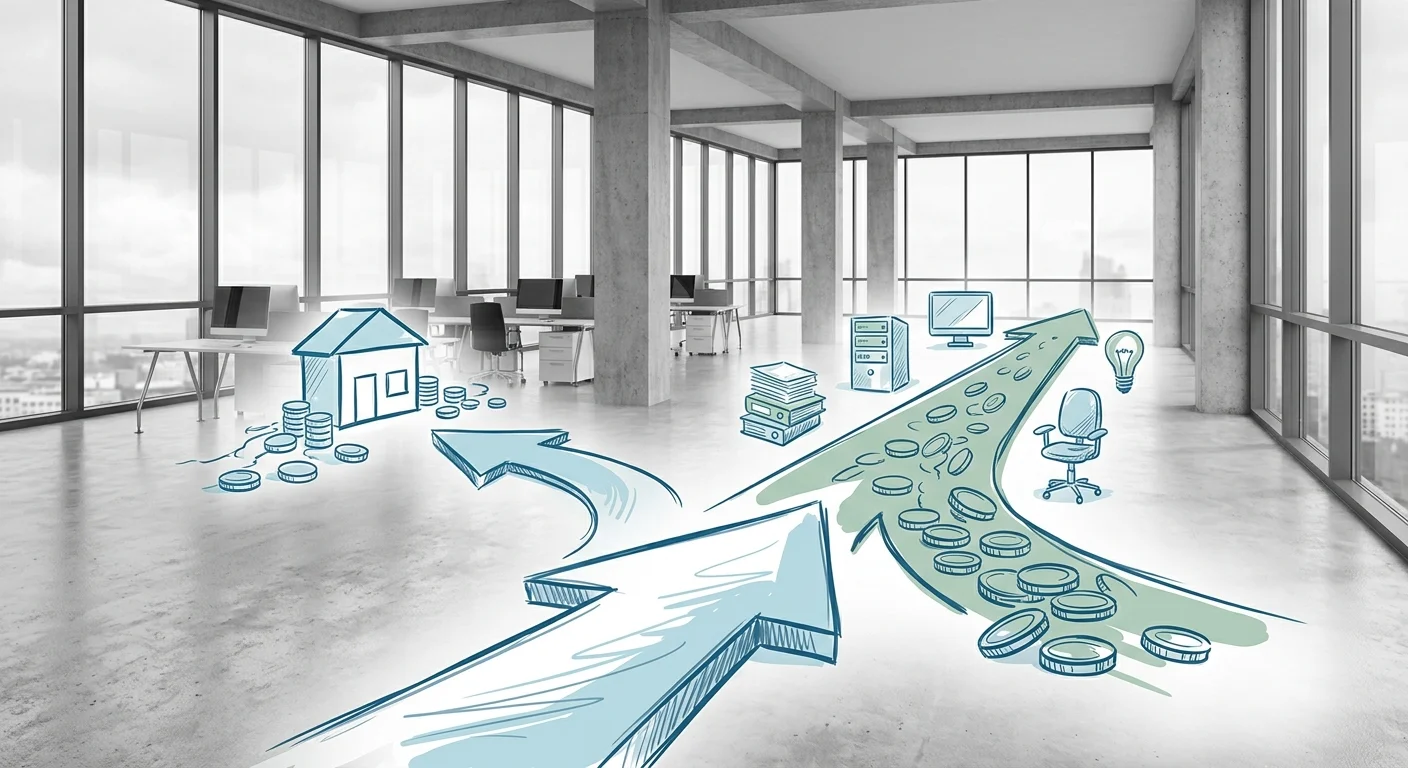
SBA 504 financing doesn't make commercial ownership cheaper. It makes the capital math work differently.
The program is built for owner-users — businesses that will occupy at least 51% of the property they acquire. That threshold isn't a bureaucratic footnote. It's the gateway to a financing structure that keeps the majority of operating capital out of the building and inside the business where it can actually move.
Get the occupancy requirement wrong and the SBA structure collapses before you reach closing. Get it right and the loan-to-value mechanics tip in your direction from the first term sheet. That's a meaningful difference — and it's worth understanding before any acquisition analysis begins.
What the 10% Down Structure Actually Preserves
The number that changes everything is 10%.
A standard SBA 504 acquisition requires as little as a 10% down payment from the business owner. The remaining 90% is financed through a conventional lender and a Certified Development Company backed by the SBA. What that structure preserves isn't just cash. It's the operational flexibility that cash represents — the ability to hire, buy equipment, carry inventory, and handle every demand that requires liquidity to execute. Ninety percent of the capital that would otherwise go into the building stays inside the business, where it can actually do something.
That's the architecture of the SBA 504 structure — and it's exactly why the locked-door fear only applies to a scenario this financing model is designed to prevent. Business owners who understand how the 51% occupancy threshold works in practice can approach an acquisition knowing what qualifies, what doesn't, and where the financing advantage actually lives. The door stays open. That's the point.
The IRS Depreciation Advantage Owners Get That Tenants Never See
Tenants write off rent. Owners depreciate the building. Those two deductions are not the same thing.
Under IRS depreciation rules, nonresidential commercial property is depreciated on a straight-line basis over a 39-year recovery period. Every year of ownership generates a depreciation deduction against taxable income. No cash leaves the business to claim it — the building's cost is already deployed. The depreciation is a tax benefit stacked on top of occupancy and equity accumulation. A tenant never touches any of it.
A tenant pays rent, deducts the rent, and builds nothing. An owner makes a mortgage payment, deducts the depreciation, and simultaneously accumulates equity in an asset that appreciates independent of what the business is doing that quarter. Tax treatment alone doesn't make ownership right for every situation. But it does mean the financial comparison between owning and leasing is more lopsided than the surface numbers suggest. The commercial depreciation vs rent write-offs analysis is worth running before assuming the two paths are even close.
How Dynamic Capital Allocation Compounds the Ownership Advantage
The tax advantage is the starting point. What happens to the retained capital after the acquisition is where the real separation happens.
The business that structures the purchase with 10% down retains 90% of its capital in active deployment. That capital isn't locked inside the building. It's funding the growth the business needs to sustain occupancy, service the debt, and build toward the point where occupancy costs approach zero. That's not a passive outcome. It's what happens when the acquisition is structured correctly — and it's the opposite of the capital-trap story that keeps business owners in leases they've outgrown.
| Financing Approach | Down Payment Required | Capital Preserved for Operations | Annual Tax Benefit | Equity Position at Year 10 |
|---|---|---|---|---|
| Full-Cash Purchase | 100% of purchase price | 0% — entire acquisition cost absorbed from operating reserves | Depreciation deduction on full building value over 39-year recovery period | Full equity ownership; zero liquidity from purchase capital |
| SBA 504 Loan | As little as 10% of purchase price | Up to 90% of capital stays inside the business | Depreciation deduction on full building value over 39-year recovery period | Growing equity via principal paydown; 90% of capital remains in active deployment |
| Leasing (No Purchase) | No down payment — zero acquisition capital required | 100% of capital remains liquid at signing | Rent deduction only — no depreciation benefit, no equity accumulation | Zero equity position; no asset appreciation; capital preserved but not compounded |
What Ownership Builds That a Lease Never Can
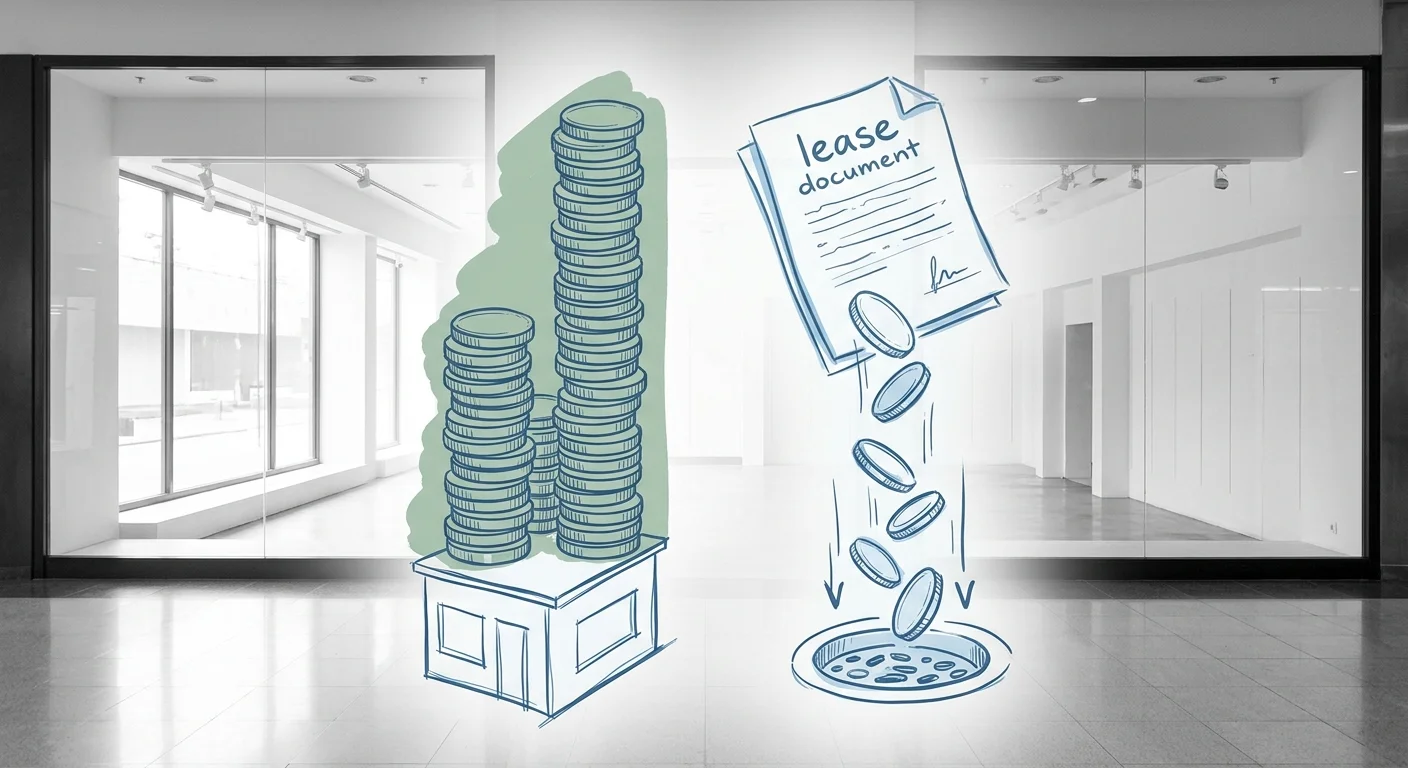
A lease gets you space. Ownership builds something — an asset that keeps accumulating value while the business is busy running itself.
Every rent payment funds the landlord's equity position. Every mortgage payment funds the business owner's. That distinction sounds simple — and it compounds across years in ways no lease renewal can undo. The U.S. Census Bureau tracks trillions in annual corporate capital expenditures across structures and equipment. The businesses directing those dollars toward owned real estate are building a balance sheet entry that appreciates independent of the business's own revenue cycle.
A lease gives you access to space. Ownership — structured correctly — gives you the building's upside while you occupy it. The question was never whether to walk in. It was whether the structure lets you keep moving once you do.
Equity as a Business Asset — Not Just a Real Estate One
Equity in a commercial building isn't a real estate outcome sitting on a separate ledger. It's a business asset — one with direct consequences for borrowing capacity, exit options, and long-term cost structure.
A business that owns its building carries a tangible asset on its balance sheet. That asset can be refinanced to pull capital during a growth phase, pledged as collateral to secure business financing, or sold to fund a transition or exit. None of those options exist in a lease. A lease is an obligation — one that gets more expensive in markets where rising Los Angeles County renewal rents strip a tenant's position at the exact moment the landlord holds maximum power.
Under IRS rules, nonresidential commercial property depreciates on a straight-line basis over a 39-year recovery period. That deduction runs every year of ownership. It reduces taxable income without a single additional dollar leaving the business — the purchase price is already deployed, and the tax benefit rides on top. The asset is appreciating. The deduction is running. A tenant gets none of it.
The Rent Payment That Never Returns vs. the Mortgage Payment That Does
A rent payment leaves the business completely. It deducts, it clears, and it's gone. The landlord books equity. The tenant books an expense. That's the whole transaction.
A mortgage payment works differently at every level. The principal portion reduces the outstanding loan balance — converting cash into equity inside an asset the business controls. The interest is deductible. The IRS depreciation on the structure runs in parallel, generating an additional write-off against taxable income with no added cash-flow cost — the purchase price is already committed. Over time, occupancy costs approach zero as the loan is retired. A tenant's occupancy cost never approaches zero. It resets at market rate every renewal cycle, in a market the tenant does not control.
| Financial Metric | Owner-User (SBA 504) | Tenant (Standard Lease) | 10-Year Difference |
|---|---|---|---|
| Annual tax deduction from depreciation | Yes — straight-line depreciation over 39 years on the full building cost | No — rent deduction only; no depreciation access | Owner accumulates 39 years of depreciation write-offs; tenant accumulates none |
| Capital expenditure directed toward owned structures | Yes — purchase price becomes a balance sheet asset tracked alongside trillions in annual corporate structural expenditures | No — rent payments are operating expenses; no structural asset created | Owner builds a tangible asset in line with how top-performing companies deploy structural capital; tenant builds none |
| Deduction type on annual occupancy payment | Interest deduction on mortgage + parallel depreciation deduction on structure | Rent deduction only — payment deducts and exits; no parallel deduction layer | Owner stacks two deduction mechanisms simultaneously; tenant accesses one and retains nothing |
Who This Structure Works For — and Who It Doesn't
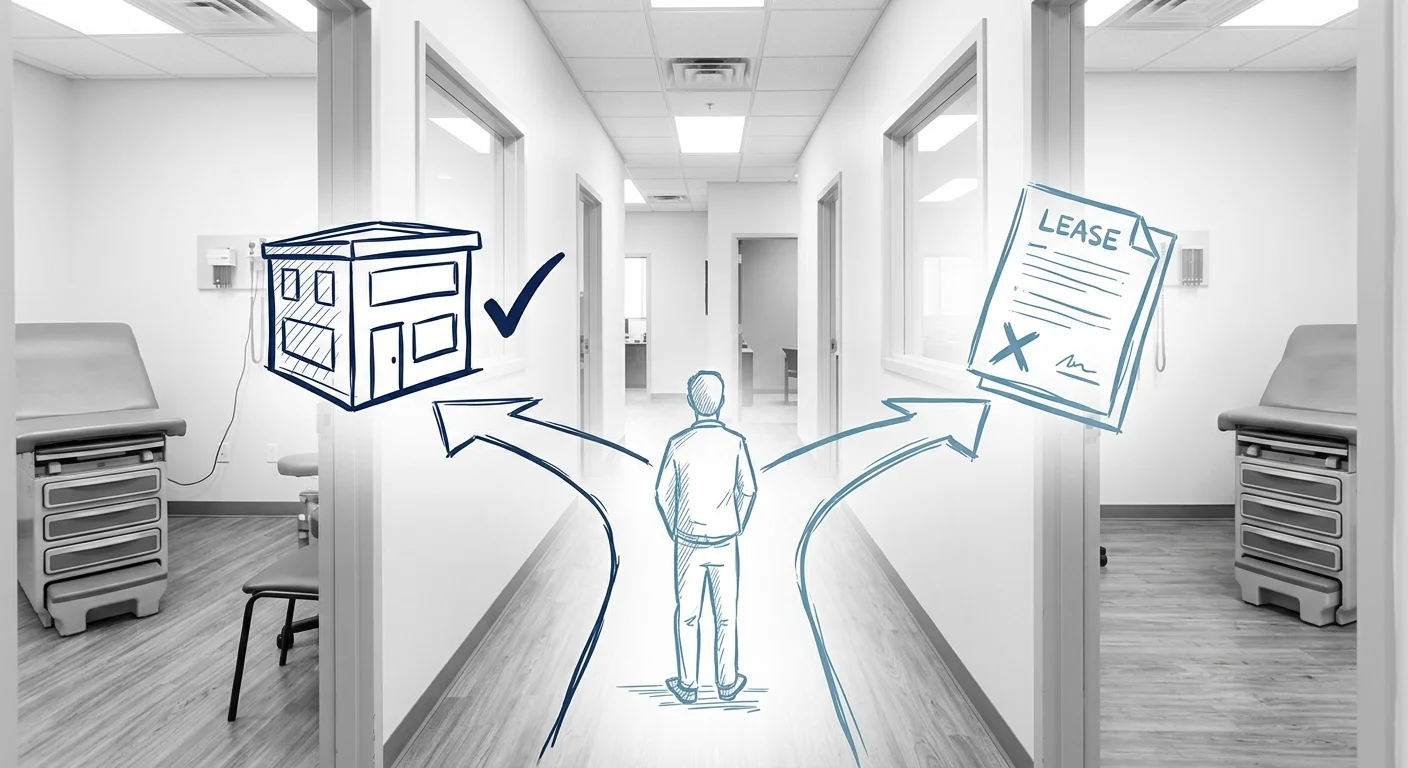
The financial case is real. But it isn't universal. The entire analysis comes down to one question: which side of that line does your business sit on?
SBA 504 financing — with as little as 10% down — works for a specific business profile. Not every operator qualifies. Not every operator should.
Naming those constraints is the work. A business that doesn't fit this profile needs to know that before investing weeks in a purchase process that was built for someone else's situation.
The Business Profile That Gets the Most from Owner-User Purchase
The business that gets the most from owner-user purchase has stable, predictable revenue. Enough to service debt without touching the operating reserves the SBA 504 structure was designed to protect. When cash flow is consistent, the financing math holds. When it isn't, the math reverses — and the equity story unravels.
That business also occupies its space consistently and expects to keep doing so. It isn't in a rapid headcount swing. It doesn't need the flexibility to exit a location on six months' notice. The SBA's 51% occupancy requirement is a threshold, not a suggestion — and businesses that can't reliably hold it disqualify themselves from the financing structure that makes the capital equation work. Understanding exactly how those SBA 51 percent rules apply to a specific building is a prerequisite to any serious acquisition analysis.
The right candidate has also separated acquisition capital from operating reserves before they walk into a purchase conversation. That separation is what makes the 90% preservation real. A business drawing the 10% down payment from working capital — rather than from a dedicated acquisition reserve — isn't protecting its liquidity with the SBA 504 structure. It's introducing the exact risk the structure was designed to prevent. The door stays open only if the financing is built on the right foundation.
When Leasing Is Still the Right Answer
Leasing is still the right answer for businesses in active growth phases where space needs are genuinely uncertain. Companies that may double headcount, open additional locations, or restructure operations within the next few years face a real constraint: a fixed footprint at the wrong moment becomes a problem the SBA structure cannot solve. Long-term illiquid assets reduce financial maneuverability — and that is true regardless of how intelligently the financing is structured.
There's a second category: businesses operating in markets volatile enough that keeping cash liquid isn't a preference — it's an operational requirement. For those businesses, the timing of a purchase works against them even when the financing is clean. A lease preserves optionality. At certain moments, that optionality is worth more than the equity accumulation a purchase would generate. That isn't a hedge. It's the honest answer for a business that isn't ready to commit to a fixed footprint.
Who Should Not Be Reading This Article
This article is not for landlords. Not for investors. Not for anyone purchasing commercial property for purposes other than owner-occupancy. The SBA 504 structure, the depreciation mechanics, and the equity accumulation discussed here apply to businesses that will occupy the majority of what they buy. No one else.
And it's not for businesses that want to move through an acquisition without comparing options. The negotiating power in an owner-user purchase comes from knowing what the market will actually offer — what other buildings are available, what terms are moving, what price is actually defensible. Skip that comparison and the financing structure can be perfectly constructed while the price paid inside it is wrong. That difference gets absorbed over the full term of the loan. Every payment, every month, for years.
And it's not for businesses that haven't separated acquisition capital from operating reserves. Walking into a purchase with pooled capital is the exact scenario that makes the locked-door image accurate — not because ownership locks the door, but because undercapitalized ownership does. The SBA 504 structure preserves up to 90% of operational capital because it assumes the 10% down comes from a dedicated source. Businesses that can't meet that assumption aren't ready for this path. No favorable financing terms change that. The door doesn't lock behind you — unless you funded the down payment with money you needed for something else.
| Business Profile | Occupancy Stability | SBA 504 Eligible | Owner-User Purchase Fit | Recommended Path |
|---|---|---|---|---|
| Established business, stable revenue | High — consistent space use, no near-term relocation planned | Yes — meets SBA 51% occupancy threshold reliably | Strong fit | Pursue owner-user purchase with SBA 504 financing |
| Growth-stage business, headcount in flux | Low to moderate — space needs may shift significantly within a few years | Uncertain — occupancy commitment difficult to sustain at required threshold | Weak fit | Lease with negotiated flexibility terms; revisit purchase when operations stabilize |
| Business with dedicated acquisition reserve (separate from operating capital) | High — purchase funded without drawing on working capital | Yes — down payment does not compromise operating liquidity | Strong fit | Pursue owner-user purchase; SBA 504 structure preserves operational reserves |
| Business with pooled operating and acquisition capital | Variable — financial cushion depends on a single undivided reserve | Conditional — eligible on paper, but liquidity risk is real if reserves are drawn down | Poor fit until capital is separated | Build a dedicated acquisition reserve before pursuing purchase; do not conflate working capital with down payment funding |
| Business in a volatile or contracting market sector | Low — revenue uncertainty makes long-term debt commitments difficult to model | Uncertain — long-term illiquid asset may reduce financial maneuverability when flexibility is most needed | Timing-dependent | Lease while market conditions stabilize; optionality has real value in constrained environments |
| Investor or landlord (not an occupant) | Not applicable — owner-user structure requires majority occupancy by the purchasing business | No — SBA 504 and owner-user purchase mechanics do not apply to non-occupying buyers | Not applicable | Outside scope of this structure entirely; different financing and brokerage model required |
Frequently Asked Questions
The strategy is clear. Now the operational questions — the ones business owners actually lose sleep over.
Every answer below lands on a position. Where the answer depends on a condition, that condition is named — not used as a way to dodge the point.
Does buying commercial property tie up too much capital for a growing business?
It depends entirely on how the purchase is financed — and that dependency is specific enough to name.
A full-cash acquisition converts liquid reserves into a fixed asset you cannot quickly sell. That concern is real. An SBA 504 loan requires as little as a 10% down payment, which means up to 90% of the business's capital stays outside the building and in active deployment.
The structure is the answer. Businesses that use it aren't walking into a capital trap. They're taking on a mortgage payment that builds equity in an asset they control.
The ones who get trapped are the ones who pay all cash — or finance without protecting working capital. That's a different decision entirely from a structured owner-user acquisition.
How do SBA 504 loans minimize upfront capital requirements for owner-users?
The SBA 504 structure splits the financing across two lenders. A conventional lender covers roughly 50% of the purchase price. An SBA-backed lender covers up to 40%. The business covers as little as 10%.
That 10% down requirement is what keeps up to 90% of capital in operations. A business can acquire a building worth several million dollars while committing a fraction of that from its own reserves.
The fixed long-term rates on the SBA portion also cut out the refinancing risk that comes with variable-rate debt. That matters because the whole point is to preserve financial room to move — not swap one exposure for another.
Are tax write-offs for commercial property depreciation better than rent deductions?
They work differently — and the combination of both is what makes ownership financially distinct from leasing.
A rent deduction clears the expense and produces nothing else. A depreciation deduction on a purchased building runs on a straight-line basis over a 39-year recovery period under IRS rules, reducing taxable income every year without any additional cash leaving the business. The building's cost is already committed. The deduction is a recurring benefit on top of it.
An owner captures the depreciation and the mortgage interest deduction at the same time. A tenant captures only the rent deduction — and captures nothing when the lease renews at a higher rate in a market the tenant doesn't control.
How does the SBA 51 percent owner-occupancy rule affect day-to-day business operations?
The SBA requires the business to occupy at least 51% of the building it buys using SBA 504 financing. The business has to be the primary occupant — not a minority tenant in a building where other parties hold the majority of space.
For businesses that use their space consistently, this threshold has no day-to-day impact. It only becomes a problem if the business plans to shrink significantly or needs to sublease most of its footprint.
Businesses that lease out more than 49% of the building — by choice or by necessity — fall outside the requirement and lose access to the financing structure that makes the capital math work.
For businesses that genuinely occupy their space, this rule is one they'll never notice.
What are the real liquidity risks of owning commercial real estate versus leasing it?
The real liquidity risk in ownership is illiquidity. A building can't be converted to cash quickly. If the business needs capital urgently, the building isn't a liquid reserve. That risk is real and shouldn't be softened.
What limits it is the structure of the purchase. A business that puts 10% down and keeps 90% of its capital in operational reserves hasn't traded liquidity for a building. It has added an asset while keeping its liquid position largely intact.
The businesses that face genuine liquidity risk are the ones that drained their reserves to close the deal.
Businesses in volatile or fast-moving markets — where liquidity is operationally essential — need to weigh the timing honestly. Even with SBA 504 financing, a purchase executed at the wrong moment in a company's trajectory creates a constraint the structure can't fix. The structure limits how much capital gets locked in. It doesn't eliminate the illiquidity of the asset itself.
Can a business use an SBA 504 loan to buy an existing building, not just new construction?
Yes. The SBA 504 program applies to existing buildings, not only new construction.
The business has to meet the owner-occupancy threshold — occupying at least 51% of the acquired property — and the building has to be used for its operations. Buying an existing building that already has tenants occupying part of it is a common scenario and is permissible under the program, as long as the business occupies the required majority share.
Due diligence on an existing building — current tenant leases, building condition, occupancy configuration — is part of the acquisition analysis. It's not a reason to default to new construction.
Most owner-user purchases in established Southern California submarkets involve existing inventory. The SBA 504 structure applies to them directly.
The Structure Decides Everything
The locked door was never the building. It was the structure of the purchase.
A full-cash outlay locks the door. The SBA 504 structure does the opposite — it puts the business inside the building while keeping the majority of its capital in active deployment.
The door stays open. The business keeps moving. The building accumulates value on a second track entirely independent of what the business earns that quarter.
Every financial argument in this article traces back to one decision: how the purchase is structured.
Structure determines whether ownership compounds or constrains. Structure determines whether the down payment strains operating reserves or comes from a dedicated acquisition position. Structure determines whether the depreciation schedule becomes a recurring tax benefit or stays permanently unavailable because the business never left a lease.
The question was never whether to own real estate. It was whether to own it correctly.
Peninsula CRE Group works exclusively with businesses that occupy what they buy. The financing mechanics, the depreciation write-offs, the equity accumulation — every piece of that equation is engineered for owner-users. Not passive institutional investors. Not landlords. Businesses that buy space to run their operation inside it.
If that's you, the path from tenant to owner is more accessible than most operators expect. If it isn't, a well-structured lease with independent representation still beats a purchase built on the wrong foundation.
But the comparison is the work either way. The door doesn't lock behind you — unless you let it. The only question left is whether you're ready to find out which side of that line your business actually sits on.
That comparison doesn't happen on its own. Peninsula CRE Group runs it — financing structure, capital position, occupancy profile, competing options — before you make any commitment. If you're within range of a decision, now is when the analysis matters most.